Engineered for high performance, dynamic optical clarity, and compliance with European CE standards. Explore our precision-manufactured inventory built for Polish optical distributors and retail chains.
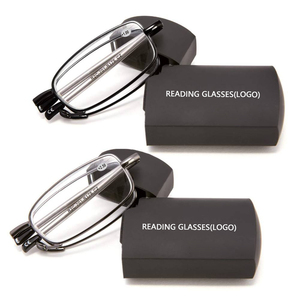
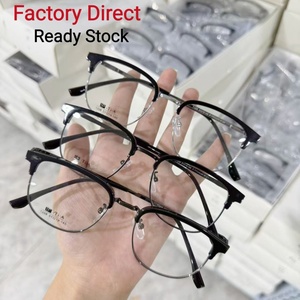
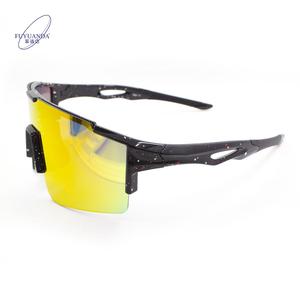
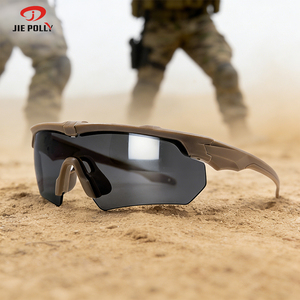
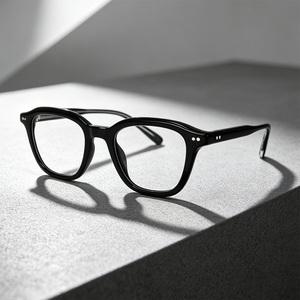
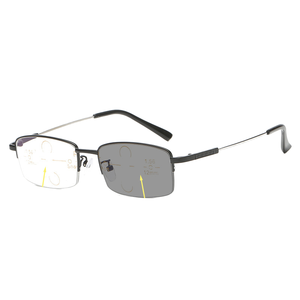
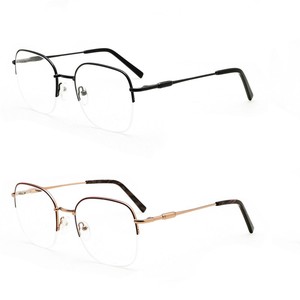
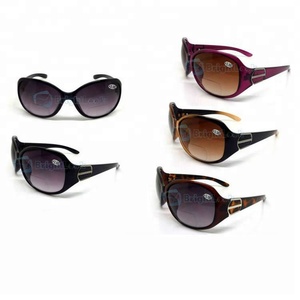
A comprehensive technical perspective on material science, European conformity protocols, and supply-chain efficiency for Polish distributors, chain opticians, and private labels.
The eyewear distribution ecosystem in Poland (Rzeczpospolita Polska) is experiencing a historic transformation. Formerly reliant on legacy Western European middlemen charging prohibitive wholesale markups, Polish optical buyers—ranging from established retail networks across Masovia and Silesia to agile e-commerce operators—are actively decentralizing their procurement. Optical professionals in Warsaw, Wrocław, Poznań, and Kraków require direct, factory-level partnerships with Chinese manufacturers capable of pairing precision OEM/ODM fabrication with strict adherence to European Union consumer safety directives.
Polarized sunglasses represent the most dynamically expanding sub-category within Central Europe. Heightened ocular health awareness, coupled with the expanding popularity of regional outdoor pursuits, has elevated consumer expectations beyond basic darkened lenses. Today, Polish consumers demand genuine, distortion-free polarized optics capable of eliminating hazardous horizontal reflective glare without degrading visual chromaticity. As an elite China-based manufacturing group with operational roots tracing back to 1960, a dedicated French design studio, and an advanced manufacturing coordination base in Shenzhen, Urband International fulfills this market void by bridging high-tier engineering with direct-from-source wholesale economics.
Procuring polarized sunglasses requires an uncompromising evaluation of laminated optical wafer technology. Inferior polarized sheets often suffer from delamination, localized optical stress patterns (birefringence), and unstable tint densities that fail European spectrophotometer assessments. By implementing multi-layer Triacetate Cellulose (TAC 1.1mm) and high-impact Polycarbonate (PC) polarized wafer integration, our production facilities ensure uniform glare cutoffs (>99% efficiency) across all optical axes, meeting both consumer lifestyle desires and stringent commercial import criteria.
Optimizing inventory mix according to Poland's unique seasonal, geographical, and meteorological profiles.
The coastal climate along the Bay of Gdańsk, Sopot, Gdynia, and the Hel Peninsula generates extreme horizontal specular reflections from the water surface. Maritime navigators, commercial fishermen, and recreational sailors require Category 3 polarized lenses with hydrophobic, anti-saltwater oleophobic outer layers. Polarization must be vacuum-laminated to resist sea spray corrosion while delivering crystalline wave-crest definition.
As the "Land of a Thousand Lakes" (Kraina Tysiąca Jezior), Warmia-Masuria hosts Poland's premier freshwater angling, kayaking, and yachting hubs. Shallow freshwater environments present distinct subsurface reflection challenges. Polarized amber and copper-tinted TAC lenses heighten contrast, filtering out the blinding sheen on water surfaces to allow fly-fishermen and boat captains to see submerged structures clearly without ocular fatigue.
Zakopane, the High Tatras, and the Sudetes present severe high-altitude ultraviolet albedo conditions, where winter snowpack and exposed granite reflect up to 85% of ambient UV radiation. Optical retailers in southern Poland prioritize Category 3 to Category 4 high-impact polarized polycarbonate eyewear equipped with lateral anti-glare shields to mitigate photokeratitis and chromatic wash in sub-zero alpine conditions.
Poland functions as the primary road freight transit artery connecting Western Europe with the Baltic States. Commercial drivers and commuters along the Autostrada corridors contend with wet asphalt glare ("mirror road" syndrome) after heavy continental rainfalls. Decentered polarized lenses prevent spatial distortion, ensuring optical comfort, rapid braking recognition, and reduced eye strain during low-sun morning and evening freight routes.
The urban demographic across cities like Warsaw, Kraków, and Wrocław blends demanding aesthetic expectations with visual health protection. Consumers look for architectural frames—such as vintage browline silhouettes, hand-finished bio-cellulose acetate, and minimalist round stainless steel rims—integrated with high-performance polarized lenses that transition smoothly from city streets to professional rooftop cafes.
Key economic and regulatory dynamics reshaping wholesale procurement in Poland from 2025 through 2030.
Polish Trade Inspections (Inspekcja Handlowa) have ramped up surveillance of imported eyewear. Wholesalers must provide verifiable Declaration of Conformity (DoC) records demonstrating compliance with EN ISO 12312-1:2013/A1:2015, optical class 1 accuracy, and UV400 spectral transmittance limits.
With the rapid rise of local optical chains and domestic e-commerce players, optical distributors are shifting away from licensed luxury conglomerates. Creating proprietary private-label collections allows distributors to preserve healthy retail margins (upwards of 60-70%) while delivering factory-calibrated polarization.
Aligning with broader EU green taxonomy rules, Polish consumers are gravitating toward sustainable frame components. Sustainable bio-acetates derived from renewable wood pulp and castor-oil-derived bio-TR90 polymers are transitioning from niche alternatives into essential mainstream product catalog lines.
Rising myopia rates across younger demographics in Warsaw and regional hubs have triggered a surge in demand for dual-purpose optical frames: high-fashion prescription optical chassis matched with ultra-thin, magnetic or mechanical polarized clip-on sun lenses.
A reference guide for optical product managers and procurement directors selecting materials for the Polish market.
| Substrate Material | Polarization Efficiency | Abbe Value (Clarity) | Impact Resistance | Target Segment in Poland |
|---|---|---|---|---|
| TAC 1.1mm (Triacetate) | > 99.2% | 56 (Very High) | Medium / Flexible | Fast-fashion retail, driving glasses, commercial lifestyle |
| Polycarbonate (PC) Polarized | > 98.8% | 29 (Moderate) | Superior (ANSI Z87.1 High-Impact) | Cycling, tactical riding, hunting, extreme winter sports |
| CR-39 Polarized Monomer | > 99.5% | 58 (Exceptional) | Standard Optical Grade | Independent optician boutiques, premium sun-Rx glazing |
| Nylon Polarized (Polyamide) | > 99.0% | 52 (High) | High / Stress-Crack Resistant | Frameless designs, screwless active hinges, luxury sport |
Harmonizing European design sensibilities, Japanese mechanical precision, and Shenzhen manufacturing scalability.
Originating with our founder's optical workshop experience in Singapore and the co-establishment of Nanyang Optical in 1960, Urband International approaches frame design through hands-on lens fitting, facial ergonomics, and long-term chassis durability.
Our portfolio is reinforced by 14 design awards, 6 nominations, and 1 invited recognition between 2006 and 2024. Recognitions connected with the iF Design Award, Red Dot Design Award, SILMO d'Or, and President's Design Award provide retail partners with a compelling brand story.
Eliminating loose screws and post-sale defects, our proprietary Screwless Hinge and Active Hinge systems provide calculated tension, flexible lateral deflection, and self-restoring alignment under repeated daily stress.
We eliminate customs hold-ups by providing batch-specific compliance dossiers: CE declarations of conformity, EN ISO 12312-1 physical optical reports, REACH Annex XVII chemical safety records, and nickel-release certifications for metal components.
Operating across Singapore (HQ & finance), France (Douvres-la-Délivrande design studio), and Shenzhen (R&D, prototyping, CNC manufacturing, and final QA), our team delivers frictionless, cross-time-zone support for Polish commercial accounts.
Practical answers addressing customs procedures, VAT liabilities, freight corridors, and private label support.
Polarized sunglasses imported into Poland from China fall under TARIC classification code 9004 10 91 00 (sunglasses with optical lenses) or 9004 10 99 00. The standard third-country customs duty across the European Union is typically 2.9%. Polish companies registered with an active EORI number clear goods directly through Polish customs offices in Gdynia, Warsaw Airport (Okęcie), or transshipment terminals like Małaszewicze.
Imports are subject to the standard Polish Value Added Tax (VAT) rate of 23%, calculated on the combined customs value plus the import duty and shipping costs. Polish businesses that qualify under Article 33a of the Polish VAT Act can handle import VAT directly through their periodic tax return (deklaracja JPK_V7), avoiding the need to make an immediate cash VAT payment at the customs border.
To legally distribute polarized sunglasses in Poland, importers must maintain: (1) An EU Declaration of Conformity (DoC) referencing Regulation (EU) 2016/425, (2) Test reports confirming adherence to EN ISO 12312-1:2013/A1:2015 (covering optical power, spectral transmittance, and polarization angle efficiency), (3) Legible CE markings on temple arms, and (4) Polish-language consumer user instructions outlining the filter category rating (e.g., Cat. 3) and UV protection limits.
Importers can select from three main logistical routes: Rail Freight via the "New Silk Road" direct to the Małaszewicze dry port terminal (14 to 18 days transit, offering the best cost-to-speed balance for volume shipments); Air Express via Warsaw Chopin Airport (4 to 7 days, ideal for high-season restocks); and Ocean Freight direct to the Port of Gdańsk (Baltic Hub) or Hamburg (28 to 35 days, providing the lowest per-unit landed freight cost).
For factory-stocked silhouettes requiring custom laser logo engraving, custom temple printing, and branded microfiber cases, our entry-level MOQ starts at 100 to 300 pieces per colorway. For bespoke custom colorways, proprietary tooling, or unique bio-acetate pantograph shapes, production runs start at 500 to 1,200 pieces across mixed shades.
Every production batch passes through our internal optical laboratory. We test with automated spectrophotometers to confirm >99% glare cutoff efficiency, complete 380-400nm UV filtration, and check for optical distortion or axis deviation. Lenses undergo thermal stress tests (-20°C to +60°C) to prevent delamination along the polarizing film, ensuring stability during cold Polish winters and hot Baltic summers.
Whether you are launching a private-label sunglass brand in Warsaw, expanding a multi-store optical chain across Silesia, or stocking high-velocity polarized cycling frames for regional sports distribution, our engineering team provides direct wholesale terms, prototype tooling, and full CE documentation.
