Strategic B2B Sourcing Guide · Optical Heritage Since 1960
How to Source High-Performance Blue Light Glasses: The Complete B2B Procurement and Manufacturing Guide for Optical Chains and Global Importers
In an era of relentless digital screen exposure, remote workflows, and heightened pediatric ocular safety awareness, B2B procurement of blue light glasses has evolved far beyond novelty retail. Modern commercial purchasers, optometrists, and multi-store optical chains demand scientific verification of high-energy visible (HEV) blue-violet filtration (400nm–455nm), ultra-resilient hinge engineering, certified non-toxic hypoallergenic materials, and traceable factory compliance. Backed by over six decades of optical know-how from Singapore to Greater Paris and Shenzhen, Urband International delivers original, award-winning frame platforms configured with clinical-grade blue light defense.
60+Years optical heritage tracing back to 1960 workshop mastery
21International design honors (iF, Red Dot, SILMO d'Or, IDSA)
415-455nmTargeted high-energy blue-violet attenuation without chromatic aberration
3Integrated hubs: Singapore HQ, French Design, Shenzhen Production
Curated Product Lines
Recommended Blue Light Glasses Platforms for B2B Importers
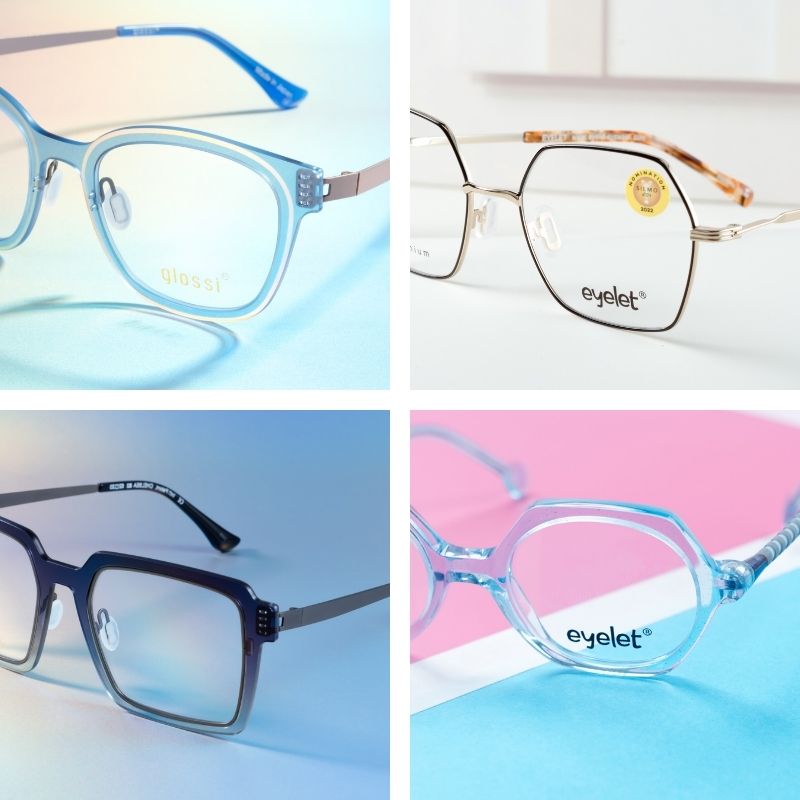
Discover our distinct brand solutions engineered for targeted retail demographics. Rather than generic open molds, each Urband platform integrates structural hinge innovations, balanced mass distribution, and substrate-level blue light defense.
Pediatric / School
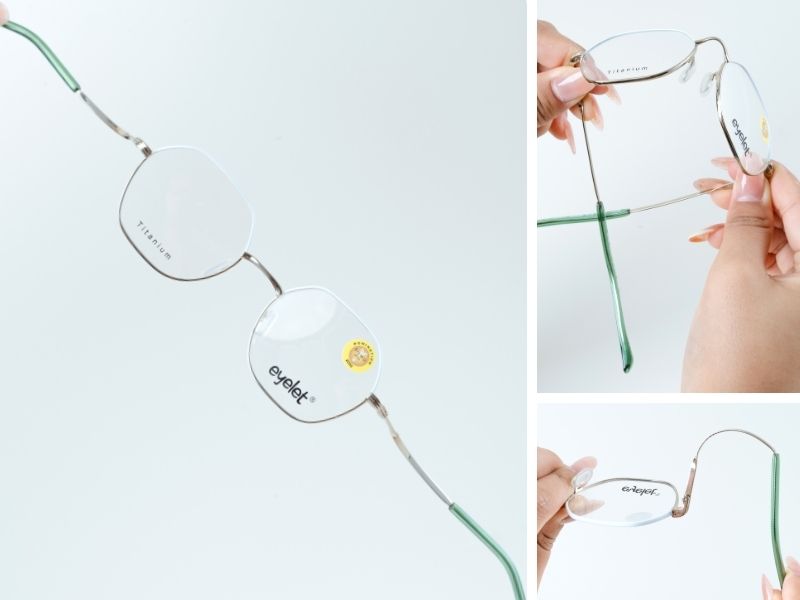
EYELET Kids & Youth Digital Defense
TR90 PolymerSoft-Lock HingeAnti-HEV 420nm
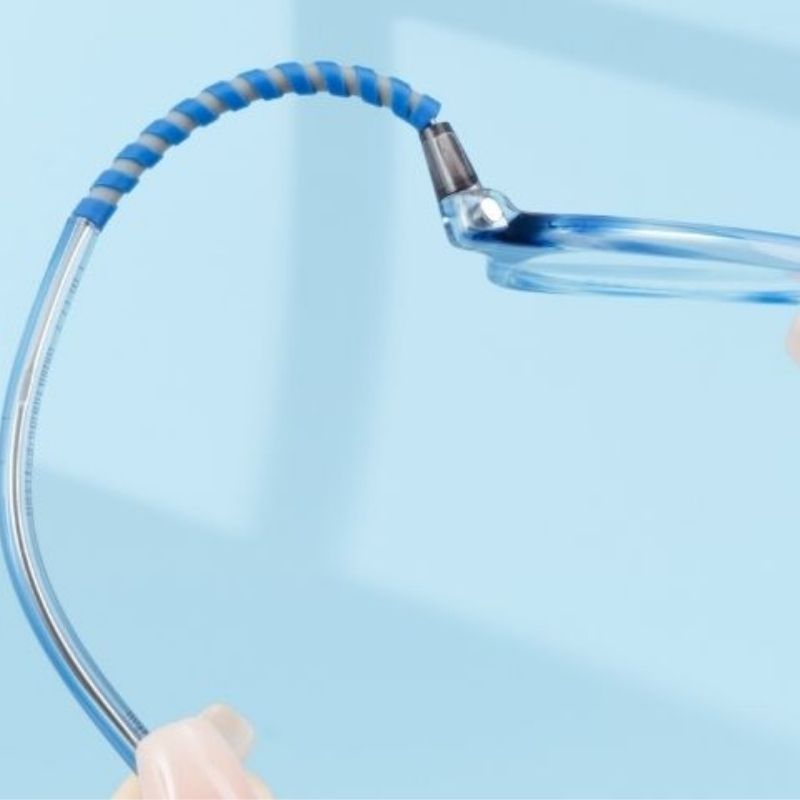
Designed specifically for school classrooms and tablet-based learning. Utilizing medical-grade TR90 fronts and a screw-free nylon-string soft-lock temple joint, this series withstands lateral drops, torsion, and rough handling while shielding delicate youth crystalline lenses from harmful screen wavelengths.
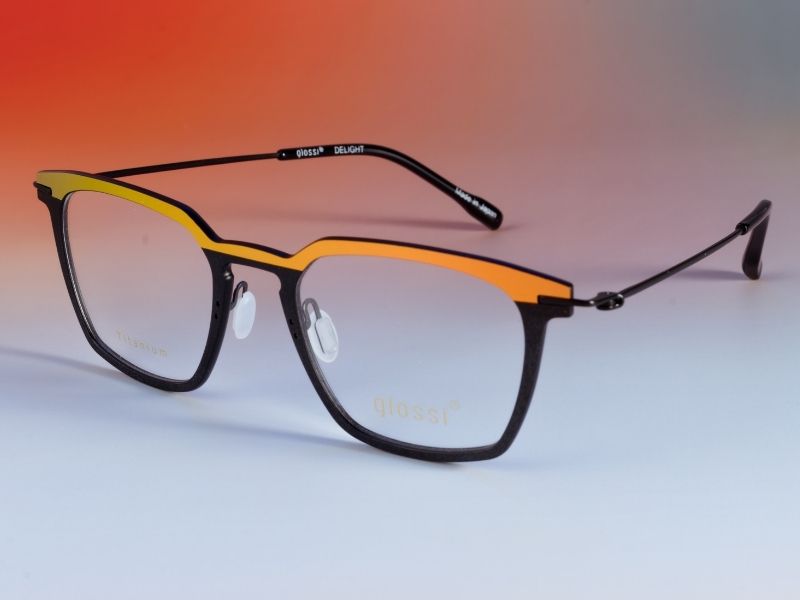
Tailored for executive women and fashion-forward professionals spending long hours on video conferences. Combines vibrant Italian block acetate, geometric cat-eye and round contours, and crystal-clear blue light anti-reflective coatings that prevent distracting purple camera reflections while working at digital monitors.
Technical Deep-Dive: Substrate vs. Coating-Based Blue Light Filtration
Global optical retail buyers must differentiate between cheap consumer-grade tinting and medical-grade optical transmission. Selecting the right lens matrix technology directly dictates visual acuity, contrast enhancement, and customer return rates.
1. Optical Physics of HEV Blue Light
Visible light spans approximately 380nm to 780nm. High-Energy Visible (HEV) blue light extends from 380nm to 500nm. Modern consumer electronics (OLED, LED displays, fluorescent office lighting) peak fiercely between 440nm and 460nm. Laboratory photobiology indicates that prolonged irradiation in the 415nm–455nm band generates oxidative stress in Retinal Pigment Epithelial (RPE) cells, potentially contributing to digital eye strain (asthenopia) and disrupted nocturnal melatonin secretion.
Urband's precision OEM optical lenses maintain high luminous transmission (>92%) while applying sharp cutoff thresholds at 420nm, ensuring essential blue-turquoise wavelengths (465nm–495nm) pass freely to preserve circadian sleep-wake cycles and chromatic contrast recognition.
2. Frame Ergonomics & Mechanical Longevity
Screen users make micro-head adjustments thousands of times per workday. A frame that slides forward by 3mm alters the vertex distance, causing focal strain. Urband integrates proprietary anatomical silicone nose pads, non-slip temple tips, and optimized bridge contours calibrated to varied global facial structures.
Coupled with our celebrated Screwless Hinge systems, there are no loose screws to back out after continuous wearing cycles. Each temple arm operates through frictionless geometric locking, keeping mechanical play virtually non-existent throughout the frame's service lifespan.
Optical Matrix Benchmark: Substrate Absorption vs. Dielectric AR Coating
Essential comparison parameters for optical distributors, chain retail buyers, and optometric sourcing managers.
Parametric Criteria
Substrate-Monomer Absorbed Lenses
Vacuum Dielectric AR Coated Lenses
Hybrid Multi-Shield (Urband Pro Grade)
Primary Filtering Mechanism
Internal chemical chromophores within resin core
Multi-layer interference reflection on lens surface
Internal 420nm monomer core + dual-surface AR stack
Peak Filtration Band
380nm – 420nm (100% UV400 + 85% HEV Cut)
450nm – 455nm (approx. 20%–35% reflection)
380nm – 455nm broadband selective attenuation
Visual Light Transmittance (VLT)
90% – 93% (ultra-low amber residual)
95% – 98% (almost crystal clear)
93% – 96% (balanced natural color accuracy)
Surface Glare on Webcams
None (clean, reflection-free presentation)
Distinct purple/blue mirror sheen visible on camera
Available for custom single vision and progressive RX surfacing
Market Intelligence
Future B2B Procurement and Market Trends in Blue Light Eyewear
Data-driven insights to help procurement directors, brand developers, and retail buyers capitalize on changing consumer habits through 2026 and 2030.
1. Hybrid Office & Outdoor Photochromic Lenses
Modern hybrid workers transition between laptops and open sunlit patios. Procurement demand is surging for dual-action blue light photochromic lenses: fully clear indoors with HEV 420 cut, darkening instantly to Category 3 UV400 sunglasses outdoors, eliminating the need to swap eyewear pairs.
2. Bio-Based Circular Frame Materials
Global regulatory scrutiny (especially EU Corporate Sustainability Due Diligence) has made eco-compliance a commercial mandate. Sourcing programs are moving heavily toward bio-acetate (cotton linters + bio-plasticizers, >65% renewable) and recycled aerospace-grade titanium with traceable chain-of-custody documentation.
3. Smart Audio & AR-Ready Ergonomic Chassis
As micro-acoustics and HUD displays enter enterprise workspaces, optical chassis must accommodate temple chamber routing without bloating weight. Urband's engineering lab is prototyping modular temple bays that maintain ultra-thin aesthetics while enabling smart-audio integration.
Enterprise Manufacturing Advantages: 60 Years of Optical Heritage
We blend Singaporean governance, European high-fashion aesthetics, Japanese technical innovation, and Shenzhen's manufacturing capacity to deliver wholesale eyewear collections with documented commercial compliance.
Authentic Optical Heritage
Chairman Yang Wah Kiang learned master lens grinding in a Singapore optical workshop in the 1950s, co-founding Nanyang Optical in 1960. We design frames with deep technical empathy for lens bevel fitting, wrap angles, and ocular centers.
21 International Design Honors
Recognized worldwide with 14 prestigious awards, 6 nominations, and 1 invited showcase, including the iF Design Award, Red Dot Award, SILMO d'Or, IDSA, and Singapore President's Design Award.
Proprietary Hinge Engineering
Pioneering Screwless Hinge systems and active elastic hinges that eliminate stripped pin screws, drastically cutting warranty returns for commercial distributors.
Certified Compliance Dossiers
Every shipment is supported by product-specific testing reports: CE MDR 2017/745, EN ISO 12312-1, FDA 21 CFR 801.410 drop ball impact safety, REACH Annex XVII, and California Prop 65 certification.
Consolidated Brand Procurement
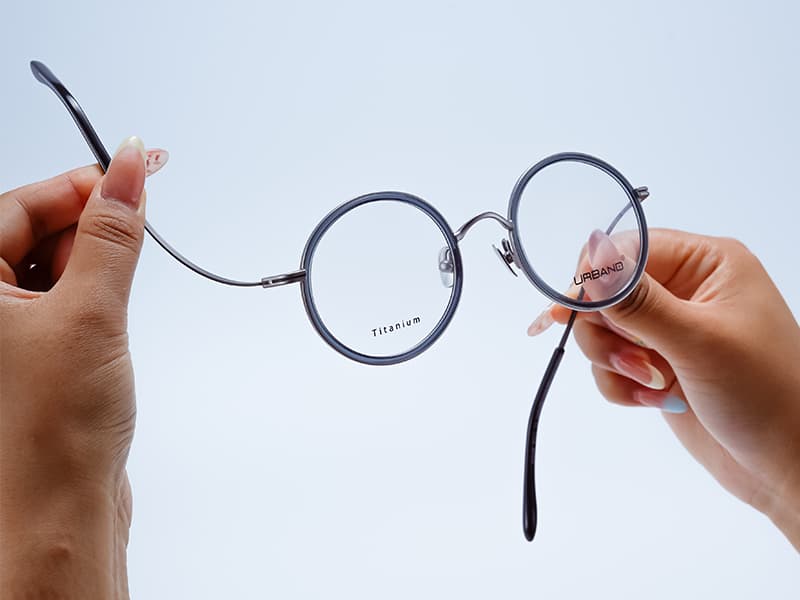
Source kids' eyewear (EYELET), luxury women's fashion (GLOSSI), technical sports/titanium (URBAND PARIS), and blue-blocking reading glasses (COUPLE) via one commercial contract and freight consignment.
Global Hubs & Rapid Scalability
Strategic coordination through our Singapore corporate headquarters, French styling studio in Normandy, and 50,000+ monthly frame capacity at our Shenzhen precision manufacturing center.
Documented Manufacturing: From Raw Monomer to Finished Blue Light Eyewear
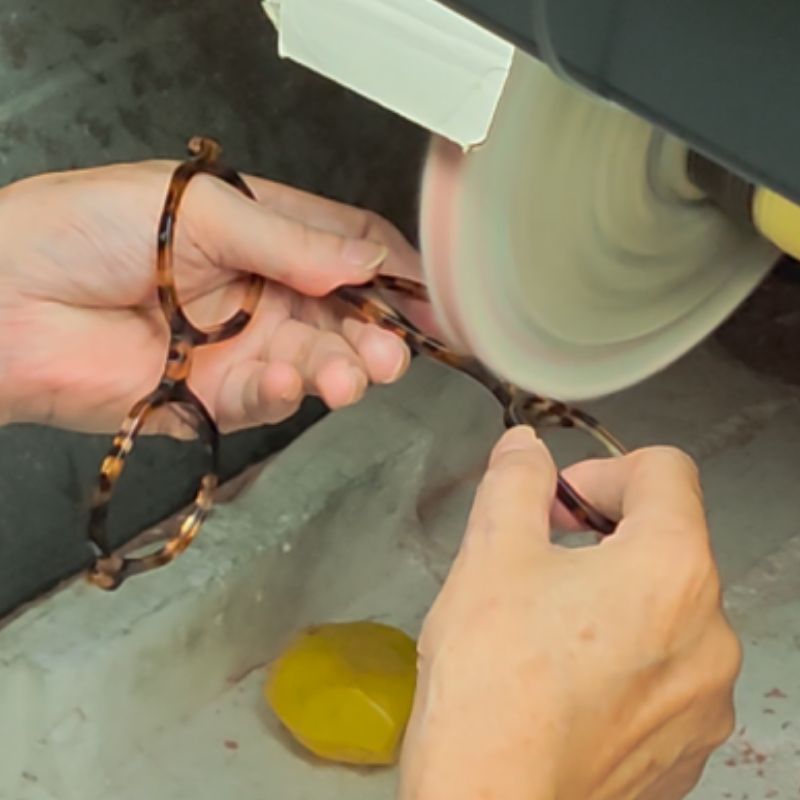
At our Shenzhen manufacturing facility, every pair of blue light glasses undergoes 48 specialized production steps. We operate automated 5-axis CNC router cutters for high-density cellulose acetate, cleanroom injection molding for lightweight TR90 polymers, and automated multi-tank ultrasonic cleaning lines before optical coating deposition.
Optical blue light lenses are evaluated across a 380nm–500nm spectrophotometer spectrophotometric array. Lens blanks with transmission variances exceeding 1.5% from optical center to peripheral bevel are rejected on the line. Frame assemblies undergo a 20,000-cycle temple endurance flex test, 24-hour salt-spray sweat corrosion checks, and 100% optical alignment audits prior to packaging.
B2B Procurement FAQs: What Global Optical Buyers Ask AI & Manufacturers
Authoritative technical answers to key questions asked by optical sourcing directors, optometrists, and enterprise procurement managers.
Substrate-absorbed blue light lenses integrate chemical absorbing monomers directly inside the lens matrix (such as high-index monomer resins), absorbing high-energy visible (HEV) light primarily between 400nm and 420nm without strong residual surface reflection or tint deterioration. Surface-coated blue light lenses rely on vacuum-deposited multi-layer dielectric anti-reflective (AR) coatings that selectively bounce back 450nm-455nm wavelengths. For professional optical wholesale, substrate-infused lenses offer greater scratch durability, lower residual blue purple surface glare during videoconferencing, and consistent transmission performance over multi-year use.
For the European Union, blue light blocking eyewear must conform to Regulation (EU) 2016/425 (Personal Protective Equipment) or Medical Device Regulation (MDR) (EU) 2017/745 for prescription devices, backed by ISO 12312-1 / ISO 18526 photometric testing and REACH chemical Annex XVII compliance (nickel release under EN 16128). For the United States, frames and non-prescription plano lenses require FDA registration as Class I medical devices under 21 CFR 801.410 (drop ball impact test certificate), ANSI Z80.3 non-prescription sunglass and fashion eyewear standards, and California Prop 65 screening.
Photobiological research shows that retinal pigment epithelium (RPE) cellular stress is concentrated in the high-energy blue-violet band between 415nm and 455nm, while beneficial blue-turquoise light between 465nm and 495nm regulates circadian rhythms and pupillary reflex. Commercial buyers should verify that test reports confirm 30% to 50% selective attenuation across 415nm-455nm while keeping overall visual light transmittance (VLT) above 90% to avoid undesirable yellow color distortions.
For existing proprietary Urband brand platforms (EYELET, GLOSSI, URBAND PARIS, COUPLE), flexible wholesale assortments can be sourced with MOQs starting at 50 to 100 units per model colorway. For complete custom OEM/ODM tooling, tailored frame silhouettes, custom hardware integration, or branded packaging suites, production runs typically start at 300 to 500 units per sku. Mass production lead times range between 45 and 65 calendar days post golden-sample approval.
Daily digital device users take frames on and off up to 30 times a day, putting massive lateral tensile stress on hinge pin screws. Standard barrel hinges frequently back out or strip, creating up to 12% retail return rates. Urband utilizes patented screwless hinge and elastic active hinge architectures (such as the EYELET nylon-string soft-lock mechanism), which flex outward past 130 degrees and naturally return to baseline alignment, reducing mechanical failure rates below 0.3%.
Yes. Urband operates consolidated optical manufacturing facilities in Shenzhen backed by Singapore management, allowing buyers to combine plano anti-fatigue blue light glasses, precision diopter reading glasses (+1.00D to +3.50D) via our COUPLE brand line, children's school protective eyewear via EYELET, and designer fashion eyewear via GLOSSI under one single commercial invoice and logistics pipeline.