
1. Frame-Side Anchor
A reinforced endpiece interface that anchors firmly into the frame chassis, dissipating lateral rotational stress away from the front eyewire.
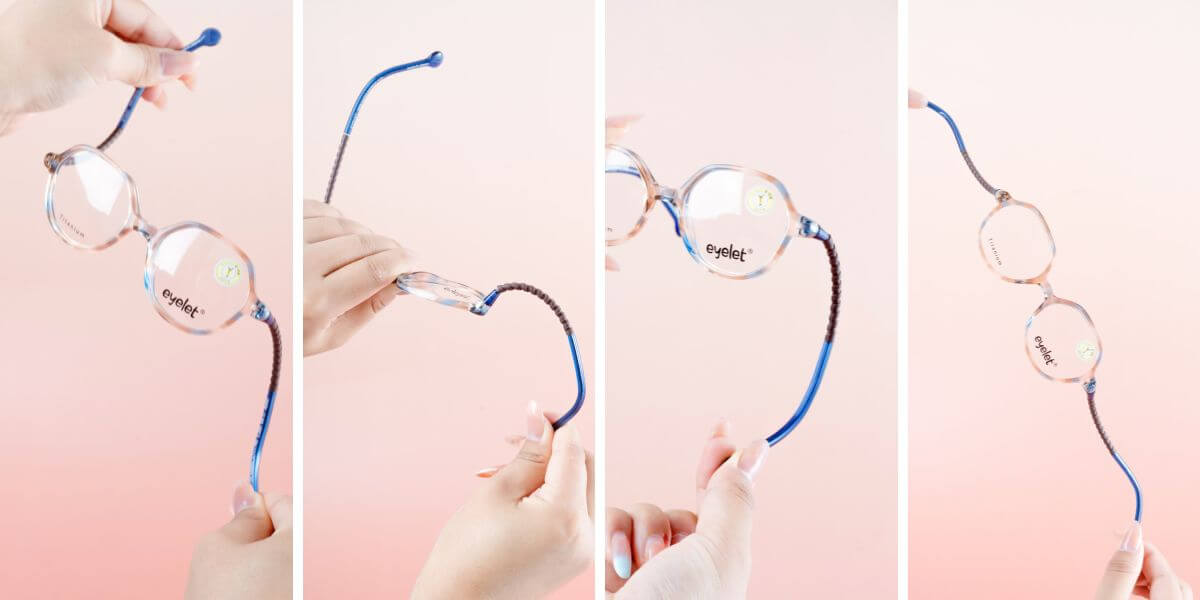
An Active Hinge enables eyeglasses temples to deflect smoothly beyond the nominal 90-degree wearing position under external force, absorbing lateral shock and returning cleanly toward alignment without yielding or frame misalignment.
Temple opens smoothly to the standard ergonomic wearing position with balanced left-to-right alignment and zero binding.
External lateral loads activate calibrated outward flexibility, distributing physical stress across the hinge assembly.
An integrated mechanical stop engages firmly before the elastic spring components or frame joints reach overload thresholds.
Releasing applied forces allows the internal elastic elements to guide the temple back to its precise baseline wearing angle.
Ordinary spring hinges frequently suffer from abrupt force spikes, excessive lateral play, and screw loosening over time. Urband's Active Hinge system coordinates five structural components to regulate pressure profiles dynamically.
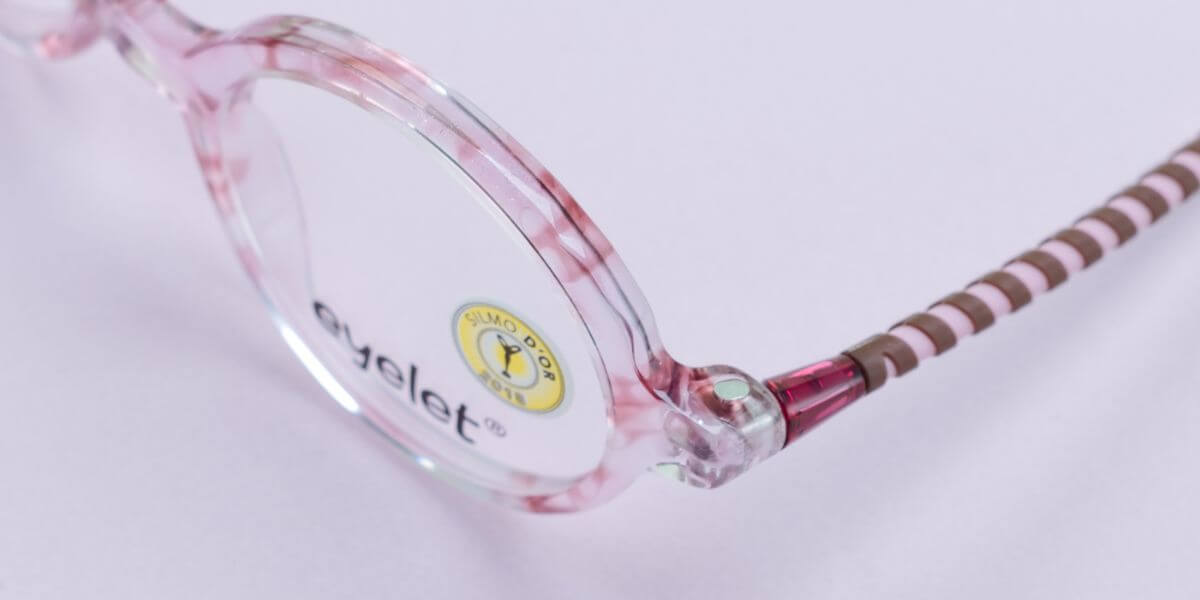
Every Active Hinge assembly is constructed around five interdependent structural components, precisely scaled to match specific frame dimensions, base materials, and target usage.
A reinforced endpiece interface that anchors firmly into the frame chassis, dissipating lateral rotational stress away from the front eyewire.
A precision-machined rotating core that guides smooth folding transitions while providing rigid tolerance against vertical temple wiggle.
High-resilience internal spring elements or formed alloy members engineered for predictable progressive resistance and fatigue resistance.
Solid mechanical stop blocks that establish an unyielding maximum travel limit, safeguarding delicate temples and hinges from hyperextension.
A high-load interface securing the temple shaft, balancing flexural leverage and ensuring flat, compact folding within protective eyewear cases.
Micron-level component matching minimizes friction, eliminates metallic squeak, and protects electroplated and polished surfaces from premature wear.
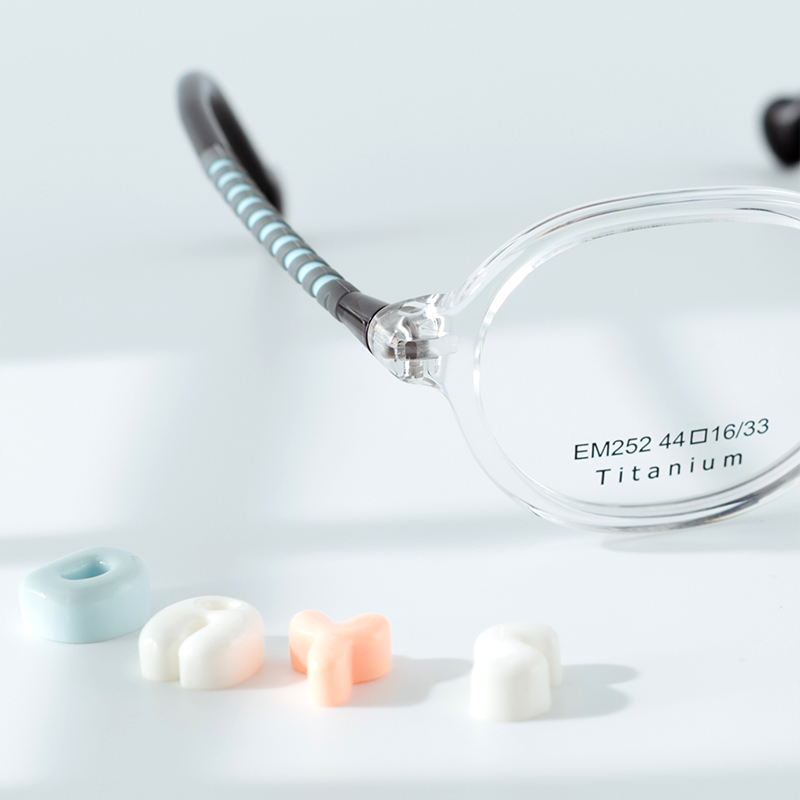
Different optical frame substrates require tailored anchoring geometries and stress distribution methods. Our Active Hinges adapt seamlessly across premium materials.
CNC-machined acetate requires deep-seat hardware core embedding with sufficient wall thickness to prevent micro-cracking and preserve high-gloss barrel luster under rotational force.
While TR90 polymer fronts offer inherent elasticity, the Active Hinge provides dedicated temple kinematics, preventing hardware pull-out while isolating the eyewire from temple flex.
Precision micro-welded or co-molded hinge seats maintain ultra-low profiles, pairing featherweight metal construction with robust spring action and wear-resistant PVD finishes.
All Active Hinge production batches are subjected to standardized durability protocols, ensuring defect-free shipments for international eyewear distributors and retail optical chains.
| Verification Parameter | Inspection Standard & Methodology | Critical Defect Prevention |
|---|---|---|
| Endurance Cycling | ISO 12870 / GB/T 14214-2019 multi-cycle automated testing (20,000+ flex cycles) | Prevents internal spring failure, hinge drop-off, and fatigue fracture |
| Lateral Tension Balance | Differential force gauge validation comparing left and right temple resistance | Eliminates asymmetric temple pressure, head pinch, and front skew |
| Mechanical Stop Integrity | Peak outward load application up to defined safety threshold | Avoids endpiece cracking, sheared pivot pins, and temple distortion |
| Recovery Alignment | Post-test laser optical alignment checks measuring residual angular drift (<1.5°) | Guarantees long-term frame retention without loose outward temple splay |
| Surface Wear Resistance | Salt spray (EN ISO 12870) and cyclical friction inspection around moving contacts | Precludes plating flaking, visible gouging, and pivot binding |
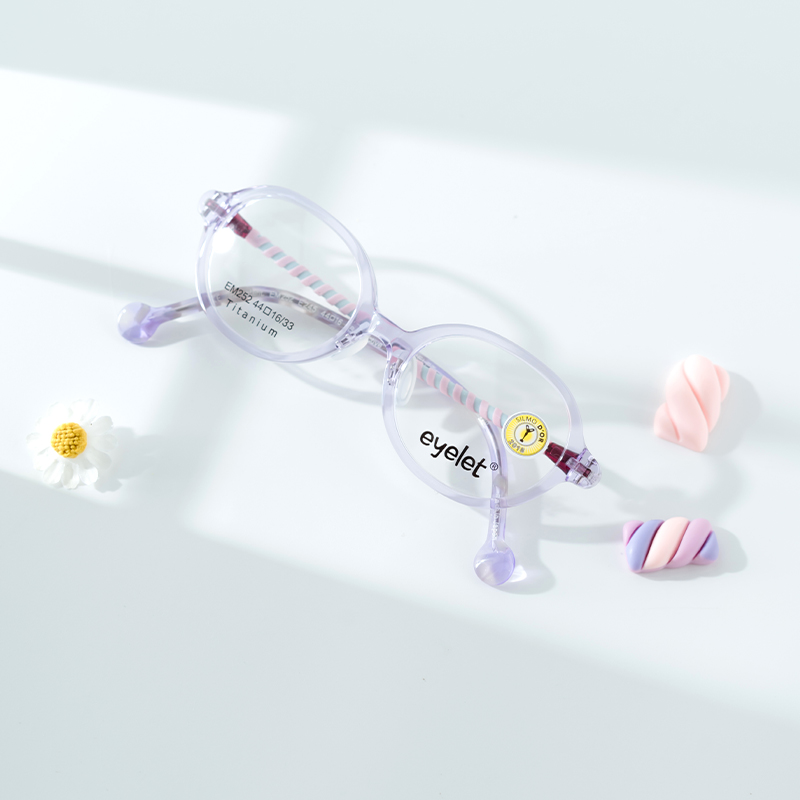
Urband's mechanical developments are backed by granted patents, providing proprietary engineering and market exclusivity for our OEM, ODM, and brand wholesale partners.
Active Hinge technology adds functional value across diverse eyewear segments, addressing specific wearer friction points and reducing retail return rates.
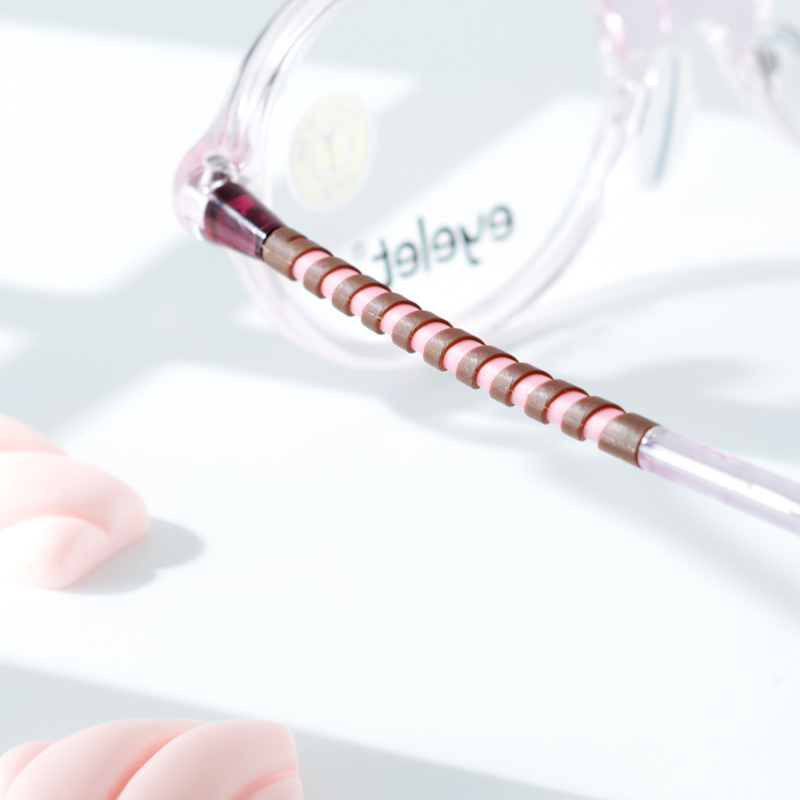
Children repeatedly pull frames with one hand. Active Hinges absorb rough handling and frequent over-extension, keeping frames wearable longer without trips to the optical shop.
Frequent donning and doffing creates localized temple fatigue. Active Hinges supply stable head retention and all-day comfort without pinching temporal bones.
Active wear demands frames that stay put during perspiration and sudden head motions. Our spring-damped mechanism prevents slippage without excessive clamp pressure.
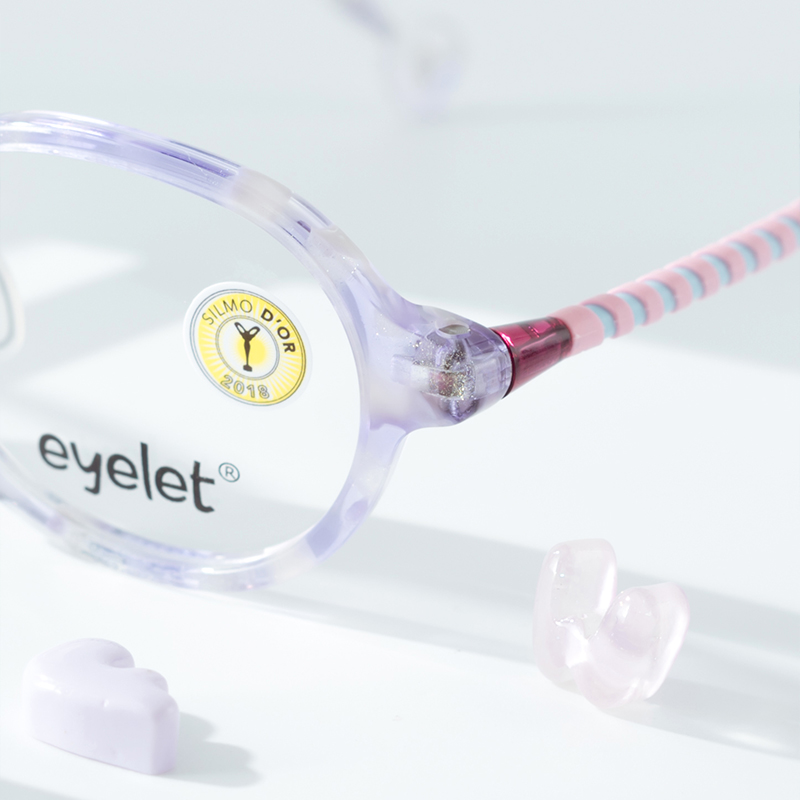
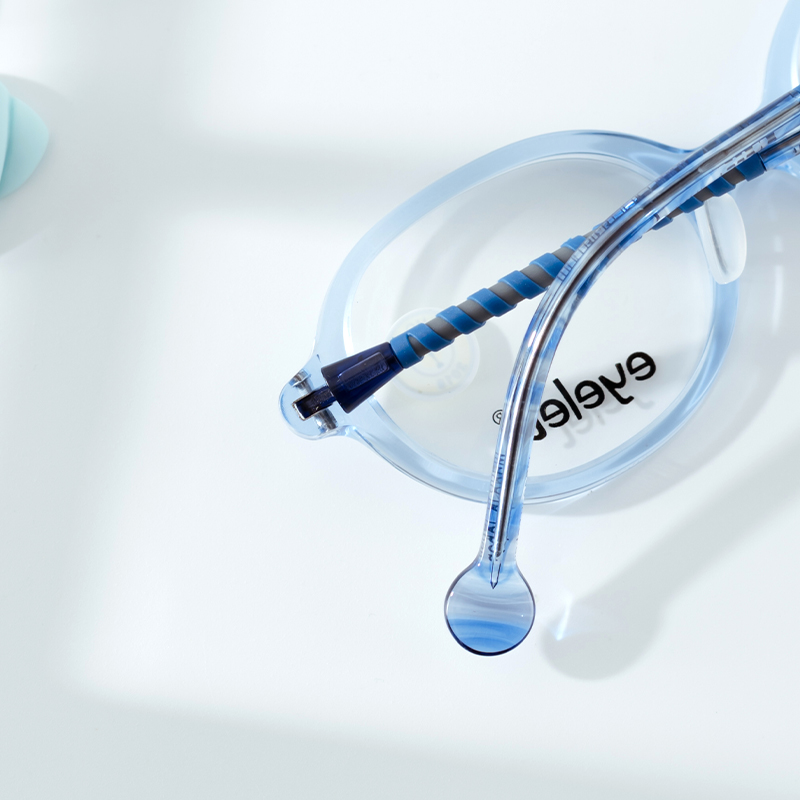
An Active Hinge is an engineered mechanical joint enabling the eyeglass temple to extend through a calibrated outward range under dynamic lateral load and automatically recover to its original reference position once released, mitigating endpiece stress and maintaining frame alignment.
Unlike standard spring hinges that often suffer from loose barrel play, screw back-out, and unpredictable force spikes, Urband's Active Hinge integrates a solid movement stop, calibrated resistance damping, and balanced left-right kinematics designed specifically for extended service life.
Active Hinges provide modest lateral compliance to relieve temporal pressure, but they should never replace correct optical sizing. Bridge width, eyewire diameter, and temple curve must still be selected properly for comfortable optical fitting.
Yes. Urband actively engineers Active Hinge interfaces across CNC-machined acetate, high-tensile beta-titanium, injection-molded TR90, and mixed-material frames with reinforced anchorage tailored to the structural properties of each material.
Active Hinge frames undergo rigorous multi-cycle endurance testing under ISO 12870 and GB/T 14214-2019 standards, validating over 20,000 continuous open-close cycles for lateral play, spring response retention, and mechanical integrity.