
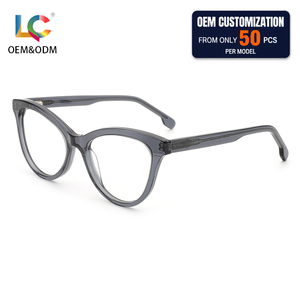
Manufacturers Modern Cat Eye Design Acetate Optical Glasses Frames Monturas De Acetato For Daily Decoration Work Women Eyewear
- Material: Multi-Layer Cellulose
- Architecture: Beveled Cat-Eye Lift
- Hinge Type: 5-Barrel Reinforced
Engineered to counteract peripheral lens mass while maximizing field of view. Our direct factory portfolio integrates screwless hinges, anti-corrosion metals, and hypo-allergenic plant-derived polymers.
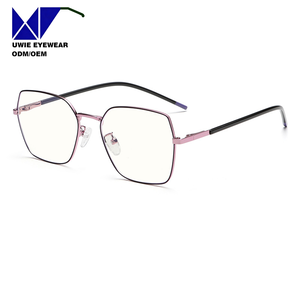
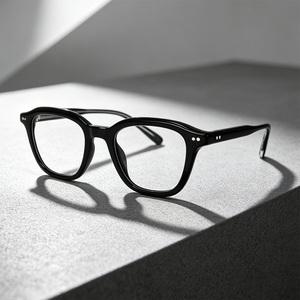
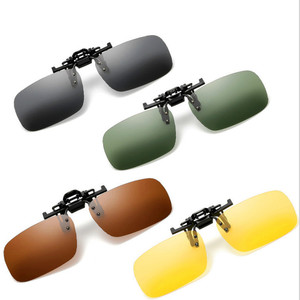
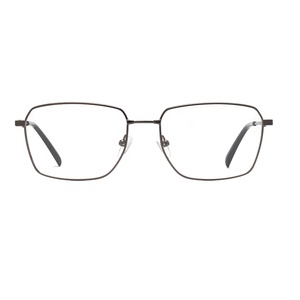
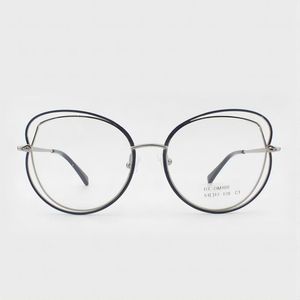
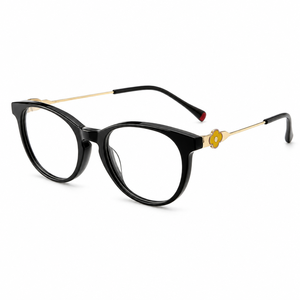
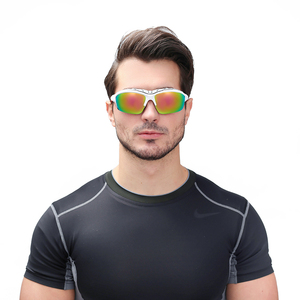
Procuring oversized optical frames from Chinese OEM/ODM contract manufacturers involves solving sophisticated engineering trade-offs that go far beyond surface styling. Within the modern eyewear landscape, oversized frames—conventionally designated by an effective diameter (ED) exceeding 56mm and lens widths from 52mm to 60mm—introduce distinct optometric and biomechanical challenges. When an aperture expands, the lens volume multiplies non-linearly, concentrating excess weight at the nasal bridge and creating profound peripheral lens edge thickness for high-minus myopic prescriptions (-4.00D and beyond).
At Urband International, our manufacturing approach integrates over six decades of lens-grinding precision dating back to our founder's 1960 optical workshop roots in Singapore. In large-format optical design, our Shenzhen engineering facility and European design studios maintain rigorous tolerances across four structural criteria: pantoscopic tilt management, vertex distance equilibrium, mechanical temple leverage compensation, and structural mass distribution.
Standard mass-market factories routinely stretch standard 48mm frame geometry into a 54mm or 56mm chassis without redesigning the bridge anatomy or adjusting the hinge cam angle. This oversight creates severe vertex-induced aberration, excessive nasal slippage, and premature hinge failure caused by prolonged temple arm lever forces. High-yield contract manufacturing requires bespoke eyewire profiling, chamfered internal lens bevel tracks, and specialized mechanical hinges.
To maintain frame integrity under everyday mechanical wear, our factory utilizes five-axis CNC profile milling for cellulose acetate alongside cold-forged beta-titanium wire drawing. By executing interior bevel back-cutting, our frames allow thicker high-index prescription lenses (1.67 and 1.74 MR-series polymers) to seat backward toward the orbital socket rather than protruding awkwardly from the front browline. This technique retains sleek, lightweight facial aesthetics while preserving the intended visual axis and pupillary distance (PD) alignment.
How our China-based precision manufacturing facilities eliminate common structural defects in oversized spectacles.
Oversized rims create higher mechanical leverage along the temple arms. Our proprietary screwless interlocking cams and flexible elastomeric soft-lock interfaces eliminate loose hinge screws, ensuring smooth, cyclic damping that exceeds 25,000 continuous open-and-close cycles without misalignment.
We utilize high-density, low-plasticizer cellulose acetate cured for up to 90 days in temperature-controlled curing chambers. This extended aging cycle minimizes internal thermodynamic stress, preventing warping, retaining lens-groove stability, and ensuring deep, long-lasting surface polish across broad front eyewires.
For oversized metal profiles, our cleanroom vacuum chambers apply physical vapor deposition (PVD) titanium nitriding. This process yields a wear-resistant surface layer exceeding 2.5 microns, ensuring complete sweat-acid resistance, nickel-free hypoallergenic biocompatibility, and high flexibility without plastic deformation.
As purchasing directors, brand managers, and independent chain buyers review their forward manufacturing commitments, the oversized frame segment is evolving beyond traditional aesthetic nostalgia. The global shift toward progressive addition lenses (PALs) and blue-light blocking occupational eyewear has accelerated market demand for generous vertical lens heights (B-measurements > 42mm). Procurement strategies over the next five years will be defined by three critical industry developments:
1. Eco-Certified Bio-Acetates and Circular Sourcing: Environmental compliance standards across Europe and North America (such as EU REACH, Prop 65, and the Corporate Sustainability Due Diligence Directive) are making bio-based, phthalate-free plasticizers mandatory. Leading China factories now source triethyl citrate plasticized bio-acetate flake derived from FSC-certified wood pulp and cotton linters. These materials provide biodegradable compliance without sacrificing structural rigidity or color saturation.
2. Hybrid Structural Architecture (Acetate-Titanium Co-Molding): Oversized frames risk looking excessively heavy when rendered entirely in thick plastics. Modern high-tier manufacturing pairs ultra-slim 2.2mm acetate front rims with rigid, milled titanium inner-eye wire skeletons. This hybrid technique maintains a bold visual silhouette while reducing overall frame weight by up to 38%, keeping total chassis mass under 18 grams.
3. Parametric Asian and Universal Bridge Engineering: Conventional Western European bridges with wide 19mm to 21mm crests frequently cause oversized frames to slide down lower nasal bridges, creating uncomfortable cheek contact. Chinese manufacturing clusters now incorporate multi-axis micro-adjustable beta-titanium pad arms and ergonomic silicone saddle configurations directly into private-label production lines, serving diverse international face shapes without requiring dual mold investments.
| Material Classification | Structural Density | Tensile Modulus | Optimal Lens Aperture | Target Assortment Role |
|---|---|---|---|---|
| Aged Cellulose Acetate | 1.28 g/cm³ | 2.8 GPa | 52mm – 56mm (ED) | Fashion Optical / Luxury Retail |
| Beta-Titanium Alloy (Ti-15V-3Cr-3Sn-3Al) | 4.75 g/cm³ | 105 GPa | 54mm – 60mm (ED) | Ultra-Light Executive / Minimalist |
| Swiss EMS Grilamid TR90 | 1.02 g/cm³ | 1.6 GPa | 50mm – 58mm (ED) | Pediatric, Active & Blue-Light |
| Medical Grade 304L / 316L Stainless Steel | 7.95 g/cm³ | 193 GPa | 52mm – 57mm (ED) | Precision Geometric / High Volume |
| Shape Memory Ni-Ti Alloy | 6.45 g/cm³ | 75 GPa (Superelastic) | 52mm – 56mm (ED) | Flexible Workwear / Tactical Rx |
Balancing European design sensibilities with high-precision Chinese manufacturing ecosystems.
Selecting a contract manufacturing partner requires evaluating both their engineering capabilities and institutional stability. Urband International operates a tri-regional framework: Singapore corporate headquarters (financial governance and strategic oversight), Douvres-la-Délivrande in France (industrial eyewear styling and creative direction), and a manufacturing coordination facility in Longgang, Shenzhen (tooling development, CNC fabrication, multi-stage QA inspection, and international shipping).
Our manufacturing lineage traces back to 1960, when our founder Yang Wah Kiang began crafting prescription lenses by hand in Singapore, later co-establishing Nanyang Optical. This deep optical foundation sets our factory apart from purely commercial trading entities. We evaluate every technical drawing from an optician's point of view: analyzing lens groove depth, safety bevel placement, temple tension, and hinge durability before cutting production molds.
Our original frame concepts have received 21 international design accolades—including the prestigious iF Design Award, Red Dot Design Award, SILMO d’Or, and the President's Design Award. Through proprietary engineering breakthroughs like our nylon-string soft-lock children's frame hinges and our integrated screwless barrel joints, we provide our OEM/ODM brand partners with distinct, defensible market advantages.
Every product batch is accompanied by thorough documentation: CE conformity declarations under MDR 2017/745, EN ISO 12870 ophthalmic frame standards, EN ISO 12312-1 sunglasses compliance, and independent SGS/TÜV chemical testing for nickel release and REACH SVHCs.
Our in-house QC laboratory conducts bridge fatigue deformation testing, salt-spray corrosion exposure up to 128 hours, mechanical drop-ball impact resistance, and temple flexing cycles before clearance, ensuring defect rates remain strictly below 0.3%.
Optical retailers and distributors can consolidate orders across diverse collections—including EYELET children's eyewear, GLOSSI high-fashion women's styles, URBAND PARIS sports frames, and COUPLE reading series—under a single wholesale supply agreement.
Lens ejection typically results from thermal expansion or insufficient eyewire rigidity across wide spans. We engineer our optical eyewires with deep 1.4mm V-shaped bevel tracks cut via high-precision CNC routers. In addition, we utilize high-modulus, cured acetate sheets with minimal plasticizer migration, ensuring stable lens retention even under high-cylinder prescription forces.
For customized OEM acetate designs requiring custom extrusion colors, standard production runs start at 300 to 500 units per model, split across 2 to 3 color variants. For stocked catalog models or standardized TR90 and metal components, we accommodate agile testing orders starting from 100 units per sku.
Yes. We produce specialized wide-rim wire profiles featuring windsor rings or thickened 2.8mm to 3.5mm grooved eyewires. This profile conceals the peripheral edge thickness of high-minus lenses while protecting the edge coatings from everyday abrasive contact.
Photopolymer 3D prototypes and initial CNC visual samples are delivered within 10 to 14 business days. Upon complete approval of technical drawings and color swatches, full tooling and mass manufacturing typically spans 45 to 60 calendar days, including barrel tumbling, hand finishing, ultrasonic cleaning, and multi-point QC.
We supply both commercially pure titanium (Grade 2 CP Titanium for front eyewires requiring precise stampings) and high-flexibility Beta-Titanium alloys (for temples and bridge components). All raw materials are verified using X-ray fluorescence (XRF) spectrographic analysis to ensure compliance with EN ISO 12870 nickel-release thresholds.
We offer end-to-end custom packaging and branding options: internal temple pad-printing, ultra-fine high-contrast laser etching, engraved metal core wires, silicone nose pad logo stamping, custom-molded hard cases, and branded microfiber cleaning cloths matched to your brand identity guidelines.
Partner directly with an established Singapore-founded manufacturer backed by European design studios and certified Shenzhen manufacturing facilities. Discuss technical blueprints, request material swatch kits, or receive a fast quotation for your private-label optical program.
Contact Us