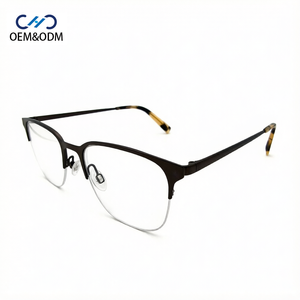
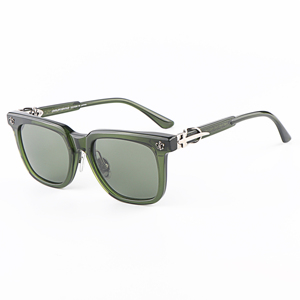
From ultralight featherweight β-titanium structures and screwless flex-hinge architectures to high-index rimless mountings, explore our baseline OEM/ODM collections currently distributed across Prague, Brno, Ostrava, and Pilsen.
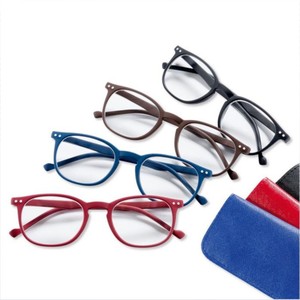
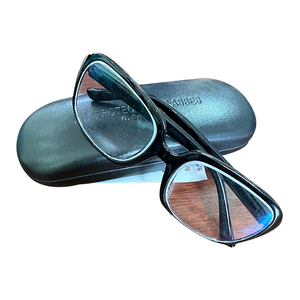
Founded upon optical discipline established in 1960 when our Chairman, Yang Wah Kiang, co-established Nanyang Optical in Singapore after mastering lens surfacing and manual glazing, Urband International bridges traditional master optometry with avant-garde mechanical engineering. While generic wholesale vendors trade mass-market catalog parts, Urband approaches frame design through the eyes of a master dispenser: factoring in optical center vertex distance, pantoscopic tilt (8°–12°), groove-bevel tension retention, and temple pressure mapping along the cranial mastoid bone.
Today, our operations are harmonized across three centers of excellence: strategic headquarters in Singapore overseeing corporate compliance; our creative studio situated at 32 Rue Jean Perrin, Douvres-la-Délivrande, France guiding silhouette ergonomics and color palettes; and our advanced Shenzhen Manufacturing & R&D Hub managing CNC micro-machining, cleanroom PVD ion sputtering, and four-point tension assembly. Backed by 21 prestigious international design honors—including recognitions affiliated with the iF Design Award, Red Dot Design Award, SILMO d'Or, and the President's Design Award—we supply high-echelon independent opticians, national chains, and eye care professionals (ECPs) seeking measurable commercial differentiation.
Engineered without conventional micro-screws, eliminating the primary point of failure in daily optical rotation. Friction-fit interlock components ensure lifetime opening torque consistency without loose temple droop.
Utilizing high-tensile β-titanium flexural members, our active hinge system absorbs accidental hyper-extensions up to 35° beyond parallel, dampening mechanical shock and returning precisely to the calibrated alignment axis.
Every shipment comes fully bundled with specific technical dossiers: spectrometer metal alloy assays (Grade 2 Pure Titanium & Ti-15V-3Cr-3Sn-3Al), ISO 12870 mechanical fatigue logs, and REACH Annex XVII chemical safety records.
For opticians operating across the Czech Republic, selecting the correct titanium substrate is directly tied to glazing lab turnaround time, mechanical stability, and patient compliance. The optical industry frequently homogenizes "titanium," obscuring the critical mechanical distinctions between CP (Commercially Pure) Titanium and structural Beta-Titanium alloys.
Commercially Pure Grade 2 Titanium (Alpha-phase): Yielding an ultimate tensile strength of ~450 MPa with an elongation factor of 20%, pure alpha-phase titanium is our preferred material for front eyewires, bridges, and sculpted nose pad arms. Its ductile crystalline lattice allows Czech optometrists to easily execute manual cold pantoscopic angle adjustments, pad-arm lateral adjustments, and bridge torsion tuning without risking brittle cleavage fractures. Furthermore, CP titanium exhibits total biological inertness, completely eliminating contact dermatitis caused by nickel trace migration.
Beta-Titanium Alloy (Ti-15-3-3-3): When cold-worked and aged, beta-phase titanium exhibits an extraordinary yield strength surpassing 1,100 MPa coupled with an elastic modulus of ~82 GPa (nearly 35% lower than pure iron alloys). This low elastic modulus provides a dramatic spring coefficient. We reserve beta-titanium specifically for our screwless temple architectures and tension eyewire mounts. The flexibility enables the temples to gently hug the cranial contour of European head structures, maintaining a firm 1.2 to 1.5 Newton gripping force without inducing tension headaches or temple pinching.
| Alloy Classification | Yield Strength (MPa) | Elastic Modulus (GPa) | Corrosion Resistance | Glazing Adjustability | Ideal Frame Application |
|---|---|---|---|---|---|
| Pure Titanium (Grade 2 CP) | 345 – 480 | 105 | Exceptional (Immune to sweat acids) | High cold plasticity; ductile | Front eyewires, rigid bridges, nose pad arms |
| Beta-Titanium (Ti-15-3-3-3) | 1,000 – 1,150 | 80 – 85 | Exceptional (Zero galvanic oxidation) | High elastic recovery; memory fit | Screwless temples, flexible bridges, rimless pins |
| Titanium-Memory (Nitinol SMA) | 500 – 900 | 40 – 75 | Outstanding | Requires heat conditioning | Active lifestyle bridges, children's flex-temples |
| Standard Monel / Nickel Silver | 350 – 550 | 120 – 140 | Moderate (Prone to verdigris & galvanic pitting) | High plasticity | Low-cost mass market promotional frames |
Vacuum PVD Magnetron Ion Plating: To protect titanium frames from extreme Central European environmental shifts, Urband utilizes multi-target Physical Vapor Deposition (PVD) carried out in ultra-high vacuum chambers (< 10⁻⁴ Pa). We synthesize nanostructured Titanium Nitride (TiN) for rich gold finishes, Titanium Carbonitride (TiCN) for gunmetal and black satin profiles, and Chromium Nitride (CrN) base coats for silver and chrome palettes. This ceramic-grade coating achieves a surface hardness of 2,200–2,800 HV (Vickers), rendering our frames completely impervious to winter road de-icing salt aerosols, perspiration acid hydrolysis, and cosmetic alcohol contact.
Supplying the optical market of the Czech Republic requires a sharp understanding of distinct consumer lifestyles, geographic realities, and changing health insurance compensation frameworks. Optical chains in shopping galleries (e.g., Westfield Chodov, Palladium Prague, Galerie Vaňkovka Brno) balance high foot traffic with style demands, while independent optometry clinics (oční optika) prioritize lens edging precision, clinical longevity, and customized fits.
Demand centers on minimalist, featherweight rimless and half-rim silhouettes. Czech IT, engineering, and banking executives wear their spectacles for 10–14 hours continuously under artificial blue-spectrum LED office lighting. Lightweight titanium frames (under 12 grams) prevent nasal red marks, slip-down migration, and temple compression during extended screen time.
Czech consumers are passionate weekend hikers, trail runners, and alpine skiers. Standard nickel-plated alloys quickly oxidize under thermal transitions from -10°C mountain air to heated indoor spaces. Our chemically inert β-titanium frames, complemented by medical-grade hypoallergenic silicone temple grips, retain mechanical grip and finish integrity despite sweat and sub-zero frost.
With an aging demographic across Central Europe, Czech opticians dispense high volumes of multifocal, free-form progressive lenses. Progressive surfacing demands absolute structural stiffness; any bridge twisting shifts the reading corridor, causing astigmatic blur. Urband's high-stiffness cold-forged titanium bridges guarantee sub-millimeter corridor stability.
Cranial Morphometry Adaptation: Unlike East Asian frame fit profiles characterized by shallow nasal splay angles and broad face widths, European facial anatomy typically presents with a higher nasal root, narrower bridge span (17mm–19mm), and elongated temple-to-ear distance (140mm–148mm). Urband delivers customized European bridge curvature profiles, 3D anatomical silicone pads, and micro-grooved temple end-pieces that can be bent cold by up to 25° without finish blistering.
Importing spectacle frames into the European Union has changed dramatically under Regulation (EU) 2017/745 (EU MDR). Spectacle frames with corrective lenses are classified as Class I Non-Invasive Medical Devices. Czech optical distributors and retail chains buying directly from Asian manufacturers must navigate clear regulatory compliance overseen domestically by the State Institute for Drug Control (Státní ústav pro kontrolu léčiv - SÚKL).
Urband International simplifies this compliance burden for Czech importers by supplying fully harmonized technical files:
Czech buyers can bypass compliance bottlenecks and customs impoundment at Václav Havel Airport Prague (PRG) by partnering with an experienced exporter that handles batch testing documentation upfront.
For bespoke OEM/ODM private-label development featuring custom frame geometry, bespoke temple engraving, and proprietary color anodizing, our standard baseline starts at 300 pieces per model (divided into 2 to 3 colorways, 100 pcs each). For optical chains selecting existing tooling from our established brand families (EYELET, GLOSSI, URBAND PARIS), we offer flexible pilot stock replenishment starting at 50 to 100 units per mixed batch to simplify working capital management.
We provide DAP (Delivered at Place) or DDP (Delivered Duty Paid) Incoterms for logistics delivery into Prague, Brno, or regional hubs. Optical frames imported into the EU typically carry a low Common Customs Tariff duty (under TARIC heading 9003 11 00 for plastic or 9003 19 00 for metal/titanium). Czech value-added tax (DPH at standard 21%) is calculated upon customs entry, though verified B2B entities registered with an EU VAT ID can utilize intra-community reverse charge mechanisms or deferment structures through local customs brokers.
High myopic corrections (-4.00D to -9.00D) paired with astigmatic toricity often create noticeable edge thickness that can warp standard eyewires. Urband manufactures selective thick-rim titanium profiles (rim profiles engineered up to 2.8mm – 3.2mm in front depth). These profiles hide edge thickness cleanly while structural rim-lock lugs, tapped with CNC thread precision, securely retain 1.67 and 1.74 ultra-high-index lenses without frame twisting or lens popping.
Yes. Premium customer satisfaction relies on fast local repairs. For every wholesale purchase batch delivered to the Czech Republic, we supply an optional 3% to 5% backup parts package, including matching nose pad assemblies, proprietary screwless hinge inserts, nylon lock cords, and color-matched temple covers. Dedicated inventory is also held in our central dispatch hub for rapid door-to-door courier replenishment.
Tooling, micro-machining, cleanroom PVD finishing, and hand-finishing for custom OEM collections generally takes 65 to 80 working days from technical blueprint sign-off. Express air freight via DHL, FedEx, or UPS directly into Václav Havel Airport Prague (PRG) delivers in 4 to 6 business days. For larger consolidated container shipments, door-to-door sea freight via Hamburg or Koper to Prague runs approximately 30 to 35 calendar days.
Join our growing network of Czech optical distributors, boutique clinics, and retail chains. Request complete OEM/ODM technical specifications, physical sample kits, and wholesale tier-pricing delivered directly to your office.