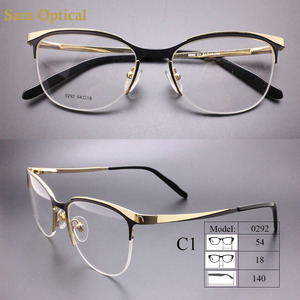
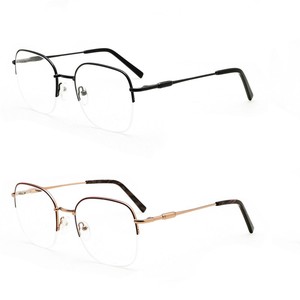
Engineered with surgical-grade sheets, custom spring mechanisms, and ion-plated corrosion resistance, these core models cater to executive, sports, and lifestyle demographics across Switzerland.
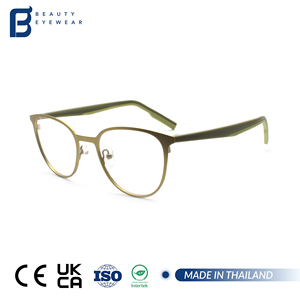
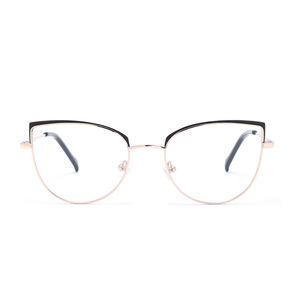
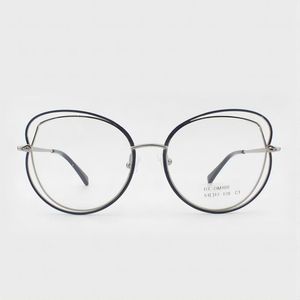
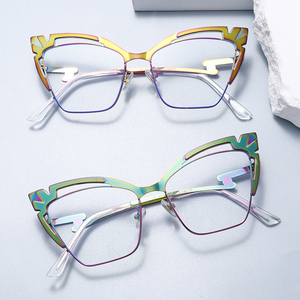
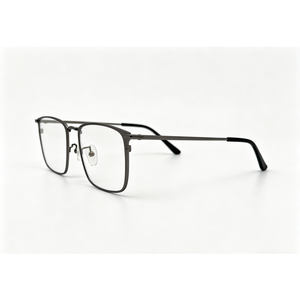
The Swiss optical sector occupies an unparalleled niche within the European eyewear market. Driven by discerning end-consumers across German-, French-, and Italian-speaking cantons—from the financial hubs of Zürich and Geneva to design-conscious centers like Basel and Lausanne—the Swiss consumer does not view optical frames merely as corrective medical devices. Instead, eyeglasses in Switzerland represent an intersection of horological micro-precision, architectural minimalism, and hypoallergenic longevity.
According to optical retail analytics within the DACH region, the average Swiss consumer maintains a high willingness to invest in premium corrective frames, prioritizing materials that withstand temperature fluctuations between humid urban offices and sub-zero Alpine altitudes. Stainless steel, specifically AISI 304L and 316L surgical grades, has emerged as the definitive material of choice for independent Swiss opticians (Augenoptiker) and boutique optical chains. It bridges the aesthetic divide between delicate rimless constructions and structural boldness, while delivering elasticity, corrosion resistance, and total biocompatibility.
For wholesale optical distributors, private label curators, and purchasing consortiums in Switzerland, partnering with a manufacturer capable of delivering horology-inspired tolerances is imperative. Our production infrastructure integrates five decades of optical manufacturing discipline with European aesthetic sensibilities, supplying Swiss partners with stainless steel frames that meet stringent Federal Food Safety and Veterinary Office (FSVO) material contact regulations and European Medical Device Regulations (EU MDR 2017/745).
Not all metal frames are created equal. In lower-tier optical manufacturing, conventional copper-nickel alloys (monel) often pose contact allergy risks and degrade under acidic perspiration. In contrast, our Swiss-market collections utilize cold-rolled austenitic stainless steel alloys engineered to eliminate galvanic corrosion and metal fatigue.
| Material Metric | Commercial Optical Monel | Standard Optical Titanium | Our Surgical Stainless Steel (304L/316L) |
|---|---|---|---|
| Tensile Strength (MPa) | 450 – 550 | 550 – 700 | 850 – 1100 (Work-Hardened) |
| Nickel Release Rate | High (> 0.5 µg/cm²/week) | Zero (Nickel-Free) | Undetectable (< 0.05 µg/cm²/week, EN 1811) |
| Elastic Memory / Springback | Poor (Deforms easily) | Moderate (Rigid or Beta-elastic) | Superior Flexural Retention without Distortion |
| PVD Coating Adhesion | Prone to flaking over 12 months | Excellent | Molecular-Bonded Physical Vapor Deposition |
| Swiss Optical Retail Margins | Low (Perceived budget frame) | Moderate (High wholesale cost base) | Maximum (Premium perception, optimal ROI) |
The manufacturing process begins with precision CNC laser-cutting of cold-worked stainless steel sheets varying from 0.6mm to 0.8mm in thickness. Unlike stamping techniques that cause microscopic edge burrs and mechanical stress concentrations, our multi-axis fiber laser cutting ensures edge perpendicularity within ±0.02mm tolerances. Following profiling, parts undergo five-stage mechanical barrelling with ceramic and walnut-shell media to polish edges to a microscopic radius. This ensures that temples feel silky against the temple skin and cause zero abrasion when adjusted by the dispensing optician.
Surface finishing is executed via Physical Vapor Deposition (PVD) ion plating in high-vacuum chambers. Rather than conventional electroplating which relies on hazardous cyanides and easily tarnishes when exposed to sweat or cosmetic lotions, PVD coatings vaporize titanium nitrides and chrome carbides to form an inert, wear-resistant ceramic molecular layer. This delivers authentic Swiss luxury aesthetics—such as matte graphite, champagne gold, brushed palladium, and deep Genevan ruthenium—that withstand years of daily wear without pitting or discoloration.
How our stainless steel frames cater to the distinct lifestyle demands of Swiss wearers across diverse environments and professions.
In the Swiss corporate and wealth management sectors, eyewear communicates sobriety, intellectual refinement, and attention to detail. Our ultra-thin rectangular and pantos stainless steel sheet frames feature discrete screwless hinge architectures. With muted matte satin finishes and no overt branding, they provide the understated luxury ("Quiet Luxury") favored by Swiss professionals who spend 10+ hours switching between digital screens and high-stakes client consultations.
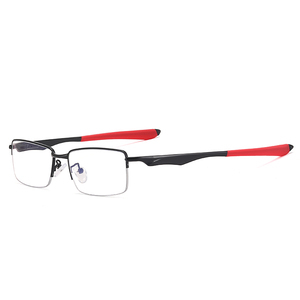
Swiss residents have an active outdoor culture, requiring frames that seamlessly transition from office heating to freezing alpine trails. Austenitic stainless steel retains its ductile toughness without becoming brittle at -20°C, a common failure point for injected polymers. Fitted with prescription polarized or photochromic lenses, our wrap-friendly sports series frames remain firmly anchored to the wearer's face during mountaineering or cross-country skiing, thanks to medical silicone nosepads and co-injected rubber temple sleeves.
Home to world-class art fairs like Art Basel and prestigious design schools like ECAL, the creative segments in Switzerland demand geometric boldness. Our laser-profiled irregular, polygonal, and architectural cat-eye stainless steel frames showcase delicate floating bevels and two-tone ionic masking. They provide progressive independent opticians with eye-catching window showpieces that appeal to architects, gallery curators, and creative directors.
Staying ahead in the Swiss eyewear market requires anticipating regulatory, environmental, and technological shifts. Wholesale buyers must adapt to four transformative market currents:
1. Cradle-to-Cradle Circularity & Environmental Stewardship: Swiss consumers and federal environmental initiatives increasingly demand transparent supply chain metrics. Stainless steel stands as one of the most recyclable industrial alloys on earth. Our manufacturing plant utilizes closed-loop swarf collection and 100% recyclable stainless scrap recycling. For Swiss optical retailers, being able to market a frame with an infinitely recyclable metallic chassis aligns with the stringent Swiss green procurement ethos.
2. The Ascendancy of Screwless Mechanical Hinges: Traditional miniature hinge screws represent the single most common maintenance complaint in Swiss optical workshops (loose screws, stripped threads, lost hardware). In response, our proprietary Screwless Friction and Active Micro-Interlocking Hinges utilize the inherent spring tension of high-tensile sheet metal to lock front and temple assemblies together without a screw. This drastically lowers warranty return rates and in-store servicing overhead for opticians across Switzerland.
3. Integration with High-Index Free-Form Digital Lenses: Switzerland boasts one of Europe's highest adoption rates for customized progressive and free-form digital lenses (such as those from Optiswiss). Our stainless steel eye-wires are engineered with deep, uniform V-groove eyewire profiles and consistent base curve geometries (Base 4 to Base 6). This prevents lens warpage and ensures that precision cylinder axes and prism corrections remain optically true once edged and glazed.
4. Strict Adherence to Swissmedic and European Medical Device Regulations: Eyeglasses frames fall under Class I Medical Devices. Navigating the bilateral relationship between Switzerland and the European Union post-MDR requires flawless batch traceability, unique device identification (UDI) readiness, and documented Technical Files. We provide our Swiss partners with turn-key compliance binders, guaranteeing seamless customs clearance at Swiss border inspection posts.
Clear, direct answers regarding customs, logistics, MOQs, testing documentation, and OEM branding for Swiss optical practices.
Shipments destined for Switzerland are processed under the Federal Office for Customs and Border Security (FOCBS / BAZG). As an experienced international manufacturer, we generate all commercial invoices with exact HS Code classification (e.g., 9003.11 for plastic, 9003.19 for metal/stainless steel optical frames) and provide complete Certificates of Origin. Swiss buyers benefit from standard DDP (Delivered Duty Paid) or DAP air cargo delivery via Zurich (ZRH) or Geneva (GVA) logistics hubs, ensuring smooth processing under the Swiss Value Added Tax (VAT / MWST rate of 8.1%).
Every production batch of stainless steel frames is supported by comprehensive laboratory verification reports from accredited third-party testing bodies. These include: (1) Nickel release testing conforming to EN 1811:2011+A1:2015 verifying less than 0.5 µg/cm²/week; (2) Sweat and corrosion resistance testing per EN ISO 12870:2018; (3) Mechanical endurance testing involving 50,000 continuous hinge cycles; and (4) REACH Annex XVII chemical safety screening confirming the total absence of lead, cadmium, and short-chain chlorinated paraffins.
Yes. We specialize in accommodating the requirements of both large optical buying groups and independent boutique opticians throughout Switzerland. For our ready-engineered stainless steel silhouettes, laser engraving of your boutique or house brand logo on the inner temple, demo lenses, and custom presentation cases begins at accessible batch sizes (starting from 100 to 300 pieces per model across assorted colorways). For bespoke ODM designs engineered entirely from your sketches, our French design studio and Shenzhen production line facilitate end-to-end prototyping.
Our screwless and active hinge designs are specifically developed from the viewpoint of a practicing dispensing optician. The frames feature discreet disassembly notches or precision snap-fit retention collars that allow laboratory technicians to demount temples in seconds without specialized pliers. Furthermore, our stainless steel alloys undergo controlled annealing at the bridge and temple core regions, allowing opticians to make pantoscopic tilt, temple spread, and face-form adjustments easily using standard optical adjusting tools without fear of snap-back or work-hardening fracture.
Sample kits for Swiss evaluation are dispatched via express courier (DHL Express / FedEx) and typically reach Zurich or Geneva within 3 to 5 business days. For catalog OEM orders with custom laser engraving, production lead times average 35 to 45 days. For complete ground-up custom ODM toolings, initial physical 3D prototyping takes 14 days, with tooling validation and first-article golden samples finalized within 30 days followed by mass production.
Our organization is anchored in an authentic optical legacy dating back to 1960, when our founder first mastered the discipline of ophthalmic lens grinding and optical retail management. Over the past six decades, this deep technical knowledge has expanded into an integrated global design and manufacturing matrix comprising:
Located in France, our creative atelier studies European fashion movements, translating subtle contouring, ergonomic temple sweeps, and balanced pantoscopic angles into contemporary optical frames that resonate with Western aesthetics.
Our ISO 9001-certified production facility utilizes high-precision CNC multi-axis milling, automated fiber-laser cutting, dust-free PVD coating cleanrooms, and stringent multi-stage optical quality inspection benches.
Recognized globally with 14 prestigious international awards and 7 elite nominations—including distinctions connected with the iF Design Award, Red Dot Award, and SILMO d'Or—providing Swiss retailers with a proven brand story.
Unlike commercial trading intermediaries, we control every micron of the production journey. From metallurgical spectroscopic analysis of raw stainless steel incoming sheets to final drop-ball impact testing and packaging, we ensure that every frame leaving our cleanroom facilities satisfies the uncompromising standards expected by Swiss consumers and opticians alike.