Entering or expanding within the Japanese eyewear ecosystem requires a paradigm shift from standard global mass production to microscopic quality governance, subtle aesthetic restraint, and anatomical customization. Operating as a distinguished private label sunglasses manufacturer and certified exporter, Urband International leverages an optical lineage established in 1960 through Nanyang Optical in Singapore, amplified by our historic R&D center in Japan (established 2002), our high-concept design studio in France (established 2005), and our vertically managed Shenzhen manufacturing infrastructure.
Japanese optical buyers, departmental merchandisers in Ginza and Shinjuku, and selective boutique chains in Kansai demand strict compliance with JIS T 7333:2018 (transmittance and optical power tolerances) and the Consumer Affairs Agency's Household Goods Quality Labeling Act (家庭用品品質表示法). This whitepaper details our technical capabilities, material sciences (Matsu-grade bio-acetate, medical TR90, Japanese-spec β-titanium), patent-backed hinge mechanics, and our curated 8-model private label sunglass collection optimized for regional distribution.
Precision-engineered prototypes ready for private label customization, laser branding, Asian-fit nose pad modulations, and batch compliance testing.
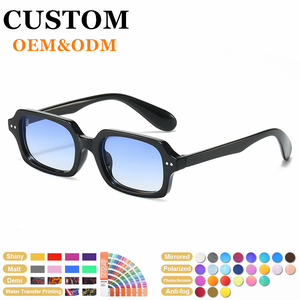
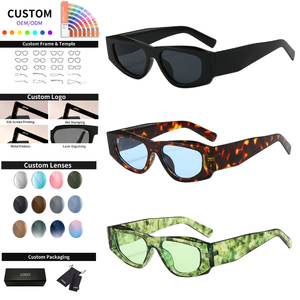
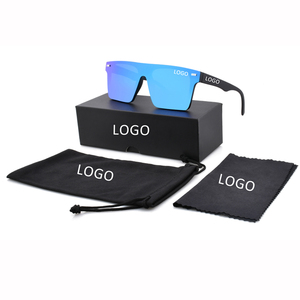
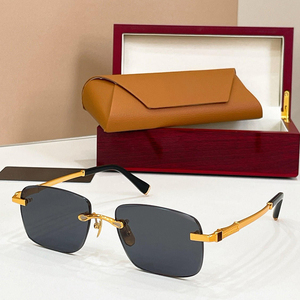
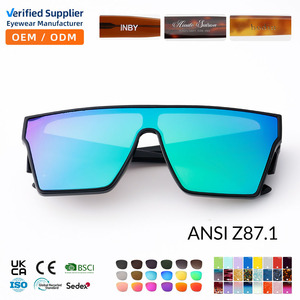
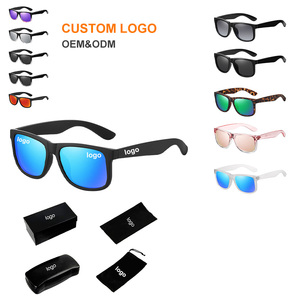
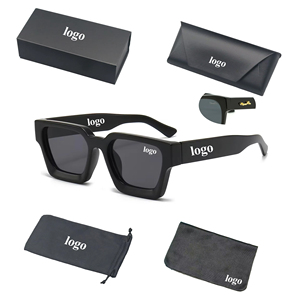
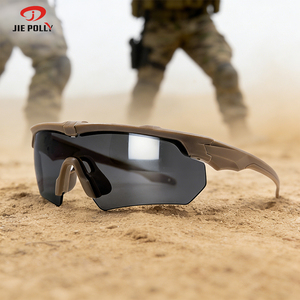
Gain direct access to engineering blueprints, JIS T 7333 verification certificates, complete frame geometries, and MOQ tier structures formulated specifically for Japanese commercial importers.
Sun protection demands in Japan diverge sharply from Western markets: visual clarity, glare-free optical filtration, and delicate anti-fatigue performance take precedence over aggressive dark tints.
In mega-regions like Tokyo, Yokohama, and Osaka, consumers transition repeatedly between outdoor glare, underground subway concourses, and brightly illuminated retail environments. Our private label solutions utilize Category 1 and 2 lighter-tint gradient lenses and fast-activating photochromic coatings that protect against horizontal reflective glare without obscuring eye contact—a critical cultural nuance in Japanese public etiquette.
From the surf breaks of Sagami Bay (Shonan) and Chiba to the sport-fishing sanctuaries of Lake Biwa and Kagoshima, water-surface glare generates severe visual strain. We equip frames with Japanese-standard TAC polarized cores treated with anti-seawater oleophobic/hydrophobic multi-coatings. The rimless and wrap-around TR90 designs resist salt crystallization and prevent frame corrosion along mechanical hinges.
The powder-snow destinations of Niseko (Hokkaido) and Hakuba (Nagano) demand optical gear capable of handling severe sub-zero UV reflection. Our tactical and sports sunglasses feature sealed TR90 chassis, inner anti-fog polycarbonate lenses, and thermal stability from -20°C to +50°C, ensuring frame elasticity doesn't degrade into brittleness on alpine slopes.
Japan boasts over 2,200 prestigious golf facilities, where reading green contours under dappled forest light is paramount. We engineer contrast-boosting amber and rose-tinted polarized optics that isolate green spectrums and eliminate turf haze. Combined with screwless elastic temples, frames remain anchored during full swings without creating pressure points on temporal bones.
Understanding shifting consumer purchasing criteria gives private label brand owners a measurable competitive advantage over standardized, off-the-shelf imports.
Unlike Western markets where dark Category 3 or 4 charcoal lenses dominate, the Japanese market has experienced massive growth in Category 1 and 2 "Pale-Color" lenses (40% to 75% visual luminous transmittance). Japanese end-users prefer sunglasses that allow subtle eye transparency for friendly social interaction, coupled with full UV400 and high-energy visible (HEV) blue-light shielding against screen-induced ocular strain.
Western-fit frames slide down low nasal bridges and cause cheekbone contact when smiling. Japanese buyers require three physiological adaptations: widened pantoscopic tilt (reduced from 12° to 7°), elevated silicone or titanium nose pad arms that sit clear of the malar arch, and tighter temple wrap curves that gently hug the flatter coronal cranial profile.
Eco-conscious Japanese consumers in major urban centers actively seek plant-based cellulose acetates (phthalate-free, bioderived from wood pulp and cotton lint) and non-allergenic, ultra-durable titanium. Urband's engineering bridges this need by providing certified biodegradable frame stock and vacuum ion-plated titanium components with zero nickel release.
Full adherence to Japanese industrial guidelines ensures zero customs detainment at Tokyo (NRT/HND) and Osaka (KIX) entry ports.
| Testing Metric & Standard | Japanese Regulatory Mandate (JIS T 7333 / CAA) | Western Counterpart (EN ISO 12312-1 / ANSI Z80.3) | Urband Manufacturing Quality Assurance |
|---|---|---|---|
| UV Filtration (Wavelength) | Full block up to 380nm required; 400nm standard for premium tier. UV-A and UV-B leakage strictly categorized. | EN ISO requires 280-380nm; UV400 is common commercial benchmark. | 100% UV400 Spectral Cut validated via in-house spectrophotometer on every production batch. |
| Luminous Transmittance (Tv%) | Mandatory classification into Categories (0 to 4). Night-driving requires Tv > 75%. Daytime driving requires Tv > 8%. | Equivalent 5-category scale; standardized driving safety warnings. | Automated photometric testing reports supplied with batch-specific transmittance curve charts. |
| Product Labeling Regulations | Strict Japanese "Household Goods Quality Labeling Act": requires Japanese text, material declaration, lens type, and importer info. | CE / UKCA mark, manufacturer address, category symbol on temple or swing tag. | Customized bilingual Japanese packaging, barcoding, and legal labeling pre-applied at factory origin. |
| Prismatic & Spherical Power | Stringent refractive tolerances to eliminate visual disorientation or dizziness over extended wear. | Standard optical power tolerances (< 0.12 diopter deviation). | Class 1 Zero-Distortion optical molds ensuring zero prismatic divergence across optical fields. |
| Nickel Release (Skin Contact) | JIS B 7285 & Japanese health guidelines for hypoallergenic plating on bridge and temple contacts. | REACH Annex XVII (0.5 μg/cm²/week limit for direct prolonged contact). | PVD vacuum ion-plating and lead-free, nickel-free barrier coats verified via laboratory screening. |
Unlike generic trading houses, Urband International is an optical manufacturing power governed by licensed optical professionals, industrial designers, and material scientists. We eliminate the vulnerabilities common in cross-border procurement.
Our frame concepts are not copies; they represent original industrial design achievements decorated by 14 awards, 6 nominations, and 1 invited recognition across the iF Design Award, Red Dot Design Award, SILMO d'Or, and President's Design Award. Your private label brand launches with an authentic design narrative that commands high retail margins.
Japanese consumers have zero tolerance for loose hinge screws or uneven temple friction. Urband's proprietary Screwless Hinge eliminates conventional threaded hardware entirely, using a calibrated interlock that never loosens. Our Active Hinge provides elastic temple deflection with automatic return memory, delivering a luxurious, vibration-free tactile response.
Coordinated through our Shenzhen engineering office with oversight from Singapore and French creative studios, our manufacturing pipeline undergoes 5-stage mechanical and optical inspection: raw acetate curing checks, CNC tolerance verification (±0.05mm), 72-hour manual polishing inspection, hinge cycle endurance testing (20,000 actuations), and final cleanroom lens assembly.
Direct answers addressing the operational, technical, and regulatory questions most frequently raised by Japanese retail buyers and importers.
Yes. We provide complete technical documentation packages required by Japanese customs and the Consumer Affairs Agency. This includes documented raw material composition (e.g., lens resin type, frame cellulose acetate or titanium grade), luminous transmittance verification curves matching JIS T 7333 categories, UV cut verification reports, and pre-printed Japanese compliance hangtags or temple stamp mockups that list the required Japanese nomenclature, manufacturer ID, and origin markers.
Our Asian-Fit modifications are engineered into our mold designs rather than being superficial afterthoughts. We incorporate: (1) higher, narrower bridge arches (D.B.L. calibrated between 17mm and 20mm depending on eye size), (2) lengthened, contoured acetate pads or multi-axis adjustable titanium pad arms that keep the lower rim elevated above the zygomatic arches (cheekbones), and (3) flattened base curves (4-base to 6-base instead of steep 8-base) paired with adjusted temple curvature to eliminate lateral temple pressure behind the ears.
For private label customization utilizing our pre-tooled and certified chassis (such as the 8 featured models), the MOQ starts at 300 pieces per model (divided into 2-3 colorways, 100-150 pcs per color), with lead times averaging 45 to 60 days including custom logo debossing, laser etching, and tailored packaging. For fully bespoke OEM/ODM frame development from initial CAD engineering sketches, MOQs start at 500 to 1,000 pieces per tool, with an initial rapid prototyping phase of 15 days and mass production completion within 75 to 90 days.
In models like our Somta Rimless Fishing Sunglasses, we utilize advanced vacuum fusion laminating to seal the PVA polarizing film within dual TAC layers, completely protecting the outer edge. The lens edges receive a proprietary sealing lacquer that prevents moisture ingress. Furthermore, the optical surfaces undergo multi-layer hydrophobic and oleophobic anti-static treatments that cause saltwater droplets to bead and slide off without leaving mineral salt residue or etching the anti-reflective rear coating.
Certainly. We maintain dedicated physical sample reserves across all 8 featured sunglasses and our broader optical frame lines (Active, Trend, LEAP, GLOSSI, URBAND PARIS). Importers and procurement heads can request an evaluation kit comprising physical frame samples, lens swatch decks (polarized, photochromic, pale-tints), and full engineering documentation. Simply contact our sourcing coordination desk via the catalog request portal below.
We support all Incoterms 2020 including FOB Shenzhen/Hong Kong, CIF Tokyo/Yokohama/Kobe, and DDP direct to your domestic distribution centers across Japan. Our logistics team works seamlessly with major forwarders (Nippon Express, Yamato Global, DHL) and prepares full customs clearance documentation, Certificate of Origin (Form RCEP/EPA where applicable for duty concessions), packing lists, and commercial invoices to ensure frictionless border entry.
Partner with an optical manufacturer that combines historical Singapore optical expertise, European award-winning design aesthetics, and high-precision Asian-fit engineering. Expand your retail margins across Japan with confidence.
