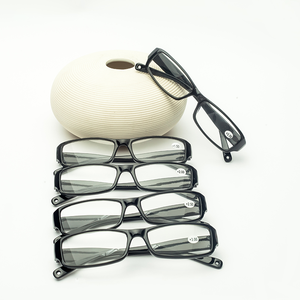
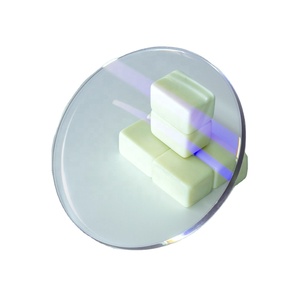
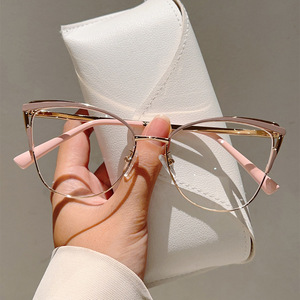
Curated commercial metal and composite frames manufactured to Japanese industrial dimensional standards, featuring anti-blue light, photochromic, and high-performance ergonomics.
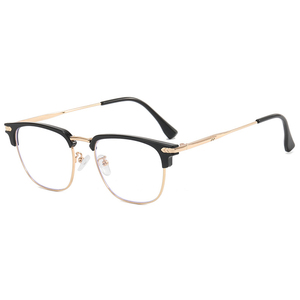
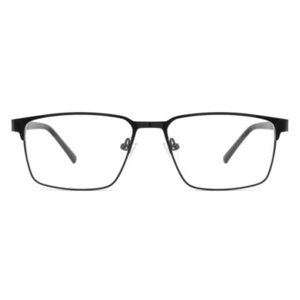
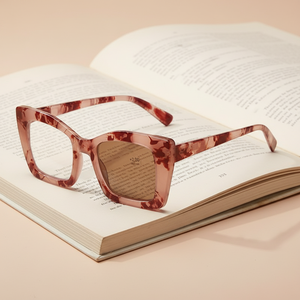
A Comprehensive Industry White Paper on Precision Metal Eyewear Fabrication, High-Modulus Beta-Titanium Metallurgy, and B2B Retail Distribution
The commercial prescription market in Tokyo represents one of the most discerning and operationally demanding optical ecosystems in the world. As commercial opticians and optical chain procurement directors throughout the Minato, Chiyoda, and Shibuya business centers recognize, eyewear frames are no longer judged merely as decorative accessories. In Japan’s densely networked corporate sectors, an optical metal frame functions simultaneously as an essential medical-grade prosthetic, a daily ergonomic companion, and an understated emblem of executive professionalism. Meeting the procurement expectations of Tokyo opticians mandates deep engineering mastery across micro-welding, galvanic electroplating, hypoallergenic metallurgic properties, and strict structural yield strength.
Urband International—operating through a robust international triangle comprising headquarters in Singapore, an avant-garde design studio in France, and a high-precision manufacturing and R&D network intimately connected to Japan’s legacy optical engineering hubs—has positioned itself as the preeminent manufacturing and supply partner for Tokyo’s retail chains and luxury boutiques. Following principles first established when our founder began lens grinding in 1960, we unify state-of-the-art multi-axis CNC cold-forging with traditional hand-finishing techniques.
Analyzing how specific metropolitan environments and physiological requirements dictate metal eyewear design across the Kanto plain.
For professionals spending 10+ hours daily in corporate headquarters under high-intensity LED illumination and dual-monitor environments, frame mass is critical. Urband’s lightweight metal frames, weighing under 8.5 grams without lenses, integrate high-elasticity Beta-titanium temples that eliminate lateral temporal pinch while maintaining uncompromised optical center alignment.
Discerning high-net-worth consumers across Ginza expect micro-detail refinement: classical Windsor rims, hairline filigree engraving across the bridge, and multi-layered ion-plating finishes that resist wear. Our refined metal series blends French aesthetic proportions with Japanese minimalist geometries to command premium retail shelf margins.
Metropolitan transit during peak rush hour subjects eyewear to recurring lateral impacts and compressive forces. Our proprietary Active Hinge and Screwless Hinge architectures absorb sudden torsion through calibrated elastic deflection, protecting solder joints from structural failure and preserving face wrap angles.
Strategic structural adaptations addressing demographic shifts, digital workplace transformations, and high-index lens physics.
With myopia prevalence exceeding 75% among urban Japanese adults, high-negative optical prescriptions (-5.00D to -9.00D) remain pervasive. Standard wire frames expose unattractive lens bevel edges. Urband engineers stepped metal eye-rims with customized depths (2.8 mm to 3.4 mm) using CNC edge tapering to aesthetically mask lens thickness without increasing assembly weight.
Tokyo’s demographic transition toward an active senior populace accelerates demand for progressive multi-focal designs. Our COUPLE metal series features specialized pantoscopic tilt angles (8° to 10°) and widened B-measurements (minimum 33 mm vertical height), ensuring optimal progression corridors for reading ease alongside seamless peripheral distance clarity.
Modern corporate workspaces demand versatility. We combine aircraft-grade stainless steel cores and ultralight TR90/acetate eyewires. This architecture accommodates blue-light blocking monomers such as 1.61 MR-8 Japan grade material without frame deformation under sustained daily office handling.
Why Tier-1 optical distributors, department store chains, and independent opticians establish manufacturing supply partnerships with Urband International.
Our original portfolio—spanning EYELET, GLOSSI, URBAND PARIS, and COUPLE—has earned 14 international design awards, 6 nominations, and 1 invited recognition since 2006. Our honors connect directly to the iF Design Award, Red Dot Award, and SILMO d'Or, offering Japanese optical stockists a validated, prestigious design narrative.
Say goodbye to micro-screws that back out from constant temple folding. Urband manufactures Screwless Hinge joints utilizing friction-locked mechanical interlocking channels, alongside Active Hinge assemblies that provide engineered spring deflection and consistent mechanical return throughout tens of thousands of cycles.
We operate an integrated supply chain maintaining rigorous test documentation. Every production batch of metal frames is supported by nickel-release compliance records under EN 16128, structural bridge endurance reports compliant with ISO 12870, REACH chemical screenings, and CE medical classifications.
A rigorous engineering reference detailing alloy characteristics, fabrication nuances, and performance benchmarks for prescription metal frames.
Selecting the proper metal alloy directly determines frame adjustment latitude at the dispensary bench, long-term fatigue life, and wearer satisfaction. The following engineering matrix provides clear procurement metrics for commercial purchasing directors:
In Japanese retail environments, JIS B 7285 compliance (the definitive standard governing ophthalmic spectacle frames) mandates that any metallic component contacting skin release less than 0.5 μg/cm²/week of nickel. Urband enforces strict closed-furnace, vacuum-assisted titanium diffusion bonding and multiple micron-thick Physical Vapor Deposition (PVD) ion-plating. This production discipline guarantees that gold, gunmetal, ruthenium, and matte black finishes resist persistent perspiration and urban atmospheric oxidation across Tokyo summers.
Addressing the technical, operational, and supply chain questions most frequently raised by Japanese retail chains and opticians.
All Urband metal optical frames supplied to Tokyo and the wider East Asian market are manufactured with dedicated Asian Fit ergonomics. This includes increased nose pad splay angles (32° to 38°), prolonged s-shaped pad arms (goosenecks) allowing refined vertical and depth positioning over shallow nasal bridges, reduced pantoscopic frame tilt (under 8°) to prevent lower eye-wire cheek contact, and gently bowed temples that accommodate wider temple-to-temple head diameters without causing head pressure points.
Our metal frames undergo multi-stage ultrasonic degreasing followed by high-vacuum Physical Vapor Deposition (PVD) ion plating and electrochemical passivation. This structure provides a hardened barrier that exceeds 48-hour synthetic sweat immersion testing and rigorous 24-hour salt spray exposure tests without showing delamination, micro-bubbling, or discoloration.
Yes. Many models in our metal series feature engineered rim profiles with deepened groove channels designed specifically to retain high-index lenses (such as 1.60, 1.67, and 1.74 MR-series substrates). Our cold-formed eyewires maintain dimensional stability during lens edging and insertion, resisting rim expansion and lens slippage during dispensary bench mounting.
For existing catalogue collections (including EYELET, GLOSSI, URBAND PARIS, and COUPLE), wholesale minimums start at low, flexible quantities across mixed colorways to support targeted retail merchandising. Bulk wholesale dispatch from our regional supply centers typically delivers to Tokyo within 5 to 9 business days via express air logistics. For bespoke OEM/ODM custom metal production runs, tooling and sample approval generally require 30 to 45 days, followed by 60 to 75 days for full-scale assembly and finishing.
Yes. Urband International provides complete technical documentation files. Every metal optical frame batch can be paired with material composition certificates, nickel release testing data according to EN 16128, bridge fatigue resistance documentation, and CE declarations of conformity conforming with EU Regulation 2017/745 (MDR) Class I ophthalmic equipment.
Connect with our technical optical sales engineering team. Receive detailed material white papers, complete catalogue lookbooks, wholesale pricing matrices, or request physical frame evaluation samples.
Inquire Now