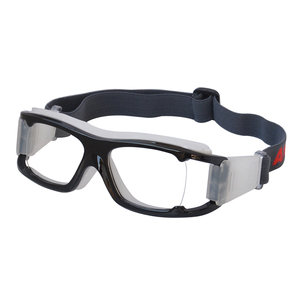
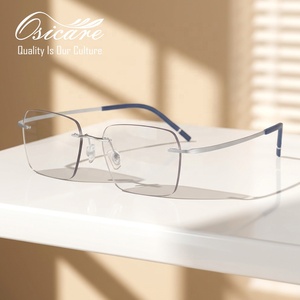
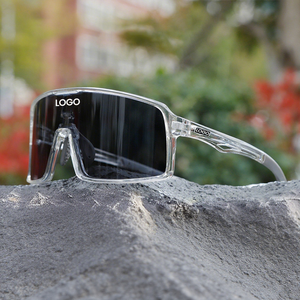
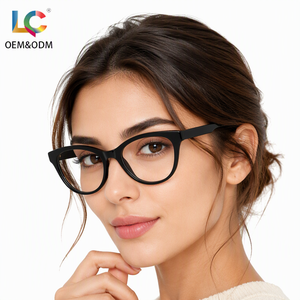
Explore our precision-manufactured optical frames, performance sports goggles, and high-elasticity children’s eyewear tailored for demanding optical clinics, chains, and distributors across South Korea.
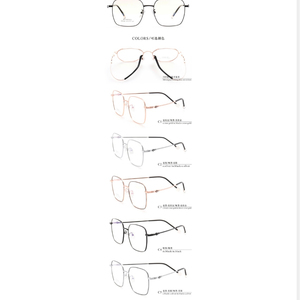
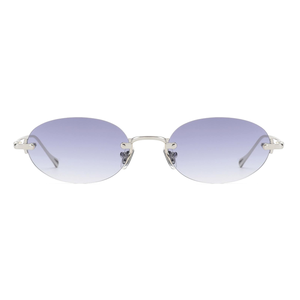

An analytical overview of pediatric myopia progression, regulatory hurdles under the Special Act on Safety of Products for Children, and shifts in consumer purchasing behavior across Seoul, Busan, and Daegu.
The South Korean ophthalmic landscape presents a distinct operational environment for retail optical conglomerates, pediatric ophthalmology clinics, and private-label eyewear distributors. According to clinical epidemiological surveys, South Korea records among the highest urban myopia prevalence rates globally, exceeding 78% to 85% among primary and secondary school demographics in metropolitan areas like Seoul and Gyeonggi-do. Unlike standard juvenile fashion eyewear markets, Korean optometric procurement demands specialized frames capable of stabilizing medical refractive interventions—specifically Defocus Incorporated Multiple Segments (D.I.M.S.) lenses, peripheral defocus orthokeratology backup spectacles, and high-index aspheric corrections.
In response to these strict clinical parameters, conventional metal and rigid acetate frames have proven inadequate for early childhood intervention. The standard infant and primary school cohort (ages 2 to 12) requires impact-dissipating, skin-inert substrates that eliminate facial trauma risks during athletic routines while maintaining precise optical axis centering. Our manufacturing ecosystem integrates LSR (Liquid Silicone Rubber) injection overmolding and co-polymer architectures to supply Tier-1 Korean eyewear brands with frames that pass the stringent Korea Certification (KC) Child Safety Confirmation standards without compromising on ergonomic weight ratios.
A technical evaluation of structural elasticity, bio-compatibility, and mechanical retention designed to eliminate nasal indentations and temple fatigue.
Optical performance hinges upon dimensional stability. When active children experience drops, torsional twisting, or lateral impacts during school activities, conventional thermoplastic elastomers (TPE) or budget PVC often deform irreversibly or crack at standard hinge joints. Our specialized production lines utilize platinum-catalyzed liquid silicone rubber (LSR) co-molded over high-tensile EMS Grilamid TR90 or Beta-Memory Titanium cores.
| Material Engineering Parameter | Medical-Grade Liquid Silicone (LSR) | Standard TPE / Extruded Rubber | Rigid Cellulose Acetate |
|---|---|---|---|
| Biocompatibility / Cytotoxicity | ISO 10993 & KC Child Product Class Safe | Variable; prone to plasticizer leaching | Requires skin contact testing; plasticizers present |
| Thermal Stability Range | -45°C to +180°C (Resists Korean Sub-zero Winters) | -10°C to +60°C (Hardens in cold climate) | Deforms above 55°C; brittle in sub-zero temps |
| Torsional Elastic Recovery | 99.4% post 180° bidirectional twist | 82.1% (progressive plastic deformation) | Brittle fracture risk at hinge lugs |
| Nasal Bridge Pressure Distribution | Dynamic conforming silicone micro-cushioning | Static point-load friction; pressure sores | Rigid pads requiring continuous manual optometric alignment |
| Chemical / Sebum Resistance | Hydrophobic; completely sweat- & sebum-proof | Degrades, yellows, and becomes tacky over time | Absorbs skin oils, surface dulls over 6-12 months |
Addressing the anatomical root causes of frame slippage, vertex distance shifting, and eyelash contact among Korean children.
Western standard frames typically feature an 8° to 12° pantoscopic angle, causing the lower rim to dig into the prominent zygomatic arch (cheekbones) of Korean children. Our localized tooling calibrates optical frame tilts precisely between 4° and 6°, preventing facial contact during laughter or speech while maintaining the prescribed visual center.
Korean toddlers and school-age youths possess developing, wider nasal crests with low bridge projection. We engineer enlarged silicone saddle bridges and micro-stepped, interchangeable nose pads. This expands load dispersion across 240% more surface area, eliminating downward sliding without pinching tender nasal cartilage.
East Asian cranial structures predominantly exhibit brachycephalic morphology (wider transverse diameter). Conventional straight temples pinch the temporal bones, causing chronic headaches. Our ergonomic silicone temple tips feature calibrated wrap-around curves and soft retention straps that grip the occipital bone smoothly without pressure points.
How our silicone structural designs perform across rigorous school regimes, competitive sports, and harsh climatic changes.
Korean primary school students frequently spend extended hours in after-school study academies (Hagwons), alternating between digital learning tablets and whiteboards. If a frame slips down just 3mm, the optical center shifts, aggravating eye strain. Our slip-resistant silicone nose interfaces maintain an exact 12mm vertex distance, securing the intended focal power through hours of downward posture.
Over 70% of Korean youths participate in martial arts (Taekwondo) or school sports where traditional screw hinges present severe facial laceration risks upon impact. Utilizing our proprietary screwless interlocking systems and soft-lock flexible temples, impacts flex harmlessly without structural snapping, eliminating loose metal components or hinge hardware breakage.
South Korea experiences intense seasonal weather shifts, from dry -15°C winter winds to 35°C humid summers. Inferior plastics become brittle and snap during Seoul's winter or soften and lose lens-holding tension during July monsoons. Our platinum-cured silicone composites preserve their elastic modulus across both temperature extremes.
Emerging design trajectories driving high-margin growth across the Korean optical retail sector.
Advanced therapeutic myopia-control lenses require exact retention within the lens groove. Our CNC tooling creates deeper, high-precision lens bevels that prevent thick high-minus peripheral edges from flexing the front frame or altering treatment zones.
South Korean parents increasingly reject tiny screw hinges that loosen, rust, or scratch toddlers' skin. Market demand is shifting decisively toward monolithic screwless hinge joints and nylon-string lock mechanisms that withstand extreme bending and self-align upon release.
Bright, loud neon frames are steadily losing market share in Gangnam and Bundang boutiques. Current consumer preference favors matte gradients, soft milky pastels, translucent sage, beige, and blush tones that complement skin tones while retaining high pediatric durability.
Over 60 years of optical heritage, European styling, and Shenzhen production precision under a single reliable partnership.
Backed by 21 international design recognitions since 2006—including the prestigious iF Design Award, Red Dot Design Award, SILMO d'Or, and President's Design Award. We bring proven aesthetic credibility that elevates retail positioning across Korean department stores and flagship optical chains.
Rooted in optical mastery since 1960 when our founder co-established Nanyang Optical in Singapore. We understand lens grinding, edger fitting tolerances, and visual axis alignment from the perspective of optometrists—ensuring frames fit prescription lab workflows seamlessly.
Headquartered in Singapore for corporate governance and trade finance, supported by a creative design studio in France and advanced manufacturing facilities in Shenzhen. This structure gives our Korean clients rapid R&D turnaround, low-latency sampling, and swift shipping routes to Incheon.
We supply comprehensive batch-specific documentation: raw material chemical assay certificates, REACH screening reports, ISO 10993 cytotoxicity testing, and EN ISO 12312-1 sunglasses compliance data to support your Korean KC Certification submissions smoothly.
Proprietary mechanisms such as our nylon-string soft-lock temple connections (proven in the EYELET pediatric series) provide controlled lateral flexibility that protects active children from breakage while setting your private-label assortment apart from standard OEM commodity lines.
Whether you require ready-to-ship wholesale stock from our five original brands or custom tooling tailored to your bespoke Asian fit dimensions, our engineering team manages CNC steel molding, pad-printing, custom color formulation, and branded case packaging under strict confidentiality.
Essential technical, regulatory, and logistics details for optical wholesalers, retail chains, and ophthalmic suppliers.
Children's eyewear imported into South Korea falls under the Special Act on Safety of Products for Children (Safety Confirmation Annex). This standard imposes stringent limits on hazardous substances (such as lead, cadmium, phthalate plasticizers below 0.1%, and nickel release on metallic components). We provide full chemical trace documentation for our virgin LSR silicone and TR90 pellets, backed by third-party testing from accredited labs (SGS/TÜV), allowing Korean importers to register products through KATRI or KCL without chemical non-compliance delays.
Yes. While our standard catalog incorporates an East Asian ergonomic base (reduced pantoscopic tilt, low-bridge saddle contours, shorter temple lengths), our OEM/ODM tooling lines allow custom adjustments to eye size (A-measurement), bridge width (DBL), and pantoscopic angle. We can run custom injection molds with an average tooling turnaround of 30 to 45 days.
For existing factory models with custom laser engraving, tampo-printing, or bespoke colorways, our typical MOQ starts at 300 to 500 units across 2 to 3 color variants. For full bespoke mold design and proprietary hinge tooling, the entry volume is generally 1,200 units per model, supported by initial rapid SLA 3D prototype evaluations.
Orders ready to ship from our standard inventory dispatch within 48 to 72 hours. Custom production batches typically take 35 to 45 working days depending on surface finishing. Air cargo from Shenzhen (SZX) or Hong Kong (HKG) arrives at Incheon International Airport (ICN) within 24 to 48 hours. Consolidated sea freight to Busan Port typically clears in 4 to 6 business days.
Pediatric myopia cases in Korea often require high-minus lenses (-4.00D to -9.00D), which are thicker at the periphery and can flex flexible frames. To solve this, our frames integrate a rigid TR90 or high-modulus polymer chassis inside the lens rim, overmolded with soft silicone on the outer and nasal interfaces. This preserves rim rigidity and lens groove integrity, ensuring defocus lenses remain securely seated at the precise corrective optical center.
Yes, we provide curated evaluation kits for established optical retail chains, ophthalmology clinics, and authorized distributors. These sets include assorted bridge widths, screwless hinge structures, and standard Korean color series, complete with material compliance certificates. Request a customized sample kit via our direct B2B channel below.
Connect directly with our engineering and procurement team for confidential OEM/ODM consultations, technical specifications, and factory-direct volume pricing tailored to your brand.