
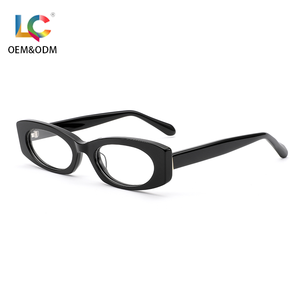
Explore our export-ready, structurally balanced product portfolio built with aerospace-grade composite technologies, biocompatible acetate, and flexible TR90 systems.
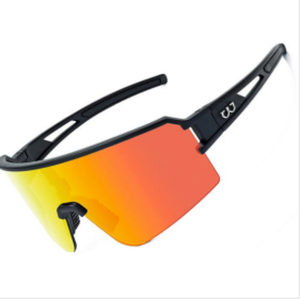
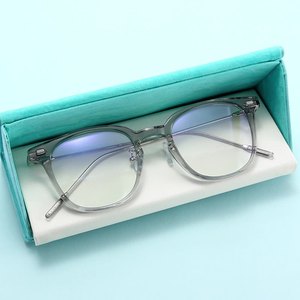
The global eyewear landscape is undergoing a structural paradigm shift. Optical retailers and enterprise brand distributors are actively transitioning from legacy heavy metallic alloys and monolithic cellulose acetate toward advanced carbon fiber reinforced polymers (CFRP), multi-layered carbon weaves, and ultra-resilient hybrid composites. Originally perfected in aerospace and Formula 1 monocoques, carbon fiber introduces a remarkable strength-to-weight ratio to premium eyewear, yielding frames that weigh under 12 grams while delivering ten times the tensile resistance of conventional structural plastic.
True carbon fiber eyewear manufacturing is not simply a decorative vinyl overlay; it is a meticulous thermo-compression and multi-axis CNC milling procedure. Carbon fiber sheets—ranging from 3K twill to unidirectional pre-impregnated (prepreg) carbon matrices—are layered with precision thermoset epoxy resins under pressurized autoclave conditions. The resulting anisotropic laminate allows factory technicians to orient torsional stiffness along the eyeglass browline while preserving localized elastic compliance in the temples for customized optometric fitting. When paired with high-grade Japanese beta-titanium or skin-safe biocompatible TR90 and Mazzucchelli acetate, carbon fiber eyewear represents the ultimate intersection of functional luxury and durability.
| Structural Substrate | Tensile Strength (MPa) | Specific Density (g/cm³) | Flexural Recovery | B2B Assortment Allocation |
|---|---|---|---|---|
| Prepreg Multilayer Carbon Fiber | 1,500 – 2,200 | 1.55 – 1.65 | Exceptional (Zero Permanent Set) | High-end Flagship, Precision Luxury Optical |
| Aerospace Beta-Titanium (Ti-β) | 850 – 1,150 | 4.45 – 4.50 | High Elastic Memory | Ultralight Minimalist Rimless & Windsor |
| Engineered TR90 / Grilamid | 65 – 85 | 1.00 – 1.05 | High Dynamic Ductility | Pediatric, Floating Sports, Rx Sunglasses |
| Cellulose Acetate (Block Cut) | 45 – 75 | 1.28 – 1.32 | Thermal Remoldable Only | Fashion Colorway Displays & Thick Profiles |
Strategic purchasing managers must navigate changing retail demographics, circular material directives, and hybrid optical hardware architectures.
B2B buyers are moving away from fragmented vendor bases. Instead of commissioning separate manufacturers for children's TR90, fashion acetate, and carbon-titanium styles, purchasing departments now favor integrated partners offering unified quality control, synchronized batch delivery, and standardized testing regimens under one Master Service Agreement.
Monolithic frames are giving way to advanced multi-material composites. Modern high-margin frames feature a 100% genuine carbon fiber front rim coupled with high-ductility internal nylon locks and beta-titanium temple inserts, solving the historical optical challenge of cold-glazing prescription lenses without cracking brittle outer resins.
Screw-backed barrel hinges account for over 68% of post-sale optometric warranty adjustments. Retailers prioritize screwless friction hinges, intermeshing cam locks, and flexible silicone-string systems that withstand 20,000+ continuous flex cycles without looseneing or mechanical drift.
From automated dry-fiber placement to bio-based epoxy resins, technical evolution is redefining the cost structure and functional boundaries of export-grade eyewear.
Modern carbon eyewear factories leverage diamond-tipped multi-axis CNC machines working inside liquid-cooled chambers. This suppresses airborne particulate hazards while achieving tolerance windows within ±0.03mm, ensuring rim grooves seat high-index progressive lenses without localized birefringence or stress warping.
Inspired by performance suspension systems, active hinge developments incorporate hidden spring-steel and shape-memory alloys within the carbon fiber temple envelope. These assemblies yield beyond 90 degrees outward deflection under blunt impact, dissipating force and auto-returning to the wearer's calibrated facial alignment.
With strict EU Green Deal and ESG mandates affecting corporate optical procurement, top-tier exporters are deploying reclaimed aerospace carbon composites mixed with 42% plant-derived bio-resins, reducing lifecycle embodied carbon without degrading surface tensile strength or chemical stability.
Decades of proprietary optometric craftsmanship, design prestige, and tightly controlled cross-border manufacturing assets.
Founded on lens-grinding precision dating back to Singapore optical workshops and the co-establishment of Nanyang Optical. We engineer frames from the optician’s viewpoint: prioritizing accurate lens seating, ocular axis stability, and pantoscopic tilt.
Our original portfolio—encompassing EYELET, GLOSSI, URBAND PARIS, and COUPLE—has garnered 14 prestigious awards, 6 nominations, and special recognitions across iF Design, Red Dot, SILMO d'Or, and the President's Design Award.
Proprietary architectural temple mechanics engineered for long-term tension retention. Our soft-lock and screwless connection systems minimize consumer breakage and optimize service turnaround at the optometric dispensing bench.
Registered enterprise headquarters in Singapore, an avant-garde creative studio in Douvres-la-Délivrande (France), and specialized engineering/QA facilities in Shenzhen, China, ensuring smooth logistics, clear compliance, and responsive service.
We do not issue vague, generic assertions. Every production run is backed by model-specific test records: complete CE Declaration of Conformity, EN ISO 12312-1 certification for sun categories, REACH chemical screening, and mechanical cycle stress data.
Access diverse demographics under one umbrella account: pediatric flexibility (EYELET), female fashion-forward silhouettes (GLOSSI), active lifestyle sports (URBAND PARIS), and precision reading optics (COUPLE).
Essential technical, regulatory, and operational considerations when sourcing composite and performance eyewear collections.
Unlike flexible acetate, pure carbon fiber will not stretch under hot-air blowers. Our engineering incorporates cold-glaze lens bevel designs or discreet hidden step-bevel metal eyewires. This allows bench opticians to edge and mount 1.60, 1.67, and 1.74 high-index lenses seamlessly without flaking frame edges or generating lens aberrations.
Shipments include batch-matched CE technical dossiers, REACH compliance documentation for nickel release and phthalates, and EN ISO 12312-1 optical performance data for sunglass filters. Detailed mechanical stress reports (covering 20,000 temple flex cycles and bridge deformation tolerances) are made available before container dispatch.
Carbon fiber exhibits rigid shape memory, which makes direct bending problematic. To resolve this, our designs utilize co-molded beta-titanium or stainless steel wire cores embedded within the temple tips. This allows dispensing opticians to adjust the mastoid bend and ear contour without requiring heat on the composite body.
Yes. As a global supply chain coordinator, Urband International supports consolidated container fulfillment. Clients can combine carbon composite sports frames, flexible children's TR90 models, and fashion acetate series within a unified commercial invoice, minimizing import overhead and inventory liability.
Hydro-dipped or water-transfer frames are standard plastic (like PC or basic TR90) printed with an aesthetic mesh pattern. True carbon fiber frames use woven or unidirectional carbon filaments compressed under heat with structural epoxy resins. True carbon frames are significantly lighter, conduct heat faster, and never peel or yellow over time.
For bespoke OEM designs, 3D prototypes and optical ray-tracing verification typically take 14 to 21 days. Rapid tooling and CNC jig preparation require roughly 30 days. Full-scale production of autoclave-molded or precision-milled carbon frames runs between 60 and 75 days, complete with complete surface finishing, pad printing, and lab inspections.
Connect directly with our international engineering and wholesale distribution team in Singapore, France, or Shenzhen. Request full OEM/ODM catalogs, raw material sample swatches, or schedule a technical project review.
Get a Quote