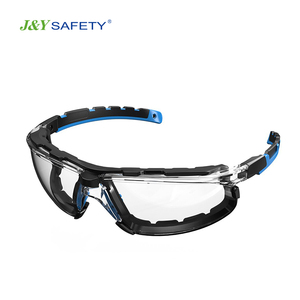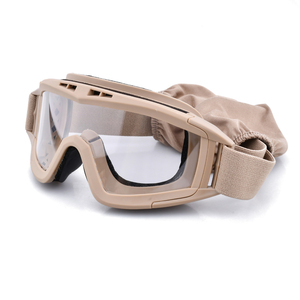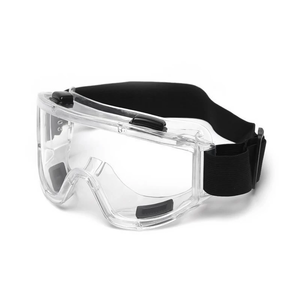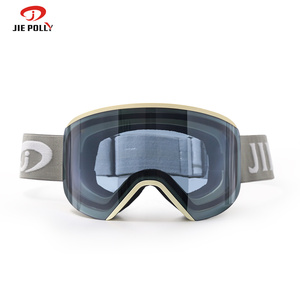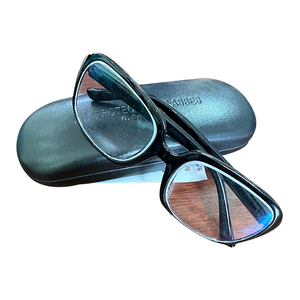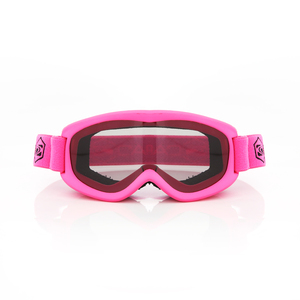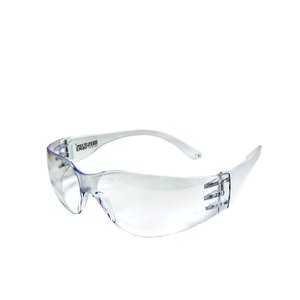
UV Resistant Anti Scratch Anti Fog Glasses Industrial ANSI Z87.1 Safety Glasses
- Impact Rating:High Velocity Z87+
- Lens Material:Optical-Grade 2.2mm PC
- Coating:Permanent Dip Anti-Fog
- UV Attenuation:99.9% UVA/UVB (UV400)
Precision-manufactured across cleanroom assembly lines with dual-side anti-fog flow coating, optical-grade virgin polycarbonate, and strict conformity to ANSI Z87.1-2020, EN166:2001, and radiation safety standards.
By synchronizing European ergonomics, Japanese tooling precision, and cleanroom volume production in Shenzhen, our manufacturing framework delivers verifiable compliance and engineering rigor across every OEM/ODM batch.
Combining Singapore executive governance (tracing back to retail optical foundations in 1960), our European design studio in Douvres-la-Délivrande, France, and high-precision tooling facilities in Shenzhen, China. This closed loop eliminates supply friction for multinational safety brand distributors.
Leveraging proprietary Screwless Hinge and Active Hinge architectures proven across 21 international awards (iF Design, Red Dot, SILMO d'Or). These mechanical systems eliminate loose hardware failures in high-vibration mining, forestry, and heavy industrial environments.
Rather than relying on generic certificates, our quality protocols issue batch-traceable test reports for each delivery. Testing encompasses continuous prismatic deviation, haze indices, drop-ball impact velocity, and EN 168 climatic fog resistance under accelerated conditioning.
Understanding the engineering boundaries between virgin optical polycarbonate, chemical-resistant polymers, and specialized heavy metallic attenuation substrates for professional B2B procurement specifications.
| Polymer / Substrate | Impact Kinetic Energy | Refractive Index | Abbe Value | Anti-Fog Integration | Primary Application Vector |
|---|---|---|---|---|---|
| Virgin Optical Polycarbonate (PC) | High Velocity (> 150 ft/s steel ball) | 1.586 | 30 | Thermal Cured Dip Coating | Heavy Construction & Machining |
| Grilamid TR90 Polyamide | Flexural Memory / High Elasticity | 1.530 | 40 | Plasma Functionalized Surface | Tactical & Sports Safety Frames |
| Thermoplastic Polyurethane (TPU) | Cryogenic Ductility (-40°C) | 1.510 | 45 | Dual-Pane Hydrophilic Flow | Sub-Zero Ski & Mining Goggles |
| Corning High-Refractive Lead Glass | Low Mechanical / High Density Attenuation | 1.800 | 28 | Multi-Layer Antireflective Oxide | Diagnostic Radiography & Cath Labs |
| Medical Grade Soft Elastomeric PVC | Viscoelastic Chemical Resistance | N/A (Chassis) | N/A | Direct Substrate Co-Molding | Chemical Splash (D3/D4) Goggles |
Data-driven forecasts for enterprise procurement officers, environmental health & safety (EHS) directors, and global safety equipment wholesalers navigating regulatory updates and technical shifts.
Stringent corporate ESG targets and European Union Ecodesign Regulations are driving the shift toward certified mass-balanced bio-based polyamides and recycled polycarbonate (rPC) without compromising Class 1 impact thresholds.
Disposable detergent sprays are obsolete. Procurement contracts now demand plasma-bonded crosslinked hydrophilic polymers capable of surviving 100+ industrial wash cycles while meeting EN 168 Clause 16 standards for fog suppression.
Enterprise buyers are consolidating SKUs by specifying dual- and triple-stamped protective frames that simultaneously satisfy North American ANSI Z87.1-2020, European CE EN166, and Australian AS/NZS 1337.1 requirements.
With an aging technical workforce and higher prevalence of corrective vision needs, safety glasses with toolless prescription clip-in carriers and digitally surfaced direct safety Rx lenses represent the fastest-growing market sector.
Our systematic manufacturing pipeline converts your industrial specifications into verified, market-ready PPE eyewear.
Parametric industrial design, headform cranial contouring, mold-flow injection simulation, and optical focal mapping.
High-polish NAK80 or S136 stainless steel multi-cavity injection molds engineered for optical zero-distortion yields.
Automated dip- and flow-coating of thermal-cured polysiloxane anti-scratch and permanent hydrophilic anti-fog chemistries.
Lot-by-lot steel ball high-velocity impact verification, spectrophotometer UV testing, and optical prism power evaluation.
Custom packaging, laser branding, technical file compilation, and streamlined international customs delivery.
Technical clarity on compliance documentation, tooling cycles, optical classes, and custom private-label manufacturing.
EN166 defines three optical classes based on spherical, astigmatic, and prismatic refractive power deviations. Class 1 is the highest optical grade, permitting continuous full-shift wearing without causing eyestrain, headaches, or optical distortion. Our virgin polycarbonate lenses undergo computerized interferometric lens analysis to guarantee zero prismatic distortion across the 180-degree visual arc.
Topical sprays apply temporary surfactant layers that dissolve upon contact with water or sweat. In contrast, our factory-applied anti-fog uses thermal dip-coating in Class 10,000 cleanrooms. The hydrophilic polymer bonds covalently to the polycarbonate matrix, absorbing micro-moisture droplets and spreading them into an invisible optical film even under abrupt temperature transitions from -20°C to +50°C.
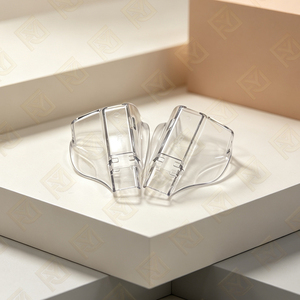
Diagnostic imaging eyewear is certified according to IEC 61331-3:2014 and DIN 6845-1. Standard shielding values are 0.50mm Pb and 0.75mm Pb at 80 to 110 kVp tube potentials. Our X-ray eyewear incorporates high-density Corning Med-X optical glass infused with over 65% lead oxide (PbO), combined with leaded acrylic lateral side shields to mitigate secondary scatter radiation.
Rapid CNC-machined functional prototypes or 3D optical resin masters are typically produced within 5 business days. Hardened steel production tooling (S136 mirror polish, 45-52 HRC) requires 25 to 35 calendar days. Standard production MOQs start at 1,200 units per frame colorway for custom-tooled eyewear, while in-stock catalog configurations are available with an MOQ of 300 units.
All virgin polymers, pigments, plasticizers, and metallic hinge parts are screened via GC-MS and ICP-OES spectrometry at certified testing facilities (such as SGS or TÜV Rheinland). We ensure complete absence of polycyclic aromatic hydrocarbons (PAHs), heavy metals (cadmium, lead, hexavalent chromium), phthalates, and nickel release in compliance with EN 12472 and EN 16128.
Yes. Urband International's consolidated supply chain allows B2B procurement partners to pool orders across children's flexible frames (EYELET), fashion optics (GLOSSI), tactical/sports safety eyewear (URBAND PARIS, RX Sport), and industrial personal protective equipment under a unified commercial invoice, minimizing customs overhead and freight logistics.
Connect with our technical engineering group to request physical sample sets, comprehensive test dossier packages, CAD files, or custom quotation matrices for container-level B2B supply.