
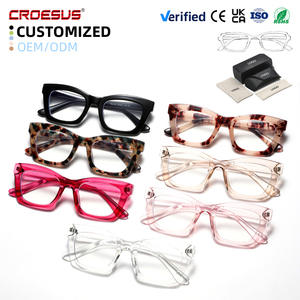
Fashion Cheap Women TR90 Acetate Cat Eye Eyeglasses Frames Anti Blue Light Gamer Glasses
View Technical Specs →
Get a Quote
Engineered for high-throughput brand portfolios, independent retail lines, and clinical dispensary compliance.
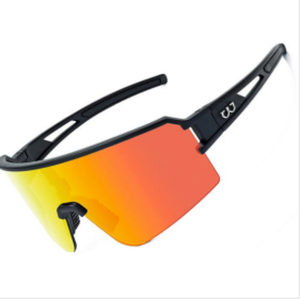
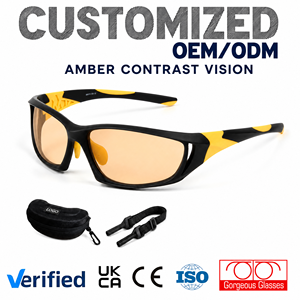
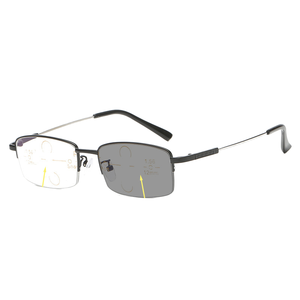
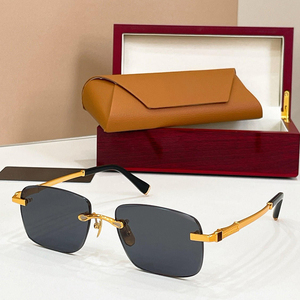
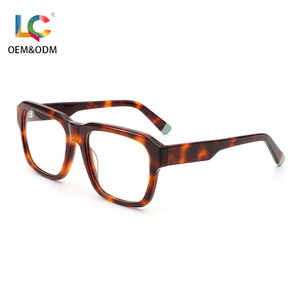
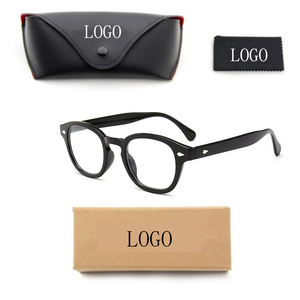
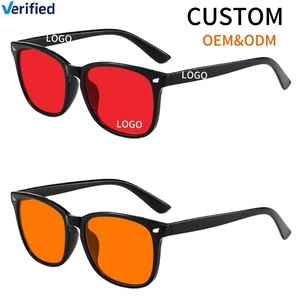
A deep dive into metallurgical tolerances, stress-distribution mechanics, and surface passivation.
In high-end optical manufacturing, performance begins at the atomic lattice. Our OEM/ODM metal eyewear operations categorize metallic structural alloys into three critical tiers: Commercial Pure Titanium (Grade 2 & Grade 4), Beta-Titanium (Ti-15V-3Cr-3Sn-3Al), and high-tensile austenitic stainless steel alloys (AISI 304L/316L). Beta-titanium yields an exceptional modulus of elasticity (approx. 100–110 GPa) alongside an ultra-high yield strength exceeding 900 MPa. This allows bridge sections and flexible temple cores to undergo dynamic cyclic flexing without plastic deformation or metal fatigue.
For complex structural fronts requiring localized micro-welding and high structural rigidity, Grade 4 CP Titanium delivers an uncompromising density-to-weight ratio (4.51 g/cm³), cutting overall frame payload down by 45% compared to conventional copper-nickel nickel-silver alloys. Furthermore, full galvanic passivation processes and medical-grade nickel-free compositions ensure comprehensive compliance with EU REACH (Regulation (EC) No 1907/2006) and ISO 12870 dermatological standards for zero cytotoxic elution.
A common point of mechanical failure in wholesale optical hardware is the hinge barrel assembly. As an authoritative manufacturer backed by 21 international design recognitions—including honors tied to the iF Design Award, Red Dot Design Award, and SILMO d'Or—Urband engineering mitigates screw-stripping, temple loosening, and thread shearing through proprietary hinge architectures:
Eliminates friction-threaded components completely. Utilizes micro-tooled interlocking sheet tabs and resilient retention clips, ensuring zero screw backup over 50,000+ continuous flex cycles.
Engineered with micro-leaf spring guides that dampen over-extension. Distributes lateral temporal forces back along the temple arm, minimizing bridge weld point stress.
Pioneered across our EYELET children's program: a high-molecular nylon tension loop that flexes outwards when dropped, yanked, or twisted, snapping back to true center instantly.
Critical business intelligence for chain optical directors, procurement leaders, and private label founders.
The global wholesale market is transitioning rapidly away from pure monoculture frames. Strategic procurement directors are prioritizing metal-acetate fusions: ultra-thin CNC-machined bio-cellulose rims mounted into laser-welded titanium skeletons (the Windsor style). This hybrid yields structural rigidity while permitting seasonal color runs without retooling mold cavities.
Standard cyanide-based electroplating is undergoing strict regulatory restriction worldwide. Modern ODM contracts require Physical Vapor Deposition (PVD) vacuum sputtering—such as Titanium Carbonitride (TiCN) and Chromium Nitride (CrN)—producing 0.3-micron scratch-resistant coatings with zero environmental wastewater effluents and 300+ hour salt-spray durability.
B2B buyers now mandate comprehensive product-level traceability over single-factory assertions. The standard for 2026+ procurement involves three-point production workflows: European concept ergonomics, high-precision prototyping, and audited Shenzhen cleanroom CNC manufacturing backed by individual batch EN ISO test certificates.
Seamlessly fusing Asian manufacturing velocity with European precision industrial design.
Traced to 1960 when founder Yang Wah Kiang co-founded Nanyang Optical. Built on practical lens-grinding expertise, we design frames from the lens bench out, guaranteeing proper bevel retention and vertex accuracy.
Global governance through Singapore Headquarters, visionary aesthetic creation via our Urband France Design Studio, and direct on-site QA/tooling coordination at the Shenzhen Hong Leong Technology Park.
Eliminate import delays. We furnish complete technical construction files (TCF), ISO 12870 mechanical cycling evidence, and batch-tested EN ISO 12312-1 spectral transmittance profiles for every collection.
Consolidate supplier overhead. A single master commercial account gives wholesale teams direct access to EYELET (kids), GLOSSI (women's), URBAND PARIS (sport/tech), and COUPLE (reading frames).
Key technical and transactional answers addressing the commercial risks of high-volume metal eyewear purchasing.
For custom proprietary OEM designs requiring dedicated wire-extrusion dies or stamping tooling, our standard baseline starts at 300 to 500 units per style (divisible across 2 to 3 color executions). For existing portfolio modifications (ODM customization across eye size, bridge modification, or custom PVD plating), minimum thresholds are significantly lower to streamline inventory rotation.
Every production batch undergoes destructive torque-resistance testing at bridge and pad arm solder joints under ISO 12870 stipulations, requiring retention past 2.5 daN shear force. High-stress joins utilize high-frequency induction silver brazing under inert argon gas shielding to avoid heat-affected oxidation. Galvanic passivation is verified through continuous 48-hour artificial sweat testing and 96-hour neutral salt-spray (NSS) chamber testing.
Yes. Our internal quality assurance framework uses precise digital CNC coordinate measuring machines (CMM) to inspect eye-rim circumference to ±0.2 mm tolerances and groove depths to within ±0.05 mm. This guarantees that whether automated edging laboratories install high-index 1.74 plastic lenses or polycarbonate prescription sports inserts, optical labs experience uniform groove fitment without tension-induced lens cracking.
We provide full MDR (EU 2017/745) Class I Medical Device Technical Documentation, Declarations of Conformity (DoC), US FDA registration and drop-ball impact compliance certification (21 CFR 801.410), and complete batch-specific chemical safety data sheets confirming lead, cadmium, and nickel release compliance under REACH Annex XVII.
Connect directly with our engineering and procurement desks in Singapore, France, and Shenzhen. Request technical dossiers, prototype sample kits, and comprehensive wholesale rate sheets.