
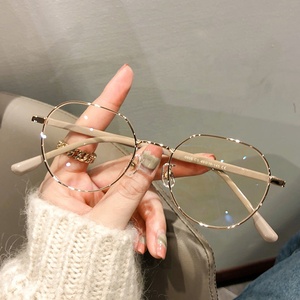
Explore high-volume OEM frame platforms pre-engineered for precision bevel cut, stress-free glazing, and rapid photochromic transition performance across multiple optical indices.
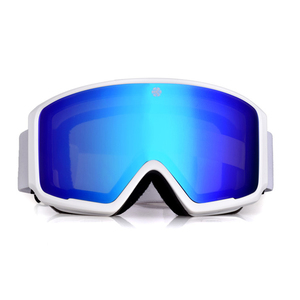
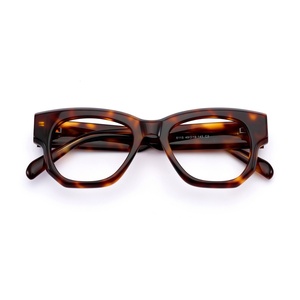
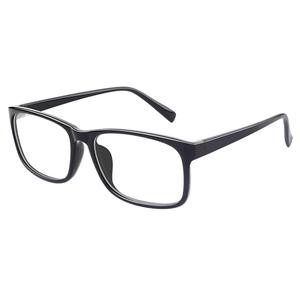
A rigorous examination of molecular photochromism, matrix embedding versus spin-coating deposition, wavelength-selective kinetics, and ophthalmic substrate thermodynamics.
Modern OEM photochromic lenses rely on sophisticated synthetic indolino-spironaphthoxazines and photoactive naphthopyrans. Upon excitation by solar radiation within the ultraviolet spectrum (315 nm to 380 nm), the carbon-oxygen spiro-bond undergoes homolytic cleavage. This ring opening alters the molecular configuration into an extended planar merocyanine structure.
This delocalized conjugated π-electron system strongly shifts absorption spectra into visible wavelengths (400–700 nm), manifesting instantaneous tinting (grey, brown, pioneer green, or vibrant fashion tints). Reverse thermal isomerization returns the open merocyanine dye to its closed, transparent ground state once UV radiation ceases.
Optical buyers face a critical architectural decision between in-mass matrix dyeing and high-speed robotic spin-coating. In-mass dispersion distributes photochromic dyes uniformly throughout monomer resins (commonly CR-39 / 1.499 and 1.56). While economically scalable, strong prescription curves cause chromatic unevenness: thick edge perimeters in high-minus lenses darken deeper than thinner centers.
Our automated Class 100 cleanroom spin-coating lines apply a uniform 15–20 μm photokinetic polyurethane lacquer over finished or semi-finished blanks across 1.60 MR-8, 1.67 MR-7, and 1.74 ultra-high-index substrates, ensuring identical optical density across the entire lens surface regardless of prescription diopters.
A classic challenge in photochromic lens procurement is thermal dependency: higher ambient temperatures accelerate thermal fading back to the colorless isomer, reducing maximum outdoor saturation in tropical environments. Conversely, freezing winter temperatures inhibit fading kinetics, leaving lenses dark indoors for prolonged periods.
Through molecular engineering of the dye matrix, our formulations introduce sterically hindered substituents that stabilize the merocyanine isomer at temperatures above 35°C while retaining a rapid half-fading time (t½ under 90 seconds) at 23°C, meeting stringent ISO 8980-3 photokinetic compliance benchmarks.
Comprehensive comparative specifications for B2B procurement managers, contract laboratories, and distributor brand planning.
| Substrate Material | Refractive Index (Ne) | Abbe Value (Ve) | Specific Gravity | Application Technology | UV Activation Window | Clear State (Tv%) | Full Tint (Tv%) |
|---|---|---|---|---|---|---|---|
| Standard Optical Polymer (CR-39) | 1.499 | 58 | 1.32 g/cm³ | In-Mass Monomer Casting | 320–385 nm | > 90% (Clear) | 12%–15% (Cat. 3) |
| NK-55 Mid-Index Resin | 1.560 | 36 | 1.28 g/cm³ | In-Mass / Dip Matrix | 315–390 nm | > 88% (Clear) | 14%–18% (Cat. 3) |
| Polycarbonate (High Impact) | 1.591 | 31 | 1.20 g/cm³ | Precision Spin Coating | 310–395 nm | > 89% (Clear) | 11%–14% (Cat. 3) |
| Mitsui MR-8 High Index Polyurethane | 1.600 | 42 | 1.30 g/cm³ | Nano-Spin Multilayer Coated | 300–405 nm (HEV Active) | > 90% (Clear) | 10%–13% (Cat. 3) |
| Mitsui MR-7 Thin Optical Monomer | 1.670 | 32 | 1.36 g/cm³ | Nano-Spin Multilayer Coated | 300–405 nm (HEV Active) | > 89% (Clear) | 9%–12% (Cat. 3) |
| Mitsui MR-174 Ultra High Index | 1.740 | 33 | 1.47 g/cm³ | Robotic Vacuum Spin System | 300–410 nm (Broadband) | > 88% (Clear) | 10%–14% (Cat. 3) |
*All substrates undergo double-sided polysiloxane hard scratch-resistant coating (HMC), multi-layer broadband anti-reflective sputtering (AR ≤ 0.4% residual reflection), and hydrophobic/oleophobic super-hydrophobic vacuum fluorocarbon top-coat (water contact angle > 115°).
Aligning OEM product lines with changing retail demands, automotive challenges, and multi-spectrum eye protection developments.
Traditional photochromic eyewear fails inside modern automobiles because laminated PVB windshields absorb virtually all solar ultraviolet light below 380 nm. Procurement is aggressively shifting toward visible-light activated (broadband 390–430 nm) hybrid dyes.
These advanced molecules react to both high-energy visible light and residual UV, activating to a comfortable Category 2 tint (50%–60% luminous absorption) inside cockpits while transitioning to a full Category 3 sunglass outdoors.
The convergence of linear polarizing polyvinyl alcohol (PVA) stretched thin films and spin-coated photochromic lacquers solves the ultimate outdoor sports challenge: simultaneously combating blinding horizontal reflective glare and fluctuating ambient illuminance.
New manufacturing methodologies ensure the embedded polarizing wafer retains a baseline 50% polarization efficiency in low light, surging to >99% polarization efficiency and Cat. 3 dark density upon UV exposure for snow, maritime, and highway sports.
Post-pandemic digital lifestyle shifts have unified consumer demand for indoor blue light shielding with outdoor sun protection. Procurement managers now avoid non-functional blank stock in favor of dual-purpose monomers.
Our OEM formulations incorporate organic blue-absorbers directly into the bulk monomer, blocking 100% of harmful UV up to 400 nm and selectively filtering 40% of high-energy visible blue light at 420 nm indoors, before darkening dynamically outside into deep aesthetic tints.
Rooted in optical heritage since 1960, combining European mechanical design aesthetics with high-volume precision manufacturing.
Our roots trace back to lens manufacturing and grinding craftsmanship established in Singapore in 1960. This heritage informs our approach to optical tolerances, base-curve consistency, stress-birefringence elimination, and surface accuracy.
Operating with corporate governance in Singapore, an advanced frame and styling R&D studio in France (Douvres-la-Délivrande), and an automated mass-production coating, edging, and assembly complex in Shenzhen, China.
Validated by 21 international design awards and nominations across the iF Design Award, Red Dot Design Award, and SILMO d'Or, confirming that our engineered frames and matching optical lenses harmonize form and function.
Every shipment is supported by rigorous batch-matched documentation: ISO 8980-1/3 photometric records, EN ISO 12312-1 sunglasses compliance, EU REACH chemical screening, and FDA drop-ball impact resistance (21 CFR 801.410).
Proprietary Screwless Hinge and Active Hinge technologies eliminate hinge screws and back-out failures, providing uniform frame-to-lens mechanical tension that prevents edge-pinching and unwanted birefringence in optical blanks.
Beyond supplying un-cut semi-finished and finished single-vision blanks, we operate high-throughput MEI milling and CNC glazing lines, packaging fully mounted, verified prescription frames ready for retail point-of-sale display.
Addressing engineering specifications, batch consistency, quality assurance, and private-label ordering parameters.
Our automated spin-coating lines achieve a finished yield of >97.8%. Color-consistency is verified using spectrophotometric transmission curves, maintaining a strict chromatic variance (ΔE) under 0.8 across distinct production batches, preventing visual disparity between right and left eye lenses.
Photochromic dye degradation occurs primarily through photo-oxidation. We formulate our spin-coat polyurethane matrix with specialized Hindered Amine Light Stabilizers (HALS) and anti-oxidants, guaranteeing stable photokinetic cycling for over 24 months of daily wear (>10,000 activation cycles) with less than a 5% shift in clear-state transmittance.
Yes. While dip-coating struggles with edge buildup on steep curves, our five-axis computerized spin-coating heads maintain precise radial velocity profiling. This ensures uniform coating thickness (18 μm ± 1.5 μm) across Base 6, Base 8, and cylindrical sports shield configurations without peripheral optical distortion.
For standard stocked formulations (Grey/Brown in 1.499, 1.56, 1.60, 1.67), the baseline MOQ is 300 pairs per specification. For specialized bespoke requests (such as proprietary mirror coatings over photochromic blanks, custom pioneer green, or laser branding), our MOQ begins at 1,000 pairs.
Each production run includes comprehensive laboratory batch test certs covering ISO 8980-3 photokinetics, transmittance curves, ISO 12311 lens robustness, ANSI Z80.3 impact safety, and biocompatibility certificates confirming nickel-free and REACH-compliant monomer and coating ingredients.
Thermal mismatch between hard photochromic lacquers and inorganic vacuum AR stacks (SiO2/ZrO2) can lead to crazing. We deploy a gradient organosilicon buffer layer that matches the coefficient of thermal expansion, passing rigorous 24-hour boiling saline immersion and cross-hatch adhesion tests (ASTM D3359 Class 5B).
Consult with our optical engineering team in Singapore and France to establish your customized indices, responsive tints, hard-coat stacks, and branded frame-glazing supply chains.
Send an Inquiry