Engineered for high consumer turnover, precise pantoscopic angles, and versatile Rx lens mounting across optical retail chains, boutique dispensaries, and wholesale distributors.
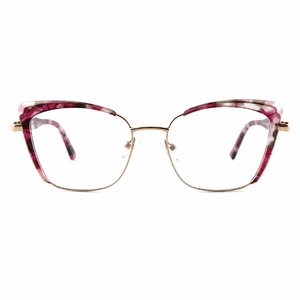
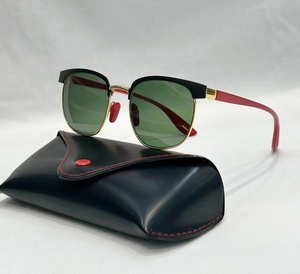
Navigating structural shifts in frame morphology, multi-axis micro-milling, hypoallergenic material integration, and international regulatory compliance for global eyewear importers.
In contemporary optical retail, unisex eyewear frames are no longer merely downsized masculine rectangular silhouettes or oversized feminine teardrops. The modern optical consumer demands structural neutrality combined with sophisticated geometric balance. From a biomechanical manufacturing perspective, producing high-performance unisex frames requires calculating bridge widths, temple lengths, and pantoscopic tilt angles that naturally conform across diverse craniofacial topologies.
Leading optical brands utilize universal face-fit mapping, bridging European nasal geometries with East Asian shallow-bridge profiles. By engineering progressive step-down nose pads and malleable beta-titanium core wires embedded inside cellulose acetate laminates, China-based original design manufacturers (ODMs) enable optical retailers to reduce stock keeping units (SKUs) by up to 35% while expanding cross-demographic patient satisfaction. Whether producing pantos, rounded squares, or architectural browline silhouettes, the focus centers on weight distribution equilibrium across the sella turcica and auricular contact points.
Eliminating thermal distortion during fabrication through diamond-tipped high-speed spindles, achieving cut tolerances within ±0.03mm for seamless bevel snap-in.
Adopting eco-cellulose acetate (ISO 14855 compliant, >68% bio-carbon) alongside aero-grade Ultem PEI capable of withstanding 360-degree deflection cycles.
Pioneering mechanical screwless interconnects and dynamic active spring friction hinges that eliminate temple loosening, screw backing, and frame splay.
Selecting the ideal raw substrate directly influences consumer perceived value, optical lab edging throughput, adjustment malleability, and after-sale return rates. Below is an engineering evaluation across primary optical frame substrates utilized in our China manufacturing centers:
| Material Type | Specific Gravity (g/cm³) | Flexural Modulus (MPa) | Optical Lab Malleability | Target Market Segment |
|---|---|---|---|---|
| High-Density Cellulose Acetate | 1.28 – 1.32 | 2,100 – 2,700 | High (Warm air bench at 55°C – 65°C) | Luxury Designer, Boutique Rx, Unisex Fashion |
| Grilamid TR90 (Swiss PA12) | 1.01 – 1.04 | 1,400 – 1,700 | Moderate (Cold snap with lens groove tension) | Sports Performance, Pediatric, Active Lifestyle |
| Polyetherimide (Ultem / PEI) | 1.27 | 3,200 – 3,500 | Rigid memory (Requires precise trace cut) | Ultra-thin Minimalist, Magnetic Clip-ons |
| Beta-Titanium Alloy | 4.48 – 4.52 | 105,000 – 115,000 | High cold pliability without annealing | Executive Rimless, Premium Lightweight Rx |
| Eco-Bio Acetate (Bio-Plastic) | 1.26 – 1.30 | 1,950 – 2,400 | Standard optical warmer compliant | ESG Corporate Brands, Eco-conscious Retailers |
Institutional optical buyers, healthcare chains, and e-commerce aggregators must navigate rapidly evolving procurement dynamics. As product development lifecycles compress from 9 months to under 90 days, manufacturers in Guangdong and Zhejiang are integrating CAD-driven virtual prototyping with rapid additive tooling.
Key procurement vectors include:
A. The Rise of Agile Near-Zero Inventory Programs: Retailers increasingly demand hybrid consignment-style manufacturing models where core unisex silhouettes (round, square, browline) are pre-tooled and stored in raw buffed forms, enabling rapid laser etching, private-label pad printing, and custom color lamination within 14 business days.
B. Mandatory Chemical Traceability and ESG Auditing: With European Union REACH regulations and US FDA stricter medical device reporting (MDR), wholesale contracts require documented traceability down to the monomer resin batch, nickel-release certificates (<0.5 μg/cm²/week per EN 16128), and non-toxic electroplating baths.
C. Screwless Architecture as a Brand Differentiator: Screw-related failures account for more than 48% of retail optical warranty visits. Brands transitioning to screwless, interlocking friction hinges or micro-coaxial nylon soft locks reduce warranty liabilities while commanding a 20% to 40% retail price premium.
Rooted in optical dispensary craftsmanship dating back to 1960 when our founder co-established Nanyang Optical in Singapore, Urband International represents the confluence of optical retail reality and advanced industrial production. Unlike purely trading entities, Urband operates an integrated global ecosystem:
Singapore international corporate management and logistics headquarters, combined with our French design studio in Normandy for aesthetic trends, backed by our Shenzhen engineering and quality-control hub.
Decorated with 14 awards, 6 nominations, and 1 invited accolade across prestige industrial forums including iF Design Award, Red Dot Award, SILMO d'Or, and the Singapore President's Design Award.
Batch-level compliance reports spanning CE MDR (EU) 2017/745, EN ISO 12870 spectacle frame mechanical testing, EN ISO 12312-1 sunglass standard, and FDA 21 CFR impact drop-ball verification.
To guarantee seamless glazing in high-speed optical labs, each production lot undergoes stringent metrological inspection before packaging:
XRF analyzer screening verifying nickel-free core wire composition, heavy metal non-detection, and cellulose acetate plasticizer purity.
High-resolution optical comparators verifying lens groove depth (>0.6mm), bevel apex angle (110° ± 2°), and temporal spread.
Automated pneumatic arm cyclic testing of hinges to 20,000 cycles under 1.5N lateral tension with zero allowable play increase.
Alternating exposure inside climatic chambers: 60°C dry heat for 24h, followed by -10°C freeze cycle to eliminate brittle cracking risks.
Continuous immersion in artificial perspiration solution (pH 4.7 at 37°C) for 24 hours per ISO 12870 to certify plating integrity.
Test glazing of 2.00 to -6.00 diopter CR39 and Polycarbonate lenses under polariscope lamps to verify zero stress-fringe patterns.
Direct answers addressing MOQs, private label OEM tooling, compliance documentation, and lens edging compatibilities.
For bespoke CNC-machined cellulose acetate frames requiring custom acetate sheeting, standard production MOQs are typically 300 to 500 pieces per model (divided across 2–3 colorways). For injection-molded TR90 or Ultem frames utilizing existing precision molds, MOQs start as low as 100 to 200 pieces per SKU. For newly commissioned private injection tooling, initial runs require 1,200 pieces to amortize precision steel tooling expenses.
We employ double-annealed cellulose acetate curing cycles. Slabs are aged inside climate-controlled aging vaults for a minimum of 60 days prior to CNC spindle milling. This eliminates internal residual polymer stresses. Our lens eye-wire grooves are CNC-profiled to standardized V-bevel angles (115°) with depth tolerances within ±0.05mm, preventing rim splay or lens popping under high-cylinder prescription mounting.
Yes. Through our unified Singapore corporate billing and Shenzhen logistics consolidation hub, international distributors can place consolidated purchase orders combining EYELET (flexible pediatric), GLOSSI (fashion-forward women's), URBAND PARIS (ergonomic urban optics), and COUPLE (dedicated reading series) under one bill of lading, minimizing customs brokerage fees and shipping charges.
Every batch shipment is accompanied by a complete technical dossier, including: EU Declaration of Conformity under MDR 2017/745 Class I Medical Devices, ISO 12870 test results for bridge deformation and temple endurance, REACH SVHC chemical screening certificates, US FDA Device Registration & Drop-Ball Impact test certificates (21 CFR 801.410), and UV400 / Polarized performance certification per EN ISO 12312-1 where applicable.
A Screwless Hinge utilizes an interlocking mechanical slot, collet pin, or tension-spring channel that operates without a traditional threaded hinge screw, completely eliminating loose or lost screws. An Active Hinge incorporates an internal spring mechanism or elastomeric flex-lock that permits temporal deflection beyond 90 degrees (up to 125 degrees) with a positive return action, dramatically enhancing comfort for broad facial profiles.
We provide multi-tier private labeling: high-precision fiber laser etching on titanium and steel temples, gold/silver hot-foil interior stamping, custom-cast metal core wires with 3D filigree patterns laminated inside transparent acetate, epoxy-filled logo end caps, and custom-embossed eco-leather cases with matching micro-fiber lens cleaning cloths.
For existing catalog models with customized private branding, delivery lead time is 25 to 35 business days. For OEM bespoke design development: 3D CAD files and SLA rapid resin prototypes are completed in 7 days; working metal/acetate physical tooling prototypes in 25 days; full commercial batch manufacturing is finalized in 60 to 75 days following sample sign-off.
Yes. Our specialized pediatric brand EYELET implements our patented nylon-string soft-lock temple joint that contains zero rigid metallic pins or sharp edge hinges. Under lateral trauma or playground impacts, the joint flexes harmlessly without snapping, preventing facial lacerations. All resins used in our youth series are non-toxic, bisphenol-A (BPA) free, and dermatologically tested for prolonged skin contact.
Partner with an international eyewear manufacturer backed by 60+ years of optical heritage, 21 design awards, and a flexible supply chain coordinating Singapore corporate reliability with Shenzhen production efficiency. Access our digital catalog, request physical sample kits, or discuss customized OEM/ODM projects today.
