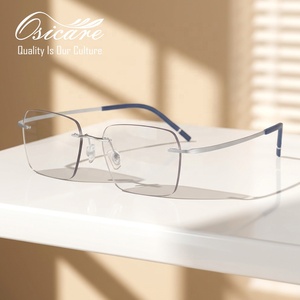
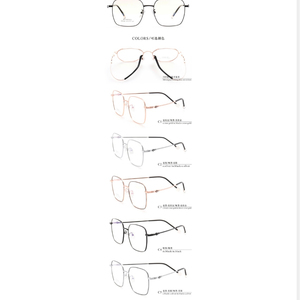
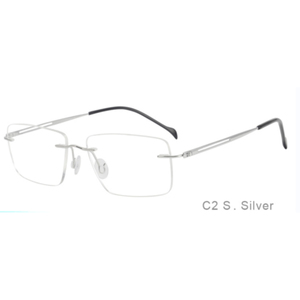
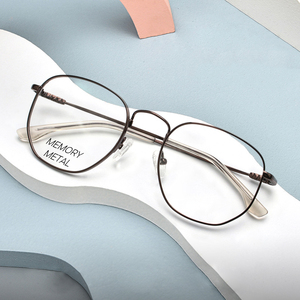
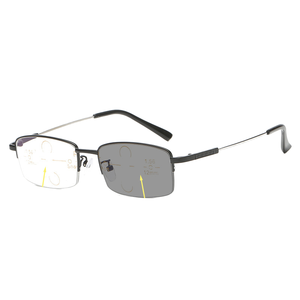
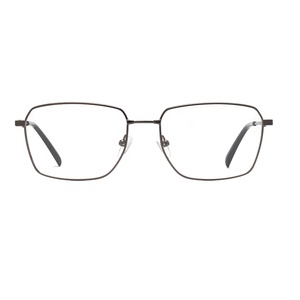
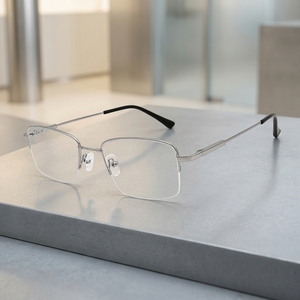
Osicare High Quality Lightweight Titanium Rimless Rect Photochromic Lenses Eyewear
- Frame Structure: Rimless / Compression Mount
- Bridge / Temple: Nitinol Memory Titanium
- Weight: ≤ 8.8 grams (frame)
- Compliance: CE, FDA, ISO 12870
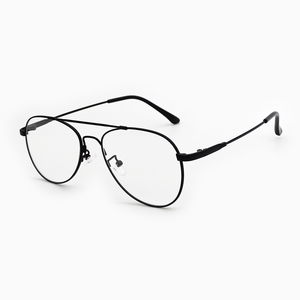
Engineered for high elastic recovery, hypoallergenic skin contact, and featherlight comfort. Explore our export-grade memory titanium and hybrid optical collections ready for B2B wholesale and OEM branding.
Understanding the thermoelastic martensitic transformation of Nickel-Titanium (Nitinol) and high-performance β-Titanium formulations provides enterprise optical buyers with clear mechanical justification for consumer retention and premium retail markups.
Unlike standard Monel, copper-nickel, or rigid stainless steel frames that undergo irreversible plastic deformation under torsional loads, memory titanium harnesses a solid-state crystalline shift. Under mechanical stress, the parent cubic austenite crystal phase reorganizes into a monoclinic martensite lattice. Once external deformation ceases, the alloy spontaneously snaps back to its original programmed contour without structural fatigue or work-hardening embrittlement.
A frequent apprehension in sourcing memory eyewear is dermatitis triggered by nickel ions. In our Shenzhen ISO 13485-compliant manufacturing lines, memory titanium components undergo electrolytic vacuum passivation and multi-layer PVD encapsulation. This creates an impenetrable titanium oxide (TiO2) ceramic outer envelope, curbing ionic migration well below the stringent 0.5 μg/cm²/week threshold mandated by European EN 16128:2015 standards.
With an engineering density around 6.45 g/cm³—significantly lighter than traditional zinc alloys (8.5 g/cm³) and German nickel-silver alloys (8.7 g/cm³)—memory titanium structures relieve persistent pressure at nasal bones and temporal pressure points. When integrated into rimless compression mounts and ultra-thin eyewires, completed frames balance effortless ergonomics with tensile strengths exceeding 1,000 MPa.
| Alloy Classification | Elastic Limit (Recovery %) | Tensile Strength (MPa) | Density (g/cm³) | Nickel Release Compliance | Typical Failure Mechanism |
|---|---|---|---|---|---|
| Superelastic Nitinol (Memory Ti) | > 8.0% Elastic Strain | 900 - 1,200 | 6.45 | Passivated EN 16128 Compliant | Infinite cycle threshold under <30° bend |
| β-Titanium (β-Ti 15-3-3-3) | 1.5% - 2.0% | 850 - 1,050 | 4.75 | Completely 100% Nickel-Free | Progressive fatigue along weld bead |
| Standard Pure Titanium (Grade 2) | 0.5% - 0.8% | 450 - 550 | 4.51 | Completely 100% Nickel-Free | Permanent plastic bending without snapback |
| Commercial Monel / Cupronickel | < 0.3% (Rigid) | 400 - 650 | 8.80 | High risk without thick electroplate | Shear fracture at bridge solder joint |
| High-Tensile Stainless Steel (304/316) | 0.8% - 1.2% | 600 - 800 | 7.90 | Passivated / Trace Nickel Release | Loss of temple clamping tension over time |
Combining the optical heritage of Singapore retail since the 1960s, styling research from Douvres-la-Délivrande, France, and our high-throughput Shenzhen optical manufacturing base.
Our foundational journey originated with hands-on manual lens grinding in Singapore workshops. This deep optometric groundwork guarantees that every memory titanium chassis is engineered not merely as decorative hardware, but with acute optical laboratory alignment, base curve stability, and precise lens bevel retention.
Validated by 14 international awards, 6 nominations, and 1 invited accolade across iF Design, Red Dot, SILMO d'Or, and IDSA. Our design studio in France transforms technical memory titanium into balanced silhouettes that command higher sell-through across professional boutique counters.
Eliminate loose screw complaints permanently. We combine memory titanium temples with proprietary interlocking screwless cam hinges and active leaf springs, providing auto-damped temple return without relying on micro-screws that back out from cyclical vibrations.
Memory titanium resists standard punch stamping due to its elastic springback. Our Shenzhen facility employs multi-axis low-speed wire electrical discharge machining (Wire-EDM) and high-power pulsed fiber lasers to sculpt micro-tolerances within ±0.02 mm accuracy.
Every shipment is matched to CE Declaration of Conformity (MDR 2017/745 Class I medical devices), FDA medical registration under 21 CFR 801.410 drop ball impact testing, and documented REACH chemical screening for lead, cadmium, and nickel salt liberation.
Eliminate supplier fragmentation. Through our global trading structure spanning Singapore HQ, France styling center, and Shenzhen operations, enterprise buyers can combine pediatric flexible eyewear (EYELET), women's acetate-titanium couture (GLOSSI), and reading optics under a single consolidated invoice and shipping master.
Optical sourcing is shifting from low-cost commodities to high-precision ergonomic engineering. Gain an informational edge by anticipating upcoming manufacturing shifts in memory titanium eyewear.
The marketplace is rapidly departing from all-metal wire looks toward hybrid assemblies. Leading optometry networks demand high-definition Italian/Japanese bio-acetates or surgical TR90 fronts coupled to invisible superelastic memory titanium inner armatures. This architecture allows opticians to preserve rich acetate chromatic depth and bevel groove stability while delegating lateral flexibility to non-deforming titanium temple cores.
Traditional toxic cyanide electroplating is being phased out under tightened EU environmental regulations and carbon accounting. Procurement programs in North America and Western Europe now prioritize closed-loop Physical Vapor Deposition (PVD). Ion sputtering in high-vacuum chambers applies micro-layers of Titanium Carbonitride (TiCN) or Zirconium Nitride (ZrN), creating ceramic-level scratch hardness (> 2500 Vickers) without toxic hazardous effluent.
With smart audio eyeglasses and continuous ocular biometric trackers entering optometric clinics, memory titanium serves as an ideal conduit. Its shape memory keeps smart electrodes, bone conduction transducers, and micro-lithium enclosures under constant, predictable head-clamping tension (0.8N to 1.2N), preventing biometric reading dropouts caused by loose mechanical frame seating.
Bulk container stockholding is being replaced by lean, quarterly replenishment cycles. Optical distributors require their manufacturing partners to offer modular OEM platforms with interchangeable memory titanium endpieces, allowing swift regional customization of temple lengths (135mm to 150mm) and nose bridge widths to suit diverse Caucasian, Asian, and universal facial anatomies.
In-depth technical answers addressing minimum order volumes, tooling investments, lens glazing tolerances, coating longevity, and testing documentation.
For custom ODM/OEM models requiring bespoke tooling, wire-EDM profiling, and customized PVD color formulations, our standard Minimum Order Quantity starts at 300 to 500 pairs per model, which can typically be divided across 2 to 3 color executions (e.g., Gunmetal Satin, Matte Obsidian, Rose Champagne). For our ready-to-ship open-mold styles, order volumes start as low as 50 to 100 units per sku to support rapid in-market pilot tests.
Memory titanium is inherently flexible, which creates challenges if full-rim chassis deflect under thick, heavy bevel edges. We resolve this by designing reinforced 2.2mm-wide stepped eye-rim eyewires or engineered nylon-suspension supra semi-rims. These constructions isolate the lens bevel groove from structural temple flex, preserving base curve parameters and preventing edge flake-off in high-index poly, 1.67, or 1.74 lenses.
Superelastic Nitinol components (bridges and flexible temple mid-sections) are thermally memory-set at 500°C during tooling and cannot be bent permanently using conventional cold optician plier pressure. To ensure practical dispensing, we design malleable pure titanium or β-titanium endpieces and nose pad goose-necks. Opticians can readily tweak pantoscopic tilt, temple spread, and vertex distance without fighting memory return.
Standard wet electroplating easily cracks and flakes off when a memory bridge bends 90 degrees. Our Shenzhen factory utilizes a multi-stage process: ultrasonic multi-solvent degreasing, micro-etching in an argon plasma chamber, an intermediate ionized titanium adhesion layer, followed by high-vacuum cathodic arc PVD deposition. This atomic bond flexes cohesively with the Nitinol substrate without peeling or chipping.
Shipments include complete quality verification dossiers: CE Declarations of Conformity under EU MDR 2017/745 Class I Medical Devices, FDA Establishment Registration documents, full laboratory test certificates according to ISO 12870:2016 (spectacle frames testing for perspiration resistance, endurance, and bridge deformation), and REACH Annex XVII chemical testing verifying nickel release compliance.
Rapid stereolithography prototypes and metal functional hand-samples are delivered within 12 to 18 business days. Upon mechanical sign-off and mold fabrication, sample validation requires 25 days. Full mass production—spanning multi-axis wire-cutting, thermal vacuum shape-setting, PVD coating, robotic lens cutting, and individual QC inspection—typically concludes in 45 to 60 calendar days.
Connect with our technical optical engineering department. Review physical master samples, evaluate our screwless hinge mechanisms, and receive volume OEM/ODM pricing within 24 hours.
Inquire Now