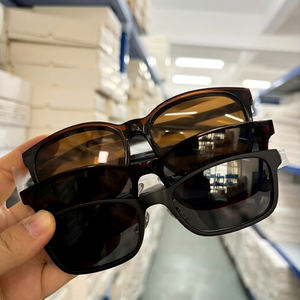
Explore production-ready OEM/ODM models engineered across premium cellulose acetate, TR90 memory polymers, Ultem, and aerospace polycarbonates from top Guangdong facilities.
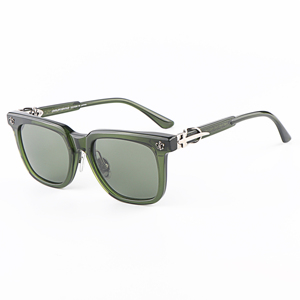
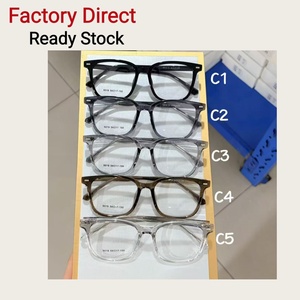
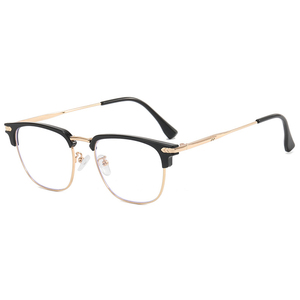
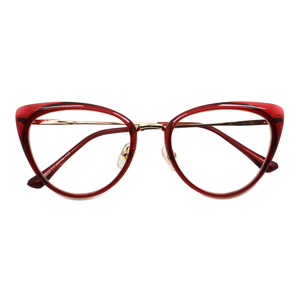
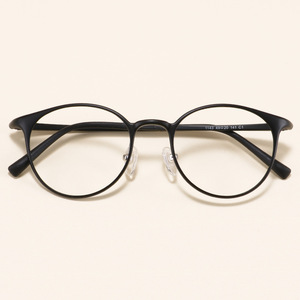
The global eyewear sector has transitioned decisively from traditional circular and soft-rectangular outlines toward bold, multifaceted geometric silhouettes. Hexagonal, octagonal, crown-panto, and faceted diamond silhouettes now represent one of the fastest-growing design segments in both prescription optical wear and high-fashion sunwear.
For optical chains, brand holders, and independent distributors, procuring geometric eyewear from premier Chinese manufacturing hubs—predominantly located in Shenzhen (Longgang District), Dongguan, and Wenzhou—demands an advanced understanding of precision tooling, multi-axis computer numerical control (CNC) beveling, frame equilibrium, and metallurgical chemistry. Geometric frames impose strict structural tolerances: because apex angles concentrate mechanical stress and optical lens edgers require exact planar alignment, suppliers must execute bevel angles with micrometric accuracy to prevent lens popping, cold-flow warping, and bridge distortion.
Evaluating geometric frame manufacturers requires rigorous cross-verification of structural parameters:
A rigorous assessment of structural silhouette options, weight dynamics, optical glazing compatibility, and target consumer demographics.
Characterized by crisp mathematical symmetry, 6-sided and 8-sided frames are primarily fabricated from high-tensile stainless steel, beta-titanium wire, or ultra-thin high-density acetate (HDCA). They deliver a contemporary intellectual look that flatters round and oval face shapes by providing deliberate angular contrast.
Glazing Considerations: Sharp corner radii require edger bevel tracking to avoid localized lens pressure spikes. High-index 1.67 or 1.74 lenses are strongly advised for prescriptions exceeding -4.00D.
Originating from mid-century French bespoke eyewear, the crown panto pairs a curved lower eye wire with a flattened, multi-angled upper brow line. Modern Chinese manufacturing leaders produce this archetype using multi-layered laminate acetate, milling the top brow with a 45-degree chamfered edge to catch light.
Structural Stability: The substantial bridge thickness in crown panto styles provides excellent torsional stiffness, preventing front-end skew and pupillary distance (PD) displacement.
Moving beyond flat planar fronts, high-end geometric acetate frames utilize 5-axis CNC cutters to sculpt multi-faceted, gem-cut surfaces across the frame face and temple stems. This architecture creates dynamic prism effects and rich internal refraction across transparent and Havana acetate sheets.
Finishing Complexity: Requires specialized hand-tumbling using graded pumice stones followed by walnut shell waxing to polish angular apexes without rounding off geometric facet lines.
Benchmark operational parameters, weight ratios, tensile ratings, and manufacturing lead times for B2B procurement decision-makers.
| Material Category | Specific Density | Tensile Strength | Geometric Machinability | Hinge Mechanism Integration | Standard Lead Time |
|---|---|---|---|---|---|
| Cellulose Acetate (Block Cut) | 1.28 – 1.32 g/cm³ | 45 – 65 MPa | Exceptional (5-Axis CNC Milling, multi-facet diamond carving) | Embedded 3/5-barrel riveted or wire-core sonic heat insertion | 45 – 60 Days |
| Beta-Titanium (β-Ti Wire/Sheet) | 4.50 – 4.54 g/cm³ | 850 – 1100 MPa | High precision via micro-laser profile cutting and hydraulic forming | Screwless interlocking friction hinges, CNC micro-block joints | 55 – 70 Days |
| TR90 Memory Polymer (EMS Grilamid) | 1.02 – 1.05 g/cm³ | 70 – 85 MPa | High precision injection tooling; limits razor-sharp edge bevels | Nylon soft-lock strings, ultrasonic snap-fit pinless hinges | 35 – 45 Days |
| Ultem PEI (Polyetherimide) | 1.27 – 1.30 g/cm³ | 105 – 120 MPa | Ultra-thin wall injection molding (down to 1.1mm rim profiles) | Integrated micro-lug joints, magnetic clip-on bridge anchors | 35 – 50 Days |
| High-Tensile Monel / Stainless Steel | 7.90 – 8.80 g/cm³ | 500 – 750 MPa | Cold wire stamping, multi-angle hydraulic press forming | Traditional German silver solder joints, spring hinges | 40 – 50 Days |
Anticipate supply chain evolutions, regulatory shifts, and emerging retail consumption patterns shaping international frame procurement.
Global optical retail chains are demanding certified sustainable raw materials. Top Guangdong factories have transitioned significantly toward bio-cellulose acetate plasticized with plant-derived citric esters, maintaining ISO 14855 biodegradability standards while preserving 99.5% optical transparency and structural stiffness.
Factories are merging selective laser sintering (SLS) nylon geometric frame cores with precision-milled titanium temples. This additive-subtractive hybrid production enables hollow geometric cross-sections that reduce overall frame weight by up to 45% compared to solid injection-molded alternatives.
The geometric frame architecture provides planar temple flats uniquely suited for concealed tech integration. Forward-looking OEMs in Shenzhen are embedding bone-conduction transducers, capacitive touch sensors, and miniaturized flexible batteries without ballooning temple dimensions beyond 3.8mm.
To eliminate bloated retail stock risk, advanced suppliers offer flexible tiered MOQs supported by digital CAD toolpaths. Brands can order initial validation runs of 300 pieces per geometric SKU, scaling rapidly to 10,000 units once point-of-sale sell-through rates confirm market acceptance.
How pioneering Chinese factories are overcoming mechanical fatigue and optical distortions in angular eyewear design.
Traditional manufacturing often saw geometric acetate frames develop microscopic fracture lines at sharp vertex corners during lens cold-snap insertion. Leading suppliers resolve this via two proprietary techniques:
Standard screw-based hinges loosen rapidly when subjected to the asymmetrical rotational forces common in geometric and oversized angular frames. The technological frontier lies in:
Bridging European aesthetic innovation, Japanese precision tooling history, and China's most sophisticated manufacturing clusters.
Urband International is not an opportunistic trading broker; it is an integrated eyewear institution grounded in six decades of precision optical craftsmanship. Founder and Chairman Yang Wah Kiang began his career grinding ophthalmic lenses by hand in Singapore workshops during the late 1950s, co-founding Nanyang Optical in 1960. This deep understanding of lens-to-frame kinematics informs every geometric blueprint we engineer today—ensuring that fashion-forward designs never compromise clinical optical performance.
Corporate headquarters in Singapore, an original design studio in France (Douvres-la-Délivrande), and an engineering and QC headquarters in Shenzhen, China (Hong Leong Tech Park, Longgang) provide uninterrupted project coordination across all world time zones.
Recipients of 14 international awards, 6 nominations, and 1 invited recognition from 2006 to 2024, including the prestigious iF Design Award, Red Dot Design Award, SILMO d'Or, President's Design Award, and IDSA honors.
Pioneers in patent-backed Screwless Hinge mechanisms and flexible Active Hinge assemblies that eliminate loose screws, reduce end-consumer warranty claims, and withstand over 30,000 temple cycles.
We do not issue generic blanket statements. Every production batch is accompanied by genuine CE conformity dossiers, EN ISO 12312-1 sunglasses spectrum certifications, REACH test records, and optical frame endurance certificates.
Consolidate diverse product demands—EYELET (pediatric resilient frames), GLOSSI (vibrant geometric women's optics), URBAND PARIS (architectural sports & urban optics), and COUPLE (reading frames)—under a single wholesale credit account.
From initial hand sketching and 3D CAD modeling in France to tooling fabrication, automated five-axis CNC profile cutting, PVD ion plating, lens glazing, and barcoded retail packaging in Shenzhen, we oversee all manufacturing nodes.
Essential guidance addressing technical specifications, MOQ requirements, quality verification, and international regulatory clearance.
Whether you require turn-key OEM/ODM engineering for geometric optical collections, custom titanium manufacturing blueprints, or immediate wholesale catalog access from our award-winning international brand portfolio, our technical engineering team in Shenzhen and Singapore is at your disposal.