CE Certified Anti Blue Glasses Manufacturers & Factory
OEM/ODM Precision Optical Solutions: Medical-Grade HEV420 Filtration, Patented Screwless & Active Hinges, and Traceable European Compliance Protocols for Global Optical Chains.
Precision Eyewear Catalog
Featured CE Certified Blue Light Blocking Glasses
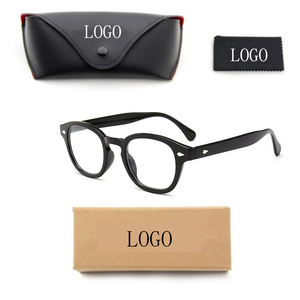
Direct-from-factory optical frames and blue-cut plano/prescription lenses manufactured under rigorous clean-room sputtering, anti-reflective vacuum coating, and ISO-standard impact testing.
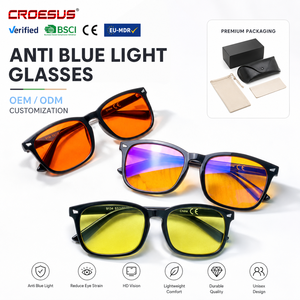
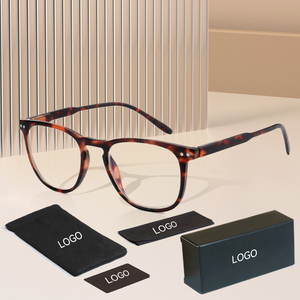
Engineered with ultra-elastic Swiss TR90 memory polymer. Resists 180-degree torsion with integrated blue cut 415nm-445nm absorption for presbyopic screen users.
High-tensile Japanese Mitsui MR-8 substrate designed specifically for drill-mount rimless assemblies without tensile edge fractures. Blocks 100% UV and HEV blue rays.
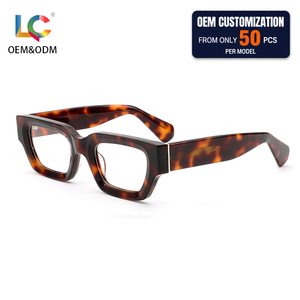
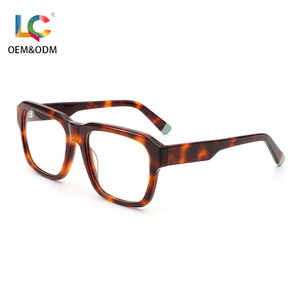
Precision CNC-contoured organic cellulose acetate with wire-core embedded temples. Features multi-layer blue vacuum AR coatings that reduce surface glare below 0.8%.
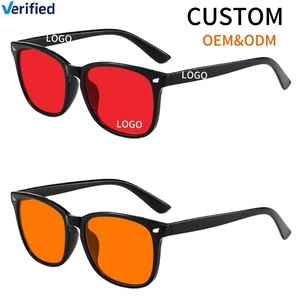
Designed for high-intensity esports gamers and office professionals. Aerodynamic temple tips reduce temporal pressure under gaming headsets while filtering 450nm spikes.
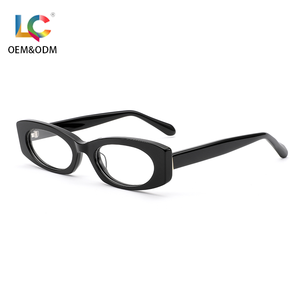
Biodegradable eco-acetate formulation adhering to ISO 14855 standards. Bold structural beveling with high-clarity CR39 zero-power blue attenuation lenses.
Six Decades of Optical Engineering & Global Supply Excellence
Rooted in master lens grinding dating back to Singapore in 1960, Urband International operates an integrated supply network linking European design studios with world-class cleanroom manufacturing facilities in Shenzhen.
1960
Optical Heritage Origin
21+
Global Design Recognitions
100%
CE EN ISO Conformity
3 Hubs
Singapore · France · Shenzhen
Tri-Regional B2B Synergy
Headquartered in Singapore for seamless corporate governance and escrow-secured trade, supported by our Douvres-la-Délivrande design studio in France for authentic European silhouettes, and anchored by our 506 Hong Leong Technology Park facility in Shenzhen for high-precision manufacturing.
This international presence removes cultural and technical friction, offering western optical distributors streamlined logistics, European ergonomics, and competitive ex-factory pricing under single-contract accountability.
Patented Mechanical Engineering
Standard anti-blue glasses fail primarily through temple screw fatigue and stripped barrel threads. Our factory integrates proprietary Screwless Hinge and Active Dynamic Hinge technologies that eliminate micro-screws entirely.
Featuring interlocking surgical-grade titanium clips and self-returning nylon-string soft-lock mechanisms, our child and adult frames survive over 40,000 continuous cyclic flex tests without alignment drift or joint loosening.
Documented CE & ISO Compliance
We provide complete Declaration of Conformity (DoC) documentation packages under PPE Regulation (EU) 2016/425 (Category I simple design) and Medical Devices Regulation (EU) 2017/745 for prescription frames, tested against EN ISO 12870:2018 and EN ISO 12312-1:2022.
Batch-specific spectrophotometric transmission graphs, nickel release certifications (<0.5 ug/cm²/week), and REACH SVHC compliance records are provided with every wholesale shipment.
Technical White Paper
Optical Physics of Blue Light Filtration: HEV vs. Circadian Health
Modern procurement directors must distinguish between generic tinted lenses and scientifically tailored selective-absorption optical substrates. Below is an engineering breakdown of our proprietary spectral attenuation technology.
1. Substrate Infusion vs. Multi-Layer Sputter Coating
Traditional cheap blue light glasses rely solely on reflective vacuum coating layers (interference coatings), which produce an unsightly, aggressive blue surface mirror reflection and reflect high-energy violet light backward into the ocular perimeter when light strikes from behind the wearer.
Our factory deploys a dual-mode protection architecture:
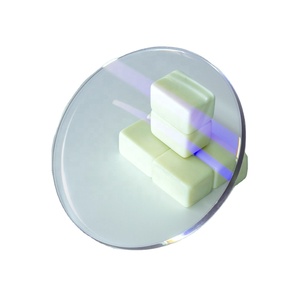
A. Monomer Molecular Absorption: Chemical nano-absorbers compounded directly into raw optical resin (1.56 CR-39, 1.59 Polycarbonate, or 1.61 Mitsui MR-8) that selectively truncate High Energy Visible (HEV) radiation from 380nm to 420nm with 100% efficiency.
B. Dual-Surface Dielectric Stack: A 16-layer vacuum anti-reflective system deposited via ion-assisted electron beam evaporation. This cancels internal lens reflections and provides an anti-static, hydrophobic, and oleophobic hard coat exceeding 5H pencil hardness.
2. Preserving the Circadian Peak (460nm-480nm)
A major pitfall in bulk eyewear procurement is over-blocking. High-energy light in the 415nm-435nm spectrum causes retinal pigment epithelium phototoxicity and digital visual strain. However, light in the 465nm-490nm wavelength regulates intrinsically photosensitive retinal ganglion cells (ipRGCs) that govern melatonin secretion and circadian alertness.
Inferior wholesale lenses block indiscriminately across the entire blue band, causing severe yellow color distortion (low Color Rendering Index, CRI < 82) and inducing wearer fatigue. Urband’s selective-band formulation maintains over 88% transmission between 465nm-495nm while filtering over 45% of peak screen spikes at 430nm-445nm, achieving an industry-leading CRI of 96.4%.
Performance Specification
Generic Blue-Cut Lenses
Urband Substrate HEV420+
1.61 MR-8 BlueCut Pro
Compliance Test Standard
380nm - 400nm (UV Blocking)
90% - 95%
100% Absolute
100% Absolute
EN ISO 12312-1 / ANSI Z80.3
400nm - 420nm (Toxic Violet Band)
30% - 50%
85% - 92%
98.5% Cutoff
ISO 8980-3 Spectrometry
430nm - 450nm (Digital Screen Spike)
15% - 25% (Reflective)
42% - 48% (Absorption)
52% (Selective Filter)
Spectrophotometer Cary 5000
Color Rendering Index (Ra / CRI)
Ra 78 - 84 (Strong Yellow)
Ra 96.2 (True Color)
Ra 97.4 (Ultra Clear)
CIE Colorimetry Standard
Abbe Value (Dispersion)
29 - 31 (Polycarbonate)
38 (Refined Resin)
41 (High Definition)
Refractometer Abbe Method
Impact Resistance (Drop Ball)
Standard FDA 5/8" Ball
Exceeds High-Velocity
Passes Drill / High Mass
EN ISO 14889 / ANSI Z87.1
Strategic Procurement Intelligence
Global Eyewear Procurement & Technology Trends (2025–2028)
The B2B optical sector is transitioning from commodity price competition to high-value technical differentiation. Brand managers and retail chain buyers must structure their multi-year inventory around three major market shifts.
1. Hybrid Photochromic Blue-Cut Integration
Separate indoor computer glasses and outdoor sunglasses create friction for modern digital nomads and hybrid workers. The fastest growing segment in European optical chains is the "All-Day Lens": indoors it acts as an ultra-clear CE-certified 420nm filter, while outdoors under direct solar exposure it dynamically darkens into Category 3 sunglasses within 28 seconds.
Our OEM factory incorporates fast-recovery spin-coating photochromic layers over monomer blue-absorbers, cutting inventory SKUs by 50% for retailers while doubling the average ticket price per consumer transaction.
2. Bio-Circular Acetate & Traceable ESG Mandates
European supply-chain due diligence laws (CSDDD) will penalize brands sourcing conventional petrochemical plastics containing hazardous plasticizers. Retailers now demand bio-based cellulose acetate synthesized from sustainably farmed wood pulp and cotton linters, coupled with non-phthalate plasticizers.
Urband utilizes bio-acetate certified under ISO 14855 standards, decomposing into organic compost within 180 days in industrial facilities while preserving the high dimensional stability, luster, and hand-polishing characteristics of traditional high-end Italian acetate.
Screen usage among children aged 4-14 has risen to over 5 hours daily, prompting a sharp increase in pediatric dry-eye and early myopia. However, traditional children's frames fail due to breakage at metal joints and small swallowed components.
Our EYELET line utilizes soft-lock nylon-string hinges and flexible medical-grade TR90 frames. In tests involving repeated twisting, stepping, and temporal stretching, these frames show virtually zero mechanical breakage, driving down warranty return rates for pediatric optical retail chains to less than 0.2%.
Key technical and regulatory answers compiled by our chief optical engineers, quality directors, and international logistics team to support your vendor qualification process.
What specific CE standards apply to non-prescription vs. prescription anti-blue glasses?
Plano (zero-power) anti-blue glasses are classified as Category I Personal Protective Equipment (PPE) under European Regulation (EU) 2016/425, requiring testing against EN ISO 12312-1:2022 (optical transmittance, spectral uniformity, and mechanical robustness). When frames are manufactured for prescription blue-cut glazing, they fall under Medical Device Regulation (EU) 2017/745 (Class I MDR), requiring conformity with EN ISO 12870:2018 (biocompatibility, perspiration resistance, nickel release, and dimensional stability). Our factory produces complete Technical Construction Files (TCF) and Declarations of Conformity (DoC) for both pathways.
How does your factory test and verify blue light blocking efficiency on the production line?
Every production run undergoes automated batch sampling using a PerkinElmer LAMBDA 1050+ UV/Vis/NIR dual-beam spectrophotometer. We measure spectral transmittance from 280nm to 780nm at 1nm increments. Finished lenses must pass three criteria: (1) 0.0% transmittance at 380nm-400nm (UV400 verification); (2) 10% to 15% maximum transmittance at 415nm-425nm (toxic HEV cutoff); (3) minimum 85% luminous transmittance in the photopic visual spectrum (EN ISO 13666 compliance) to ensure natural color rendering without chromatic aberration.
What are your Minimum Order Quantities (MOQ) and production lead times for OEM/ODM?
For our ready-to-ship catalog frames across the EYELET, GLOSSI, URBAND PARIS, and COUPLE series with custom laser logo engraving, our MOQ is 100 units per model (assorted colors allowed). For full bespoke ODM manufacturing involving custom tooling, pantone color matching, and custom lens monomer blending, MOQ is 300 units per colorway with a 500-unit minimum per style. Prototype 3D SLA printing takes 5 business days; pre-production steel mold creation takes 25 days; full mass manufacturing cycles typically conclude in 45-55 days from golden sample signoff.
Can you provide consolidated sourcing across multiple frame materials and demographics?
Yes. One major advantage of partnering with Urband International is our multi-brand architecture. Through a single wholesale vendor agreement, buyers can consolidate their purchase orders across pediatric flexible frames (EYELET), high-fashion acetate women's collections (GLOSSI), technical sports optics (URBAND PARIS RX-Sport 2.0), and ergonomic reading glasses (COUPLE). This consolidation reduces your supplier onboarding overhead, lowers international freight handling costs, and streamlines customs clearance.
What is the factory’s batch defect tolerance and quality assurance protocol?
We operate under ISO 9001:2015 quality management procedures with an Acceptable Quality Limit (AQL) of 1.0 for Major defects and 2.5 for Minor defects, substantially tighter than common factory standards (2.5/4.0). Quality gates include: raw material incoming FTIR chemical verification, salt spray corrosion testing for 48 hours (EN ISO 12870 Sec 4.6), temple cyclic flex testing at 40 cycles/minute, cross-hatch adhesion testing on AR vacuum coatings (ASTM D3359 Method B), and final 100% manual cosmetic inspection under high-lumen polarization lamps.
How are warranty claims, spare parts, and after-sales support managed globally?
We provide a 2-year factory defect warranty on all frame hinges and structural components, and a 1-year warranty on lens vacuum coating integrity (crazing and delamination). Every wholesale production container includes 2% complimentary spare components (replacement silicone nose pads, temple tips, and screwless hinge clips). For our major retail and distribution partners, buffer inventory is maintained at our Singapore and Shenzhen hubs to ensure emergency replenishment within 72 hours via express courier.
Request CE Compliance Packages & Wholesale Pricing
Connect directly with our engineering and procurement team in Singapore and Shenzhen. Receive complete optical spectrophotometer test files, Declarations of Conformity, physical master sample boxes, and tier-1 factory pricing schedules within 24 hours.