Eyewear is a daily tool, and the frame matters as much as the lenses. The World Health Organization’s 2019 World Report on Vision estimates that at least 2.2 billion people worldwide have near or distance vision impairment. That scale helps explain why comfort, fit, and durability deserve careful attention. Titanium optical frames are made from titanium or titanium-based alloys, valued for their low weight, strength, and resistance to corrosion. The International Titanium Association identifies these properties as important advantages of titanium in demanding applications.
A light frame can feel less noticeable across a long workday. It may also resist everyday wear better than some alternatives. A real advantage. But “titanium” on a product label does not guarantee a perfect fit, a particular alloy, or lasting hinge performance. Some frames combine titanium with other metals, so buyers should check the manufacturer’s material details, nose-pad design, and warranty. Not automatically hypoallergenic, either. People with metal sensitivities should confirm the composition rather than relying on the name alone. Price can also be higher, while repairs may require a specialist. This guide explains what titanium optical frames are, how their materials and construction differ, and what to check before choosing a pair. The small details matter.
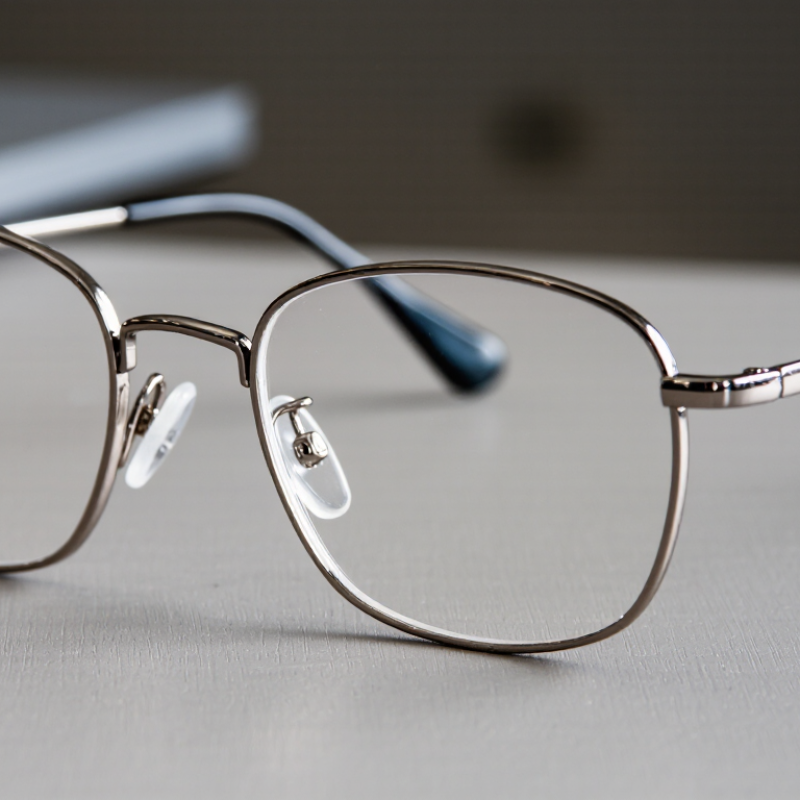
A titanium optical frame is a wearable structure built to hold lenses in a stable position. Its front includes two rims, a bridge, and endpieces; the temples extend toward the ears and connect through small hinges. Some designs use a full rim, while others secure the lens with a partial rim or nearly invisible support. Small parts matter: a stiff hinge can feel tight, and poorly adjusted nose pads may leave marks.
The frame material may be commercially pure titanium or an alloy, so “titanium” does not describe one fixed recipe. ASM International’s materials-property tables give titanium a density of about 4.5 g/cm³, compared with roughly 7.9 g/cm³ for common stainless steels. Those figures describe bulk materials, not finished glasses; lens size, hinge parts, and frame thickness also affect total weight. That distinction matters. A light frame is not automatically comfortable. In fitting practice, balance across the bridge and even temple pressure can matter just as much. Titanium can also be difficult to solder or adjust with ordinary tools, so repairs may require specific equipment and skill. Repairability is worth asking about before purchase.
Titanium optical frames are eyeglass frames made partly or entirely from titanium or titanium alloys. Their basic structure typically includes rims that hold the lenses, a bridge connecting the rims, temples that rest over the ears, and hinges. Nose pads may also be fitted.
Approximate material density helps explain why titanium can be used to make lightweight frame components. These values describe the materials, not the weight of finished frames, which also depends on design and component dimensions.
Titanium optical frames are made from commercially pure titanium or titanium alloys, and the distinction matters. Grades 1 through 4 are commercially pure; grade 2 is often chosen for its useful balance of strength, corrosion resistance, and formability. It can make slim temples that feel light without seeming flimsy. Grade 5, also called Ti-6Al-4V, is an alloy with added aluminum and vanadium. It is stronger and harder, but less easily shaped than commercially pure grades. Grade alone does not tell you how a frame will feel.
“Beta titanium” usually refers to a titanium alloy, not a pure grade. Its spring-like flexibility can help temples flex gently when put on or removed. Still, flexibility depends on the frame’s thickness, shape, and construction. A titanium front may also use other materials in hinges, screws, or decorative parts, so the whole frame is not necessarily titanium. Check the maker’s material specification rather than relying only on a frame’s color or lightness. Tiny details matter. If a frame feels unusually rigid, that may reflect its design, not a flaw in the metal. I would avoid assuming that every titanium alloy suits every wearer; fit, adjustment, and individual material sensitivities deserve attention.
Design starts with the frame’s shape, weight, and intended fit. Designers choose titanium sheet, wire, or rod according to the parts being made. Thin sheet can form rims, while slender wire may become temples or bridge components. The drawings must allow room for hinges, lenses, and small adjustments. Small parts matter.
Manufacturing usually combines cutting, bending, machining, and joining. Computer-controlled tools help create repeatable shapes, but titanium can spring back after bending. Workers account for this when forming each component. Laser welding may join parts with focused heat, helping limit distortion around delicate joints. Fit takes patience. A slight angle difference can make a frame sit unevenly on the face.
After assembly, frames are polished, cleaned, and sometimes given a surface finish. Technicians check alignment, hinge movement, and dimensions before fitting lenses. The process is precise, but not effortless: heat or pressure can still leave a part needing adjustment. That hands-on correction is easy to overlook when discussing modern equipment. A well-made frame depends on both controlled production and careful inspection.
Titanium optical frames come in several styles, and the shape affects both appearance and daily comfort. Full-rim frames surround each lens, giving the glasses a defined outline. Rectangular versions often look crisp and structured, while round frames create a softer impression. Titanium keeps these styles relatively light, which can help reduce pressure on the nose during long hours of wear. Small details matter. A narrow bridge or thin temple may feel different after a full day than it does in a quick fitting.
Semi-rimless frames hold the lenses along part of their edges, often leaving the lower portion open. They can look less heavy than full-rim styles, though lens edges need careful handling. Rimless frames have no surrounding rim, so their appearance is especially understated. Their reduced visual bulk may appeal to people who want their face to remain the focus. But minimal does not mean maintenance-free. Screws and lens attachments still need occasional checking.
Titanium can resist corrosion and offers useful strength for slender designs, but frame fit depends on more than material. Temple length, nose-pad placement, and lens size all affect stability. A frame that feels weightless may still slide or pinch. That is easy to miss in a brief try-on. The best style is not automatically the thinnest one; it should sit comfortably and suit the wearer’s prescription and routine.
| Frame Style | Typical Design | How Titanium Is Used | Key Features | Useful Considerations |
|---|---|---|---|---|
| Full-rim | A complete rim surrounds each lens. | Titanium forms the eyewire, often with matching titanium temples. | Provides a defined frame outline and protects the lens edges from everyday contact. | Lens shape and rim thickness affect the overall appearance; confirm that the frame accommodates the required lens prescription. |
| Semi-rimless | A rim surrounds part of each lens, with a nylon cord or similar system securing the exposed edge. | Titanium is commonly used for the upper rims, bridge, and temples. | Creates a lighter-looking, less visually prominent lower edge than a full-rim design. | The exposed lens edge needs appropriate care. Lens material and thickness can affect suitability and durability. |
| Rimless | Lenses attach directly to the bridge and temples using drilled or mounted connections. | Titanium components can form the bridge, hinges, and temples without a surrounding eyewire. | Minimal frame appearance and less material around the lenses. | Lens mounting requires careful adjustment. Rimless lenses can be more exposed to impact and handling damage. |
| Round or oval | Rounded lens shapes with curved outlines. | Available in full-rim, semi-rimless, and rimless titanium constructions. | Offers a softer outline; slim titanium rims can keep the frame visually light. | Fit depends on lens width, bridge fit, and how the frame aligns with the wearer’s face. |
| Rectangular | Lens shape has straighter lines and a wider-than-tall appearance. | Often made with thin titanium rims or lightweight titanium temples. | Provides a more angular outline and is available in many frame sizes. | Check the frame width and lens height against comfort, prescription, and personal fit needs. |
| Aviator-inspired | Typically features a double bridge and larger, softly tapered lenses. | Titanium may be used for the thin rims, bridge, and temples. | Combines a recognizable double-bridge profile with the potential for a lightweight frame structure. | Large lenses may add weight depending on lens material and prescription; fit should be checked at the bridge and temples. |
| Beta-titanium flexible styles | May use a variety of shapes, including rectangular, round, and semi-rimless designs. | Beta-titanium components are used where flexibility is desired, commonly in temples or selected frame parts. | Can flex more than many rigid frame constructions and may help the temples accommodate everyday movement. | Flexibility varies by alloy, design, and construction. It does not make a frame indestructible or maintenance-free. |
Note: Titanium is valued in eyewear for its low weight and corrosion resistance. Frame properties vary by alloy and construction; “titanium” does not always mean the frame is made entirely of pure titanium. People with metal sensitivities should check the specific materials used, including alloys and nose-pad or hinge components.
Titanium optical frames are made from titanium or titanium-rich alloys, chosen for their low weight and resistance to corrosion. They can feel comfortable during long days, especially when heavier frames leave marks on the nose. Some designs flex slightly under pressure, but that does not make them unbreakable. Alloy composition and coatings vary, so sensitivity can depend on the specific frame. Check the product details if you have reacted to eyewear metals before.
Tips: Clean frames with lukewarm water, a drop of mild soap, and a clean microfiber cloth. Dry the hinges and nose pads gently. Avoid household cleaners and hot car dashboards; heat may affect coatings or frame components.
There are trade-offs. Titanium frames often cost more than basic metal or plastic options, and repairs or adjustments may require an experienced optician. Their thin profiles can also be difficult to grip when you are putting them on. Use both hands. A frame that feels sturdy can still bend if it is twisted in a bag or slept on. I would not treat “titanium” as a guarantee of perfect durability; hinge quality, fit, and everyday handling matter too.
Frames may use titanium sheet, wire, or rod. Thin sheet can form rims, while slender wire may become temples or bridge parts.
Production can involve cutting, bending, machining, and joining. Workers account for spring-back when bending titanium. Laser welding may help limit heat distortion near delicate joints.
They inspect alignment, hinge movement, and dimensions before lenses are fitted. A small angle difference can make the frame sit unevenly. Fit takes patience.
Their low weight may reduce pressure marks on the nose during long days. Still, comfort depends on fit, not just material.
No. Some designs flex slightly, but twisting a frame in a bag or sleeping on it can bend it. “Titanium” is not a durability guarantee.
Alloy composition and coatings vary, so reactions may depend on the specific frame. Check product details if you have reacted to eyewear metals before.
Use lukewarm water, mild soap, and a clean microfiber cloth. Dry hinges and nose pads gently. Avoid household cleaners and hot car dashboards.
They often cost more than basic metal or plastic frames. Adjustments may need an experienced optician, and thin profiles can be hard to grip. Use both hands.
Titanium optical frames are eyeglass frames made with titanium or titanium-based materials. Their basic structure includes rims that hold the lenses, a bridge, hinges, and temples that rest over the ears. Frame construction may use different grades of titanium, from commercially pure forms to stronger alloys, each offering a balance of weight, strength, flexibility, and corrosion resistance.
Design and manufacturing involve shaping the material, joining frame components, and finishing surfaces for comfort and durability. Styles range from full-rim and semi-rimless designs to rimless frames, with each offering a distinct appearance and level of lens support. Titanium optical frames are valued for being lightweight, sturdy, and generally comfortable for extended wear. However, they may cost more than some alternatives, can require specialized repairs, and may not suit every style preference. Regular cleaning with a soft cloth and careful handling can help maintain their finish and function.