Choosing acetate eyewear frames for a brand is not just a color decision. It is a product, fit, and sourcing decision. A polished tortoiseshell front may look rich under studio lights, yet feel too heavy after hours of wear. A bright, layered sheet can photograph beautifully, but its pattern may vary across production batches. Those details shape what customers experience—and what they remember.
Eyewear designer Alain Mikli is often associated with the line, “I don’t make glasses; I make faces.” It captures an important idea: frames change how a face is seen. For a brand, that makes proportion, bridge fit, temple comfort, and color placement worth careful review. Small details matter. Ask suppliers about sheet consistency, finishing, hinge construction, available colors, and production minimums. Request physical samples, then inspect them in daylight and wear them beyond a quick fitting. Check whether edges feel smooth and whether the temples sit comfortably without pressure. Not every sample tells the full story. Production can differ, and that possibility deserves honest discussion.
This guide explores how to turn those checks into a practical selection process. It covers design direction, material quality, fit, customization, supplier evaluation, and quality control. There is no universal “best” acetate eyewear frames choice. A frame that suits one audience may feel wrong for another. The useful work is matching the material and construction to your brand promise, price point, and customer’s everyday needs.
Define Your Brand’s Audience and Eyewear Requirements
Before selecting acetate frames, describe the person who will wear them. Consider age range, face shapes, daily routine, and preferred level of visibility. A commuter may value lightweight comfort and a secure fit, while a style-focused shopper may welcome a thicker, more noticeable front. Get specific. “Modern” is not a useful audience profile on its own.
Turn those observations into measurable requirements. Compare lens widths, bridge shapes, and temple lengths against the fit your customers need. Ask whether frames should suit prescription lenses, long hours of wear, or frequent handling. Acetate offers rich color and a substantial feel, but thicker fronts can feel heavy on some faces. Check hinge movement and surface finish on physical samples, not just product images.
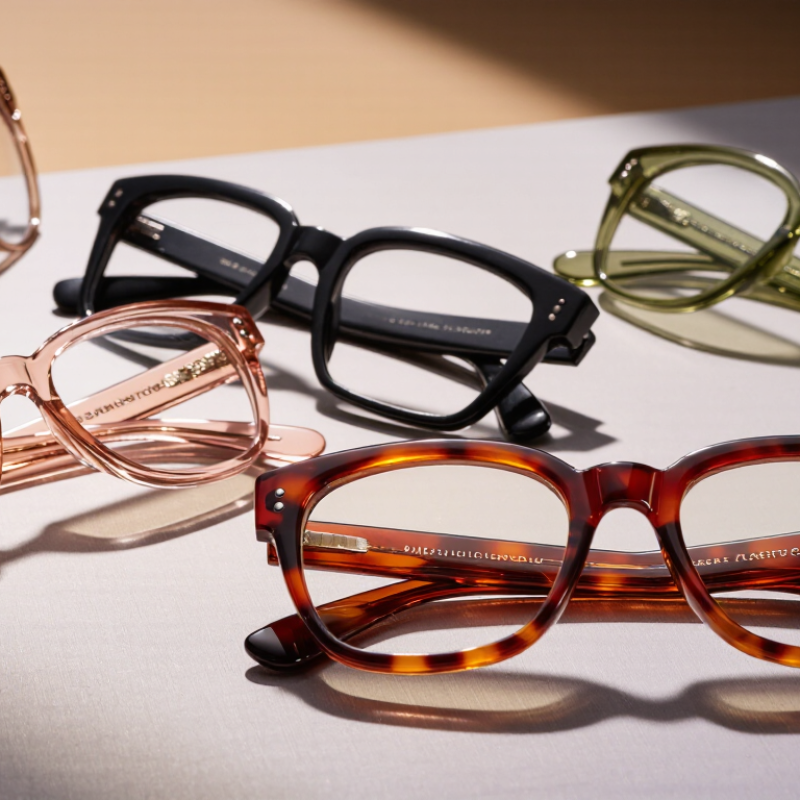
Color choices should reflect how customers actually dress. Tortoiseshell tones can feel versatile, while bright colors ask for a more confident buyer. Request samples in daylight and indoor lighting; translucent acetate can look quite different between the two. One detail is easy to miss: a frame that looks striking on a display may feel too wide during a full day of wear. Keep room for revision. A first specification is rarely perfect.
Understand Acetate Materials, Colors, and Construction
Acetate is not one uniform material. For eyewear, cellulose acetate sheets can offer rich color and a warm, substantial feel. Ask suppliers about sheet consistency, thickness, and how colors are layered. A cloudy edge or uneven pattern may become obvious after cutting and polishing. Request samples from different areas of a sheet, not just one polished frame.
Color affects more than appearance. A translucent amber front can reveal the core and add depth, while a dark, opaque tone hides small marks more easily. Hold samples near a window and under indoor lighting. The difference can be surprising. Also check whether the color runs through the material or sits mainly on the surface; this influences how edges look after shaping. My own preference would be to judge a sample on a finished frame, though that takes more time.
Construction deserves the same attention as color. Inspect hinge alignment, screw seating, temple symmetry, and the smoothness of the bridge and rim edges. Open and close each temple repeatedly; stiffness or looseness can signal inconsistent assembly. Check frame weight on the face, especially with thicker fronts. A design that looks balanced on a table may slide during wear. One detail is easy to miss: ask how production teams control variation between batches. Even good specifications need real inspection.
Choose Frame Shapes, Sizes, and Fit for Your Customers
Choose frame shapes that balance personal style with everyday comfort. Rounded acetate frames can soften angular features, while rectangular fronts may add definition to fuller cheeks. These are starting points, not rules. Face shape alone cannot predict what a customer will enjoy wearing. Ask about their usual clothing, work setting, and preferred level of visibility. Small details matter.
Check frame width against the customer’s face, rather than relying on the size printed inside the temple. The front should sit without pressing at the sides, and the hinges should not flare outward. At the bridge, look for stable contact without pinching or slipping. Acetate bridges vary in depth and contour, so a frame that fits one nose may slide on another. Have customers look down and turn their heads; movement often reveals fit problems that a mirror misses.
Temple arms should reach comfortably behind the ears without squeezing. Lens height also deserves attention, especially for customers who need progressive lenses; confirm requirements with their eye-care professional before choosing a final shape. For stronger prescriptions, ask an optical professional whether the lens size and frame design are suitable. A sample try-on with varied face shapes can expose gaps in a collection. We still misjudge this sometimes: a striking display shape may feel heavy after an hour. Comfort is harder to photograph, but customers notice it.
How to Choose Acetate Eyewear Frames for Your Brand – Choose Frame Shapes, Sizes, and Fit for Your Customers
| Frame shape |
Typical lens width |
Typical bridge width |
Typical temple length |
Common fit profile |
Fit and selection notes |
| Round |
44–50 mm |
18–22 mm |
140–150 mm |
Narrow to medium faces |
Check that the circular lenses do not sit too low or extend beyond the cheek area. A smaller lens can help keep the frame proportionate on a narrow face. |
| Oval |
48–54 mm |
16–20 mm |
140–150 mm |
Narrow to medium faces |
Compare the frame front width with the wearer’s face. The temples should extend comfortably without pinching or flaring outward. |
| Square |
48–56 mm |
16–22 mm |
140–150 mm |
Medium to wide faces |
Angular corners create a defined look. Make sure the frame does not press at the temples and that the lower rim clears the cheeks when smiling. |
| Rectangle |
50–58 mm |
16–22 mm |
140–155 mm |
Medium to wide faces |
The wider lens shape can suit broader faces, but overall frame width matters more than lens width alone. Check that the hinges sit near the sides of the face. |
| Cat-eye |
48–55 mm |
16–21 mm |
140–150 mm |
Narrow to medium faces |
Check that the lifted outer corners follow the wearer’s brow line without extending too far past the face or touching the temples. |
| Browline |
48–56 mm |
16–22 mm |
140–150 mm |
Medium faces |
The heavier upper rim should sit comfortably below the eyebrows. Confirm that the frame front is not too wide or visually overpowering on the wearer. |
| Oversized |
54–60 mm |
16–22 mm |
145–155 mm |
Medium to wide faces |
Check total frame width, weight, and cheek clearance. A larger lens opening may need careful lens-thickness planning for stronger prescriptions. |
Measurement note: Typical ranges are general selection guides, not fixed sizing rules. Frame measurements are commonly printed as lens width, bridge width, and temple length in millimeters. Fit should be confirmed by checking the complete frame width, nose comfort, temple pressure, and cheek clearance.
Evaluate Customization Options and Manufacturing Quality
When choosing acetate frames, evaluate the supplier’s customization menu and the consistency behind it. Options may include layered colors, custom patterns, temple shapes, core-wire finishes, hinge styles, and logo placement. Ask for physical swatches: a color on a screen can look different in a polished frame. Grand View Research estimated the global eyewear market at USD 183.36 billion in 2023, indicating a large, competitive category. That figure is context, not proof that every customization will sell.
Manufacturing quality shows in details you can inspect. Check sample frames for smooth edges, even polish, aligned hinges, consistent color, and temples that open without wobbling. Request written tolerances, batch inspection records, and test documentation. ISO 12870:2016 sets requirements and test methods for spectacle frames; ask whether the supplier can provide relevant test evidence. Small details matter. More options can also raise minimum order quantities or slow sampling. There is a trade-off. A glossy sample may hide uneven finishing, so inspect the frame under direct light and handle several units.
Tips: Approve a “golden sample” before production, then compare finished units against it. Confirm color references, logo position, hinge specification, and acceptable variation in writing. Keep one sample from each approved batch. If something feels slightly off, record it rather than assuming it will disappear at scale.
How to Choose Acetate Eyewear Frames for Your Brand
Example frame dimensions to guide fit and customization discussions
These illustrative dimensions describe one possible frame specification, not an industry standard or quality rating. Adjust lens, bridge, and temple measurements for your target fit. Assess manufacturing quality separately by checking acetate consistency, hinge alignment, frame symmetry, polishing, and finish on production samples.
Compare Suppliers, Pricing, and Production Timelines
When comparing acetate eyewear suppliers, look beyond the quoted frame price. Ask what the quote includes: custom colors, hinge installation, polishing, packaging, and sample revisions. A low unit cost can hide setup charges or extra fees for small orders. Request a written breakdown. It helps.
Check how suppliers control material consistency. Ask for color swatches and inspect a sample under daylight and indoor lighting. Acetate sheets can vary slightly between batches, so confirm how repeat orders are matched. Also ask about hinge alignment, edge finishing, and inspection standards. Small details matter on the shelf.
Production timelines need the same scrutiny as pricing. Ask for separate estimates for sampling, approval, bulk production, and shipping. A supplier may quote four weeks for production, while sample revisions add several more. Build some buffer into launch plans. I have seen buyers focus too heavily on the fastest promise; it is not always the most dependable choice. Compare recent delivery records, communication speed, and how delays are reported. Get milestones in writing, but leave room for a little uncertainty. Planning is rarely perfect.
FAQS
Request samples from different areas of a sheet. Compare them near a window and under indoor lighting. A cloudy edge can show after polishing.
Yes. Translucent amber can reveal the core, while opaque colors may hide small marks. Check whether color runs through the material or stays near the surface.
Check hinge alignment, screw seating, temple symmetry, and smooth rim edges. Open and close each temple several times. Small details matter.
Check that the front does not press at the sides. The bridge should feel stable, without pinching or slipping. Ask the wearer to look down and turn their head.
Temple arms should sit behind the ears without squeezing. Try the frame on, since a thick front may feel heavier after an hour. We can misjudge that.
No. Rounded frames may soften angular features, and rectangular fronts may add definition. Treat these as starting points, then ask about clothing and daily use.
Ask whether it covers custom colors, hinges, polishing, packaging, and sample revisions. Request a written cost breakdown. It helps.
Get separate estimates for sampling, approval, production, and shipping. Ask about recent delivery records and written milestones. Leave extra time; fast promises can be uncertain.
Conclusion
Choosing acetate eyewear frames for your brand starts with understanding who will wear them and what they need, including preferred styles, comfort, durability, and price range. Learn how acetate materials, colors, patterns, and construction affect a frame’s appearance and performance. Then consider shapes, sizes, and fit so your collection can suit different face shapes and everyday preferences.
Before placing an order, review options for customization, such as colors, finishes, and design details, and assess manufacturing quality through clear specifications and sample checks. Compare suppliers not only by unit price, but also by material consistency, communication, minimum order requirements, and production timelines. A thoughtful evaluation of these factors can help you develop a coherent collection that balances visual appeal, reliable quality, customer fit, and practical production needs.

