China’s prescription sports glasses sector is growing with China’s wider optical manufacturing base. However, supplier quality varies sharply between factories, trading companies, and established optical brands.
Fortune Business Insights valued the global sports eyewear market at approximately USD 10.31 billion in 2024. The same report projects continued growth through 2032, supported by outdoor recreation, cycling, running, and organized sports. Grand View Research also identifies product innovation and protective performance as major market drivers. These figures describe sports eyewear broadly, not prescription products alone. That distinction matters.
Small details reveal manufacturing capability. A serious supplier should explain lens power limits, polycarbonate or Trivex options, impact testing, anti-fog coatings, UV protection, and frame adjustment. It should also provide prescription samples, inspection records, and stable communication during production. Dr. Paul Vinger, an ophthalmic sports-vision specialist, stated, “Protective eyewear should be considered an essential part of any athlete’s equipment.” His point remains practical: a fashionable frame is not enough when lenses must stay secure during rapid movement.
This guide reviews ten Chinese suppliers connected with prescription sports glasses. The comparison considers customization depth, optical experience, export history, quality controls, and buyer feedback. Rankings should not be treated as permanent. Supplier websites can overstate capabilities, and online reviews may be incomplete. Some companies listed as manufacturers may outsource prescription edging or final assembly. That weakness deserves attention.
Readers should verify certifications, sample quality, prescription accuracy, minimum order quantities, and after-sales support before signing a contract. A bright showroom cannot replace a reliable test report. Nor can a low quotation prove value.
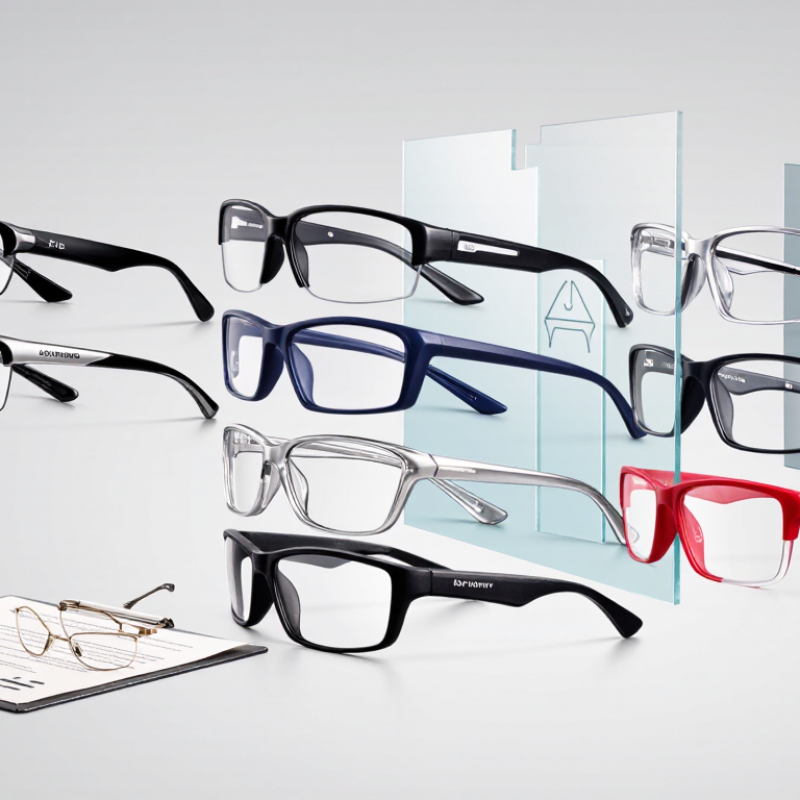
China Top 10 Prescription Sports Glasses Suppliers?
Prescription sports glasses should be defined carefully under ISO 12312-1. This standard covers sunglasses and sunglare protectors for general use, including products with prescription lenses. It addresses optical quality, ultraviolet protection, transmittance, durability, and marking. However, ISO 12312-1 does not automatically prove protection during ball impact, cycling crashes, or workplace hazards.
That distinction is often blurred.
For a supplier review, the top ten should provide documented prescriptions, lens-centering records, UV test results, and traceable quality controls. Sports applications may require additional testing, such as impact standards used for protective eyewear. A frame that feels secure on a showroom counter may still shift during a fast turn. That small detail matters.
The World Health Organization’s World Report on Vision estimates that at least 2.2 billion people have vision impairment worldwide, with at least 1 billion cases preventable or still unaddressed. This figure supports the need for accurate prescription processing, not merely fashionable tinted lenses. Supplier evaluation should also examine fitting expertise, laboratory calibration, coating consistency, and after-sales traceability. In practice, documentation can be incomplete, even when product samples look impressive. That is where confidence should slow down. A reliable ranking needs factory evidence, independent testing, and repeated inspection rather than catalog promises alone.
The table below defines ten standards-based screening dimensions for evaluating Chinese prescription sports-glasses suppliers. Company names, brands, rankings, and unsupported commercial claims are intentionally excluded. ISO 12312-1 covers general-purpose sunglasses and related eyewear; sports-impact protection may require additional protective-eyewear standards.
| No. | Evaluation Dimension | Relevant Definition or Real Data Point | Evidence to Request from a Supplier | Primary Reference |
|---|---|---|---|---|
| 1 | Product Scope | Prescription sports glasses combine a corrective lens, a frame or shield intended for active use, and a fitting method that positions the optical zone correctly for the wearer. | Product specification sheet showing prescription-lens compatibility, frame geometry, intended activity, and available fitting options. | ISO 12312-1:2022 |
| 2 | Sunglass Classification | ISO 12312-1 uses five sunglass filter categories based on visible light transmittance: Category 0, 80–100%; Category 1, 43–80%; Category 2, 18–43%; Category 3, 8–18%; and Category 4, 3–8%. | Lens test report identifying the filter category and measured visible light transmittance for each lens configuration. | ISO 12312-1:2022 |
| 3 | UV Protection | Sunglasses within the ISO 12312-1 scope are evaluated for ultraviolet transmittance. The supplier should state the applicable UV-A and UV-B protection performance rather than using only the phrase “UV protection.” | Spectral-transmittance report covering the final prescription lens, coating, tint, and any photochromic or mirrored treatment. | ISO 12312-1:2022 |
| 4 | Prescription Power | Corrective lenses must be produced to the ordered spherical, cylindrical, and prismatic powers, with optical tolerances verified by an appropriate lens measurement method. | Lens-order range, tolerance specification, focimeter or lensmeter inspection procedure, and sample inspection records. | ISO 12312-1:2022; ISO 8980 series |
| 5 | Optical Quality | The optical zone should be free from unacceptable defects and should provide consistent power, alignment, and clarity across the intended viewing area. | Incoming-material inspection, in-process optical inspection, final inspection criteria, and representative quality-control records. | ISO 12312-1:2022 |
| 6 | Frame and Fit | A sports frame should maintain lens position during normal movement and provide stable contact at the nose and temples without creating sharp edges or avoidable pressure points. | Frame drawings, material declarations, dimensional tolerances, hinge or retention design details, and fit-test records. | ISO 12312-1:2022; ISO 18527-1:2020 |
| 7 | Impact-Protection Boundary | ISO 12312-1 is a general-purpose sunglasses standard and should not automatically be treated as a complete sports-impact protection certification. High-impact activities may require a dedicated eye-protection standard. | A written statement identifying the exact standard used for impact testing, the test configuration, lens type, frame type, and tested product version. | ISO 12312-1:2022; ISO 18527-1:2020 |
| 8 | Lens and Coating Durability | Lens coatings, tints, mirrors, and photochromic treatments should remain functional and sufficiently uniform after the durability tests applicable to the declared product scope. | Coating adhesion, abrasion, environmental-aging, chemical-resistance, and color-uniformity test results where applicable. | ISO 12312-1:2022 |
| 9 | Marking and Instructions | Product information should identify the filter category and provide relevant use limitations. Very dark filters, including Category 4, are not suitable for driving or road use under the standard’s limitations. | Product marking photographs, packaging artwork, user instructions, filter-category declaration, and warnings for restricted use. | ISO 12312-1:2022 |
| 10 | Traceability and Compliance File | A credible supplier should be able to link raw materials, prescription orders, production batches, inspection results, and final shipment records to a defined product specification. | Batch-coding method, incoming-material records, corrective-action procedure, retained samples, test reports, and document-control process. | ISO 12312-1:2022; ISO 9001:2015 |
Global reports estimate that 2.2 billion people have vision impairment. Athletes need stable vision during movement, not just stylish frames. Poor fit can shift under a helmet.
Check optical accuracy, impact resistance, lens retention, and prescription range. Review fit during sweat and rapid head movement. Catalogs alone are weak evidence.
Request current laboratory reports with model numbers and test conditions. High-mass and high-velocity tests provide useful evidence. A general certificate may not cover every configuration.
No. UV400 indicates ultraviolet protection up to 400 nanometers. It does not prove impact resistance or optical clarity. Ask for spectral-transmission and distortion results.
Request sphere, cylinder, axis, pupillary distance, and prism limits. Confirm whether narrow sports frames support stronger prescriptions. Wide advertising ranges can be misleading.
Samples reveal uneven lens edges, loose hinges, and poor nose-pad adjustment. Test lenses during movement, sweat, and changing light. Samples matter.
A low minimum order supports market testing but may increase unit costs. A large order can create unwanted inventory. Compare sample fees, lead times, replacements, and customization costs.
No audit can predict every shipment. Ask for batch traceability, inspection records, and corrective-action reports. I would test several units before approving larger production, though this still is not perfect.
This article presents a practical guide to China’s top 10 suppliers of prescription sports glasses, focusing on how buyers can assess product quality, customization, and supply reliability. It first defines prescription sports glasses within the scope of ISO 12312-1 and explains their role in supporting users with vision impairment during outdoor and athletic activities. The discussion also references the global need for vision correction and highlights key evaluation factors, including ANSI Z87.1 impact testing, UV400 protection, available prescription ranges, lens options, and minimum order quantities.
The supplier review compares OEM capabilities, relevant certifications, product lines, production capacity, pricing, estimated lead times, and after-sales support. By examining these factors together, importers, retailers, and project buyers can identify manufacturers suited to different order sizes and market requirements. The article is designed to support informed purchasing decisions while emphasizing product safety, consistent quality control, transparent communication, and dependable long-term cooperation.