Buying bulk reading glasses at scale involves more than comparing unit prices. Global buyers need suppliers that can deliver consistent magnification, comfortable frames, clear product specifications, and dependable order communication. This guide introduces ten suppliers for comparison, with attention to practical factors such as product range, customization, minimum order quantities, sample access, and quality-control procedures. The right choice depends on the buyer’s market and sales channel. There is no universal best supplier.
Details matter. A sample pair can reveal uneven lens edges, loose hinges, or frames that feel uncomfortable after a few minutes. Buyers should also confirm available diopter strengths, materials, packaging options, lead times, and how defects are handled. Ask for current product documents and a written quotation before placing a large order. A polished catalog is not proof. Supplier websites and claims may change, so verify important details directly and compare the same specifications across candidates. This shortlist is a starting point, not a substitute for due diligence. Even a well-reviewed supplier may not fit every budget, timeline, or customer preference. Use the profiles below to identify promising options, then test samples and clarify expectations before committing.
Understanding the Bulk Reading Glasses Market and Product Categories
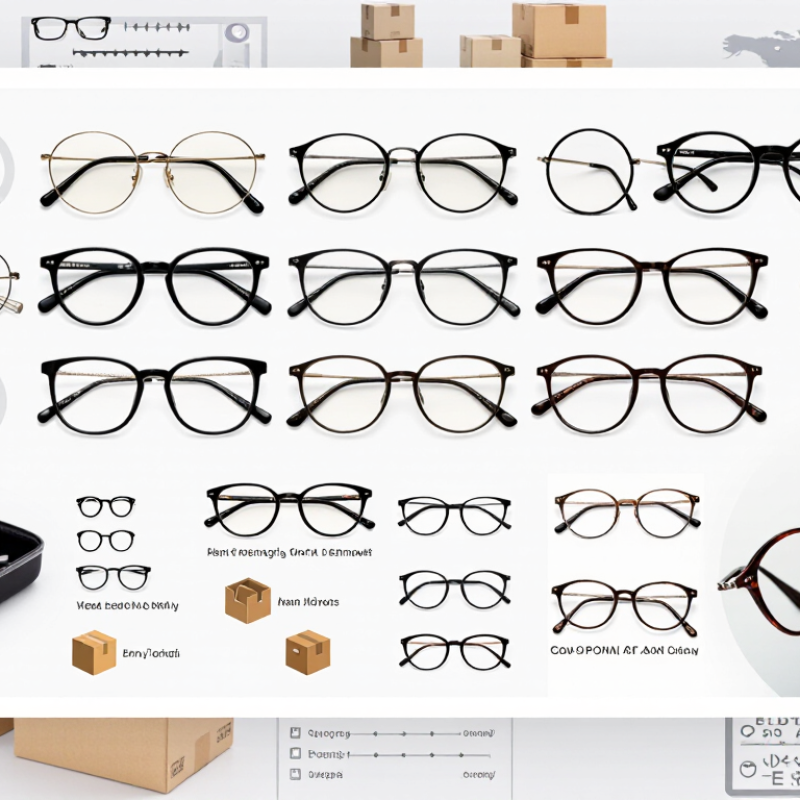
Bulk reading glasses serve customers who need near-vision support, but buyers should not treat every pair as interchangeable. The World Health Organization’s World Report on Vision (2019) cites estimates that 1.8 billion people had presbyopia in 2015, including 826 million with near-vision impairment because they lacked adequate correction. That points to broad demand, yet it does not reveal which strengths or frame shapes each market prefers. Small differences matter. Common wholesale categories include single-vision readers in multiple diopters, full-frame and half-eye designs, and options made with plastic or metal frames. Lens coatings, nose-pad styles, and hinge construction also affect daily comfort and durability.
For global purchasing, assortments often span several magnification strengths and adult frame sizes. Buyers can request sample sets and check lens clarity, symmetry, hinge tension, and printed strength before placing a larger order. Packaging matters too: individually protected pairs are easier to display and distribute. A tidy assortment chart can still miss real customer preferences; local sales data should guide later reorders.
Tips: Compare samples under ordinary indoor lighting. Confirm that the stated lens strength matches the product, and record customer feedback by strength and frame style. Fit still varies.
The chart shows commonly offered lens strengths in diopters, from +0.75 to +4.00. For bulk purchasing, confirm which strengths your customers need and check product availability with suppliers. These standard strengths are not a substitute for an individual eye examination or prescription.
Choosing a bulk reading glasses supplier takes more than comparing unit prices. Request samples in several strengths and inspect them under a bright desk lamp. Check lens edges, frame alignment, hinge movement, and whether both lenses feel consistent. Small details matter. Ask how the supplier checks optical power and records inspection results. A polished sample is useful, but it does not prove every carton will match. If possible, inspect a small trial order before committing to a larger shipment.
Compare complete costs, not just the quoted price per pair. Confirm what the quote includes, such as cases, packaging, labeling, and freight. Ask about minimum order quantities, production lead times, payment terms, and how defects are handled. Low prices can become expensive if delays or inconsistent quality create extra work. For capacity, request realistic monthly output figures and ask how busy-season orders affect delivery dates. A production schedule and a clear explanation of material sourcing are more useful than a broad promise of fast turnaround. No checklist catches everything. Even experienced buyers may miss a weak point, so keep written specifications and review them with the supplier before production begins.
The ten supplier profiles differ less by catalog size than by production focus. One optical-focused factory offers a broad range of magnifications and checks lens clarity. A high-volume producer suits repeat orders, but buyers should confirm its capacity in writing. A metal-frame specialist may provide sturdier hinges and adjustable nose pads. Another supplier accepts smaller trial orders, useful when demand is uncertain. Small batches can cost more per unit.
A fifth profile focuses on lightweight frames for long reading sessions. Ask for samples and compare fit, weight, and lens edges in person. A private-label-capable supplier can add packaging or simple frame markings, though setup fees may apply. One quality-led operation shares inspection records and defect procedures. Request the criteria behind those records; a polished document alone proves little. An export-oriented supplier may help prepare carton details and shipping paperwork. Confirm who handles each task before payment.
The remaining profiles include a rapid-replenishment wholesaler and a supplier offering recycled or lower-impact frame materials. The latter should provide material specifications, not just broad environmental claims. Across all ten, compare lens powers, frame measurements, sample consistency, minimum order quantities, and lead times. Ask how damaged units are handled. One awkward point remains: a low quotation can hide uneven quality, and a sample may not match a full production run. Independent checks are worth considering.
Supplier location can shape freight cost, delivery time, and how easily buyers can check production samples. A nearby supplier may simplify communication and replenishment, while a distant factory may offer different pricing or production capacity. Compare the quoted unit price with shipping, insurance, and expected transit time. Ask where the glasses are made, not only where the sales office is located. Small details matter.
Customization can include frame colors, lens powers, packaging, and printed labels. Confirm which options are available at the supplier’s standard production scale. Request a physical sample with clear lens-power markings, sturdy hinges, and packaging that protects frames during transit. Digital images help, but they cannot show how a frame feels in hand. I have seen buyers overlook this. It is easy to regret.
Minimum order quantities vary by product and by customization level. A supplier might accept a modest order for standard frames but require more units for custom colors or packaging. Ask whether mixed lens powers count toward one MOQ, and whether repeat orders can use the same specifications. Before placing a large order, compare a sample run’s cost with the full-volume quote. The first calculation may be imperfect; record the assumptions and revise them when freight or packaging details change.
A supplier’s low unit price means little if reading glasses arrive with incomplete paperwork or damaged lenses. Before ordering, ask for test reports, material specifications, batch traceability, and labels matched to each destination market. Product classification and requirements can differ by country, so confirm them with qualified local compliance advisers. Do not rely on a generic certificate alone. Check that the documents identify the actual product and production site.
Shipping deserves equal scrutiny. UNCTAD’s Review of Maritime Transport 2024 notes that shipping carries over 80% of world trade by volume, making port congestion and route disruption relevant sourcing risks. Ask suppliers for carton dimensions, packing photos, lead-time ranges, and a clear plan for delayed or split shipments. A sample carton can reveal loose frames or scratched lenses before a full order leaves the factory. Small detail. Big difference.
After-sales support should be agreed in writing, not left to friendly messages. Set a response time for defect claims, define acceptable evidence, and clarify replacement or credit terms. Keep photos, batch numbers, and inspection records for each shipment. A realistic quality check may still miss an occasional defect; the useful question is how quickly the supplier investigates and prevents repeats. WTO’s Global Trade Outlook and Statistics 2024 projected merchandise trade volume growth of 2.6% for 2024, underscoring why buyers should plan inventory around changing demand rather than assume steady replenishment.
| # | Supplier Sourcing Profile | Potential Buyer Fit | Compliance Checks | Shipping Considerations | After-Sales Terms to Confirm |
|---|---|---|---|---|---|
| 1 | Large-volume OEM eyewear factory in an established manufacturing cluster | Importers seeking repeat orders, multiple frame styles, and negotiated production runs | Request lens-power test results, material declarations, batch traceability, and destination-market documentation. Requirements depend on the product and country of sale. | Compare sea freight for planned replenishment with air freight for urgent samples or stockouts. Confirm carton dimensions, gross weight, and packing list before booking. | Agree in writing on defect definitions, inspection timing, replacement or credit terms, and the evidence required for a claim. |
| 2 | Optical-products specialist focused on ready-made reading glasses | Buyers prioritizing consistent optical powers, clear product specifications, and assortment control | Confirm the stated diopter range, power marking, optical-quality checks, and lot-level records. Ask which tests are performed and request sample reports. | Protect lenses from scratching with individual sleeves or equivalent packaging; verify that the chosen carton configuration meets carrier handling needs. | Check whether mixed-power cartons, replacement lenses, or replacement units are available, and define how long support remains available after delivery. |
| 3 | Private-label OEM supplier offering custom colors, packaging, or frame details | Retailers and distributors building a house-brand range without naming a supplier in public materials | Approve production samples and artwork before mass production. Ensure labels, warnings, country-of-origin information, and claims meet the laws of each target market. | Packaging changes can affect carton size and freight cost. Obtain final packed dimensions and weights rather than relying on pre-production estimates. | Set procedures for artwork changes, obsolete packaging, quality deviations, and reorders using the approved reference sample. |
| 4 | ODM supplier with an existing catalogue and configurable models | Buyers seeking shorter product-development work and a choice of established designs | Verify that the actual shipped model matches the tested or documented model. Keep approved samples, specifications, and change-control records. | Catalogue availability does not guarantee ready stock. Confirm production status, order allocation, and dispatch dates in the purchase contract. | Clarify whether discontinued models can be reordered and whether a comparable replacement requires new sample approval. |
| 5 | Regional wholesale distributor serving a defined import market | Smaller buyers or businesses needing local-language service and lower order quantities | Request the identity of the responsible importer or economic operator where applicable, product documentation, and evidence of lawful market placement. | Domestic or regional delivery may simplify transport, but check whether goods are already customs-cleared and who handles import duties and taxes. | Confirm local return addresses, warranty handling, spare-stock availability, and response times for product complaints. |
| 6 | Export-focused supplier experienced with consolidated shipments | Importers combining reading glasses with other small consumer goods | Check that documentation and product descriptions remain consistent across the invoice, packing list, labels, and shipping records. | Consolidation can reduce freight handling, but may add coordination time. Confirm cutoff dates, cargo-ready dates, and responsibility for delays between suppliers. | Require shipment-level records and a clear process for reporting shortages, transit damage, or carton-count discrepancies. |
| 7 | EU-based supplier or distributor | Buyers serving European markets who value regional stock or shorter intra-European delivery routes | Determine whether the product is subject to EU medical-device rules based on its intended purpose and claims. Obtain the applicable conformity and labeling documentation; do not assume one document fits every model. | For intra-EU movements, confirm the dispatch country, delivery terms, and tax treatment. For imports into the EU, establish who is responsible for customs clearance. | Agree on returns, complaint escalation, and any local-language support needed for the destination markets. |
| 8 | Supplier preparing products for the United States market | Importers selling through US retail, pharmacy, or e-commerce channels | FDA generally regulates nonprescription reading glasses as Class I medical devices; applicable exemptions and obligations depend on the device and activities. Verify current FDA requirements, labeling, and establishment or device-listing responsibilities for the specific parties. | Confirm the importer of record, customs classification, country-of-origin marking, and any applicable duties before shipment. Rates depend on classification and origin. | Retain lot and complaint records and agree how safety or quality issues will be escalated and handled in the US market. |
| 9 | Supplier offering mixed-SKU or assortment-based bulk orders | Retailers testing several powers, colors, or styles before committing to larger runs | Check that each SKU has a distinct specification and traceable lot identification. Verify that mixed cartons do not obscure required power or model information. | Request a carton-level assortment plan and packing list. Mixed-SKU packing can increase receiving and inventory-control work if cartons are not clearly labeled. | Set minimum quantities and replenishment rules by SKU, and confirm whether defective units can be credited individually or only by lot. |
| 10 | Trading company coordinating production through one or more factories | Buyers seeking one commercial contact for product sourcing and export coordination | Identify the actual manufacturing site and agree who supplies test records, traceability data, and change notifications. Audit rights and document access should be stated in the contract. | Specify the named shipper, dispatch location, Incoterms® rule and named place, and who books freight and handles export documentation. | Define which party receives complaints, arranges corrective action, and pays for replacements or credits; avoid relying on verbal assurances. |
Note: These are sourcing profiles, not named companies or a verified supplier ranking. Supplier capabilities vary. Confirm requirements with the relevant regulator, customs authority, freight provider, and supplier before placing an order. Incoterms® rules allocate specified responsibilities between seller and buyer; they do not replace a complete sales contract.
Common options include single-vision readers in different strengths, full-frame and half-eye designs, and plastic or metal frames.
Request samples across several strengths. Check printed power and lens clarity under ordinary indoor lighting. Keep local sales feedback in mind.
Check lens symmetry, hinge tension, nose pads, and frame comfort. A neat sample chart can still miss what customers prefer.
Individually protected pairs are easier to display and distribute. Inspect a sample carton for scratched lenses or loose frames.
Ask for test reports, material details, batch traceability, and destination-specific labels. Confirm that documents match the product and production site.
Requirements can differ by country. Check them with a qualified local compliance adviser, rather than relying on a generic certificate.
Request carton dimensions, packing photos, lead-time ranges, and plans for delayed or split shipments. Shipping routes can face disruption.
Set response times, defect evidence requirements, and replacement or credit terms in writing. Keep photos and batch records. Occasional defects may still slip through.
This guide explores the bulk reading glasses market, including common product categories, lens options, frame styles, and packaging formats. It explains how global buyers can assess suppliers by reviewing product quality, pricing, manufacturing capacity, communication, and order flexibility. The article also presents profiles of ten types of suppliers, helping buyers compare their strengths and identify options suited to different purchasing needs.
A practical comparison of supplier locations, customization services, and minimum order quantities supports more informed sourcing decisions. The guide also outlines key considerations for compliance documentation, shipping timelines, packaging, and after-sales support. By evaluating these factors together, buyers can reduce sourcing uncertainty, set clear expectations, and build dependable supplier relationships for bulk purchases.
